
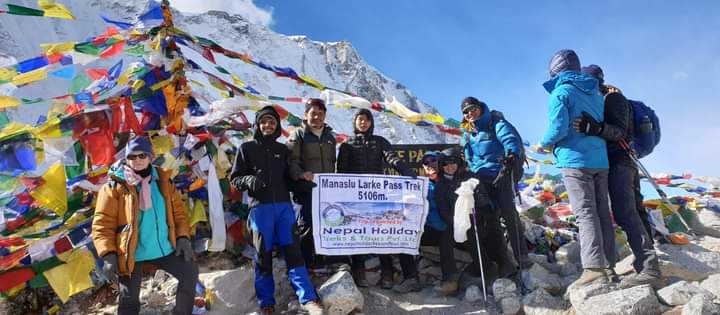


Short Manaslu Larke Pass Trek Overview
Take the scenic Manaslu larke la pass Trek, an inspiring off-the-beaten-track experience in Nepal. Enjoy unforgettable Himalayan vistas, unspoiled Tibetan heritage, and serene landscapes on this thrilling circuit trek. One of the several ways to tour this region is the Manaslu larke la pass Trek, which is also called Manaslu larke la pass Trek. It presents the beauty of the pristine mountain ranges and untouched Tibetan culture in all its glory Manaslu region is one such place which is likely to not fade away too soon if you have just been to. The region is equally gifted with natural wonders like lucrative landscapes, true vegetation, and all. Yet, the region is not in the awareness of many people in the world and that makes it one of the best off-the-beaten places in the world. If you’re seeking a distinctive and captivating experience in Nepal, this trek offers a refreshing change while providing the most striking and mesmerizing scenery along the way. Larke La Pass Trekking is a rare opportunity to explore a relatively new trekking region in Nepal, abundant in spectacular views along the border of Nepal and China.
This gives your title a positive spin (“Amazing”) and your meta description with the target keyword “Manaslu larke la pass Trek,” but in an interesting way to search engines and readers alike. If you’d like further adjustments, please let me know. Everest Base Camp Trek Each passing year, the Manaslu larke la pass Trek, has become popular due to the panoramic views of the snow-covered mountain on the way. It goes through this exquisite region step by step and covers all of the ecstasies lying there. Larke pass, the highest point of the trek, is the main attraction of the trek. From a low of 1310m to a maximum of 5106 m the Manaslu larke la pass Trek, gives you a remarkable view of a variety of landscapes. Surrounded by the immaculate views of peaks like Ngadi Chuli, Himalchuli, Bouddha Himal and Manaslu itself, Manaslu larke la pass Trek, is one of a kind. The pass that this trek leads to is known as the challenging pass to ascend. But, the view after the hardest climb is really paying one.
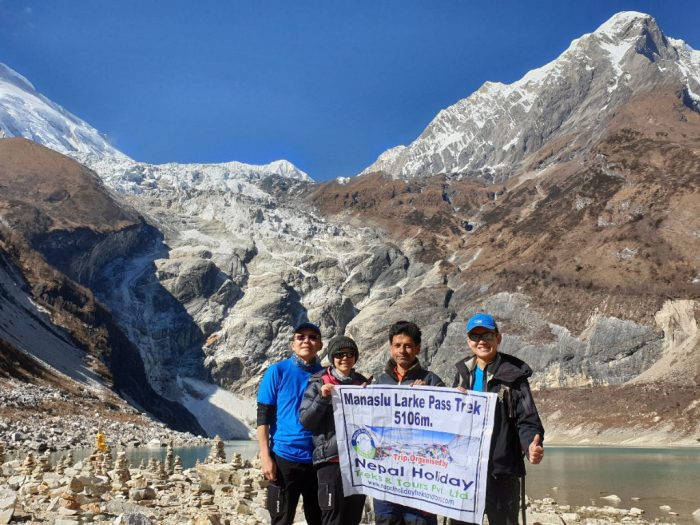
There in the various places of the trek are ancient monasteries and gompas waiting to be explored by the world. The monuments along the trail to Larkya La Pass often contain exquisite art on their walls and statues, showcasing the rich cultural heritage of the region. These artworks serve as windows into the history, traditions, and beliefs of the local communities. Exploring these monuments not only offers a glimpse into the past but also provides a deeper appreciation for the craftsmanship and creativity of the artisans who created them. It’s indeed an experience worth cherishing and sharing with others. During the trekking, the significant attractions Tibetan Sylla and Sama village, Amazing views of Manaslu and Ganesh Himal, Panoramic views of 10 peaks over 6000m, and the Larke La Pass itself. Moreover, the Manaslu region’s vibrant flora also has made the trek a scenic one. The woods are dotted with the Himalayan trees, flowers, and various animals as well. This wealthy vegetation will be encountered across the Manaslu larke la pass Trek, With proper preparation and a sense of adventure, this trek is an amazing opportunity to immerse you in the heart of the Himalayas.
Best Time to Trek Short Manaslu Larke Pass
Autumn (September to November): It is the most popular and generally the best time to trek in the Manaslu region. The monsoon has cleared the air by late September, visibility is superb, skies are a deep blue and temperatures are comfortable at altitude. October is the prime month, expect full teahouses, excellent trail conditions and some of the clearest mountain views of the year.
Spring (March to May): It is the second best season and our second recommendation. Rhododendron forests bloom spectacularly in the lower valleys in March and April, adding color to the already dramatic scenery. The weather is generally stable and warming. Snow on the Larke La is typically manageable by mid-march, though early season crossing can have more trail breaking required.
Winter (December to February): It is possible nut cold and demanding. The Larke La Pass will have significant snow and can be blocked entirely during heavy snowfall periods. Teahouses may be closed or minimally staffed. Only experienced cold weather trekkers should attempt a winter crossing.
Monsoon (June to August): It is not recommended. The trail is slippery, leeches are abundant in the lower forests, landslides can block sections of the route and the mountain views are largely hidden by cloud. Some trekkers enjoy the green lushness of a monsoon trek but it significantly increases the challenges without adding to the rewards.
Difficulty and Fitness Level Required for the Short Manaslu Larke Pass Trek
This is a moderate to challenging trek. It is not a technical mountain climb but it is a serious Himalayan undertaking that should not be underestimated.
What makes it demanding
The daily distances are significant, several days cover 20 kilometers or more over rough, often steep terrain. Day 5 (Namrung to Samagaun) involves 8 to 9 hours of walking and is the longest and most tiring day before the pass. Day 8 is the most physical and psychologically demanding, 8 to 9 hour day that begins before dawn, crosses a 5,106m pass and then descends steeply to Bhimthang. Day 9 is long, knee testing descent.
Altitude is the other major factor. By Day 7 you are sleeping at 4,460m and the pass sits at 5,106m. Altitude sickness (Acute Mountain Sickness or AMS) is a genuine risk for anyone regardless of fitness level. The itinerary is designed with appropriate acclimatization days built in but two people respond to altitude the same way.
Fitness Recommendations
You should be comfortable with 6 to 8 hours of hiking per day on consecutive before attempting this trek. Prior experience altitude is helpful but not strictly required. A good preparation routine would include regular hiking with a loaded daypack, stair climbing and cardiovascular exercise in the months before departure. If you have access to hills or mountains train on those rather than flat terrain.
You do not need to be an elite athlete but you need to be honestly fit, comfortable with discomfort and prepared for the fact that some days will be genuinely hard.
Why Choose Short Manaslu Larke Pass Trek?
If you are dreaming of a real Himalayan adventure but cannot commit to weeks on the trail, the Short Manaslu Larke Pass Trek is made for you. In just 10 days, you get to cross the legendary Larke Pass at 5,160 meters, the most spectacular highlight of the entire Manaslu Circuit without the longer time investment.
What makes this trek stand out is how genuine it feels. The Manaslu region is a restricted area, so the trails quiet and uncrowded. You will pass through the remote Tibetan influenced villages, ancient monasteries and dramatic glacial valleys, all under the watchful presence of Manaslu – the world’s eight highest mountain.
The route is challenging enough to feel like a true achievement but manageable for any fit and determined trekker. Standing at the top of Larke Pass with snow peaks all around you is one of those moments you simply can’t put into words.
It is short on days but absolutely bot short on experience. For trekkers who want the best of Manaslu without the full circuit, this is the perfect choice.
Outline Itinerary
Day 01 : Drive from Kathmandu to Machhakhola (869m) (7-8 hrs drive)
Day 02: Trek from Machhakhola to Jagat (1340m) (22.2 km / 13.7 miles, 6-7 hrs walk)
Day 03 : Trek from Jagat to Deng (1600m) (20.6 km / 14.7 miles, 5-6 hrs walk)
Day 04 : Trek from Deng to Namrung (2630m) (19.5 km / 12.1 miles, 6-7 hrs walk)
Day 05 : Trek from Namrung to Samagaun (3520m) (17.4 km / 10.8 miles, 8-9 hrs walk)
Day 06 : Trek from Samagaun to Samdo (3875m) (16.4 km / 10.1 miles, 4-5 hrs walk)
Day 07 : Trek from Samdo to Dharamsala (4460m) (11.7 km / 7.2 miles, 4-5 hrs walk)
Day 08 : Trek from Dharmasala to Bhimtang via Larke La Pass (5106m) (24.7 km / 15.3 miles, 9-10 hrs walk)
Day 09: Trek from Bhimtang to Dharapani (1970m) (15.7 km / 9.7 miles, 7-8 hrs walk)
Day 10: Drive from Dharapani to Kathmandu (9-10 hrs drive)
Manaslu Trek Alternatives
While the Manaslu Larke Pass trek is famous for its dramatic high- mountain crossing , these alternatives routes offer equally unforgettable experiences – whether you want solitude , culture or diverse landscapes.
| Trek Route | Duration | Difficulty | Max Altitude | Best for | Crowd level |
| Manaslu Larke Pass Trek | 12-16 days | Challenging | 5,106 m | Adventure Seekers | Low |
| Tsum Valley Trek | 10-14 days | Moderate | 3,700 m | Culture and Spirituality | Very low |
| Manaslu Trek (no pass) | 7-10 days | Moderate | 3,500 m | Short Adventure | Low |
| Nar Phu Valley Trek | 12-15 days | Challenging | 5,300 m | Remote Exploration | Very low |
| Annapurna Circuit Trek | 12-18 days | Moderate to Challenging | 5,416 m | Scenic Variety | Medium |
Which Alternative Trek is Best ?
- For culture and spirituality: Tsum Valley
- For moderate adventure: Manaslu Circuit ( without pass )
- For raw wilderness: Nar Phu Valley
- For variety and classic trekking: Annapurna Circuit
Short Manaslu Larke Pass Trek Highlights
- Scenic trails and diverse landscapes with views of Manaslu, Ngadi Chuli, Himalchuli, Bouddha Himal, and others
- High Mountain Pass: Larkey La Pass, 5,160 meters (16,924 feet) with spectacular views, and encircling Mt. Manaslu, the world‘s eighth tallest peak.
- We will provide you with a (20 degree sleeping bag) and a duffel bag for the trekking excursion, but you must return them after completing the trek.
- Crossing the Larkya La Pass and gushing streams and breathtaking waterfalls
- Experiences the Tibetan influenced culture by the Sherpa’s, Tamangs of the region.
- Explore to Buddhist shrines, monasteries, mani walls.
- Trekking towards one of the most beautiful trekking regions of the world.
- Rich in religious and cultural diversity and containing semi Tibetean culture, alongside traditional life-patterns of the Gurung and the Bhotias within Manaslu Restricted at this area that stands exclusive is to see it untouched and virgin in natural splendor.
- Explore the diverse exotic flora and fauna in the restricted Manaslu Conservation Area.
- Find your spiritual self in the most well-known monastery of the region, Lho Gaun – Ribung Gompa, and collect the colorful collection of religious artwork.
- Many suspension bridges to cross, walking along the Budi Gandaki River, exploring the dense Rhododendron forest, and the variety of plants and animals there.
Short Manaslu Larke Pass Trek Itinerary
Expand allDay 01 : Drive from Kathmandu to Machhakhola (869m) (7-8 hrs drive)
Here we go, the adventure starts for Manaslu Region! It all begins after Kathmandu to Machhakhola. The bus will find its way through a neighbor’s green hills, rivers, settlements, and many more. It’ll be a comfortable ride until Aarughat, the bumpy and rough road start from there. But the experience of bumpy road’s will be very new for you, and you may enjoy it.
After several hours, you will reach the destination where you have to spend an the whole night, Machhakhola. It’s also the starting point of Manaslu Larke Pass Trekking.
Day 02: Trek from Machhakhola to Jagat (1340m) (22.2 km / 13.7 miles, 6-7 hrs walk)
The first mornings outside Kathmandu will make you hit the trail of the trek for the very first time. After breakfast at Machhakhola, you’ll join the trail that moves with the Buri Gandaki River. From there, you’ll enter the forest before the arrival of Gurung’s village. Your trail on the bank of Budhi Gandaki River and pass the beautiful village of Tatopani where you can get the chance to fresh in a natural hot spring.
After refreshment, you’ll start the trek by crossing a suspension bridge to Doban. The bridge is slightly rough and difficult as you have to walk in a landslip area. After that we’ll reach to Dobhan and the trails go continue till we reach Jagat, a very beautiful place with stone flag street. We overnight stay here.
Day 03 : Trek from Jagat to Deng (1600m) (20.6 km / 14.7 miles, 5-6 hrs walk)
Early morning in Jagat and have breakfast to start the day at the right time to reach. Thereafter, you’ll start your trek to reach Pewa through Salleri, Sirdibas, and Phillim. Explore to gompas and many prayer flags, and You have to show your trekking permits at Pewa to proceed after. Getting your permits checked and you’ll enjoy the trek more which leads through a wood of pine and rhododendron. Then you’ll come to Tsum valley the point of where the other popular trek of the region.
And it will not take much from there to reach Pewa where you have to end the trek of the day. Pewa is a popular for its special Dal Bhat. You’ll enjoy that night meal and if time will manage and you interested you’ll interact with the people, make talks and warm your body around the fireplace.
Day 04 : Trek from Deng to Namrung (2630m) (19.5 km / 12.1 miles, 6-7 hrs walk)
After breakfast, the trek started with bamboo forests to a suspension bridge and a steep. The trail your way to the Ghatta Khola River. Walking through some villages with Mani Stones carved into wayside rocks. You will be surrounded by towering peaks, forests, and waterfalls. The trail can be challenging at times, but the beauty of your surroundings will be breathtaking.
Moving safely out of that part, you’ll join an ascending hill which leads to take around 1 hour. The climb is not straight, its rounding and easier one to trek. Through settlements like Rana, Bihi Phedi, and Ghap and you’ll comfortably move ahead at Ghap. The place is very slippery lies in the landslide area and the special is the Prok Village serves as a viewpoint for the (Mt.) Siringi Himal. You’ll follow a zigzag trail and one last steep trek to reach Namrung village. We’ll stay the wholenight there.
Day 05 : Trek from Namrung to Samagaun (3520m) (17.4 km / 10.8 miles, 8-9 hrs walk)
The journey from Namrung to Samagaunstarts! the trail through the rugged beauty of the Manaslu region in Nepal, terraced fields and picturesque villages, ascends, offering breathtaking views of the surrounding Himalayan peaks. Leaving Namrung behind and your route will going through lush forests of rhododendron and pine, with the sound of rushing mountain streams .
On route, you’ll pass through beautiful Gurung villages where you can experience the warm hospitality of the local Gurung and Tibetan communities with colorful prayer flags fluttering in the bridge and monasteries offering moments of serenity and reflection of beauty. Finally, after a rewarding trek, you’ll reach Samagaun, a picturesque village, with towering peaks of the Manaslu range. Here, you can immerse yourself in the unique culture, reflection of beauty and lifestyle of the mountain people. Sama Gaun will warm welcome for you. Staying overnight at a tea house
Day 06: Trek from Samagaun to Samdo (3875m) (16.4 km / 10.1 miles, 4-5 hrs walk)
After having spent another night in Sama Gaun, you’ll now finally leave the village and head towards Sambo which leads through tree line behind to ascend to a ridge across a wooden bridge of the Budhi Gandaki River and we can see a powerful large stream crashing on the Rocky River bed.
You’ll walk on the high valley as well as enjoying awesome mountain peaks to reach Samdo. It is a small village with Tibetan influence. Overnight you stay at tea houses.
Day 07: Trek from Samdo to Dharamsala (4460m) (11.7 km / 7.2 miles, 4-5 hrs walk)
The trek starts with having breakfast and starts with our experienced guide. Firstly, your trail will passes the icy streams and then to drier barren lands. The day’s trek is just 4 hours and easy for you. Rather than rushing, you’ll do a slow trek by viewing of every scenic view around. You’ll be crossing two streams.
After a few hours of good walk, the village known as old of Larke Bazaar, a trading village in Tibet during the early days. From here, a steady climb to Dharmasala This journey is not just about reaching the destination, but also about enjoying the journey and immersing yourself in the magnificent natural beauty that around you .
Day 08: Trek from Dharmasala to Bhimtang via Larke La Pass (5106m) (24.7 km / 15.3 miles, 9-10 hrs walk)
The trek today is on challenging terrain, so you will wake up early and head start. You’ll trek through valleys and villages which marked by prayer flags and carefully descend to the four frozen lakes. So the trekkers should be physically fit, be prepare and you should follow the guide’s advice of what you’ll doing.
The trail leads us through the rocky steep and snow-covered hills. Then after you’ll finally reach the Larkya La Pass, which offers breathtaking mountains peaks of Himlung Himal , Cheo Himal, Annapurna II and many more. As well as huge Larkya La glacier with ice falls valleys. And all of the struggle will be paid off from the top after viewing the scenic beauty. From there you can get enough views of the entire Manaslu region, the neighboring Annapurna regions mountain and landscape. We’ll cross the moraines and steep down to gentler meadows via. The arrival of bhimtang with The widening valley, mani walls, and sight of human settlements.
Day 09: Trek from Bhimtang to Dharapani (1970m) (15.7 km / 9.7 miles, 7-8 hrs walk)
The 10th day (last day) of the Manaslu Circuit Trek begins! the trail leads to a downhill hike through lush green forests, verdant rhododendron and pine forested path till we cross the Dudh Khola (river). The first Gurung Goa village you will come across since Samdo, will be reached by following your path. The valley gets more agricultural and fertile as you travel past the beautiful fields.
This trial is also known as the meeting point of the Annapurna circuit. We can see the Marsyandi valley below from this trial. Once we reach Dharani Village, we check into Tea house and stay there for the whole night.
Day 10: Drive from Dharapani to Kathmandu (9-10 hrs drive)
The journey back to civilization begins. The drive back to Kathmandu from Dharapani will be a lengthy one, covering a distance of 200 kilometers (several hours). From Dharapani drive heads down to Besisahar, from here you’ll change of vehicle after driving on a jeep. From Besisahar, we will on regular tourist bus from there.
If the above Short Manaslu Larke Pass Trek itinerary does not meet your needs, we can design individualized travel plans based on your preferences and specifications.
Plan My TripShort Manaslu Larke Pass Trek Cost Includes
- Three meals a day- Breakfast, Lunch, Dinner during the trek.
- Accommodation in tea house during the trek private room.
- From Kathmandu to Machha Khola by local bus and Dharapani to besisahar by local jeep and besisahar to Kathmandu by local bus.
- Manaslu special Permits.
- Manaslu conservation area permits & Annapurna Conservation area permits and manaslu local government permits.
- A highly Experience, helpful, knowledgeable, friendly, English speaking well trained, government license holder Guide with all his salary, food, Drinks, accommodation, equipment, transport, and insurance.
- You will be under observation with a pulse oximeter to have your oxygen levels and heart rate measured twice a day during the trek. This is to catch the signs of Altitude Mountain Sickness (AMS) early, thus making trekking safer.
- Normal First aids kit box.
- Arrangement of Emergency helicopter service (paid by your travel insurance company).
- All taxes and company service charges.
- Nepal Holiday T-shirt & Trekking Map.
Short Manaslu Larke Pass Trek Cost Excludes
- International airfare and visa fees
- Accommodation and foods in Kathmandu.
- Airport pickup and drop service.
- Personal expenses of bar and beverage bills, wifi, hot shower, bottle of water, extra porters,
- Laundry or any other things which are not mentioned by the company.
- A strong, helpful, porters with proper safety equipment and walking equipment his salary, food, drinks, accommodation, insurance, (one porter for two people he will carry bag pack max 20-25kg).
- Your trekking gears and extra nights in a certain destination.
- Your travel insurance which should include the emergency rescue.
- Tips for your guide and porters which is compulsory.
- Entrance fees during the sightseeing.
- Extra expenses due to any event such as strikes, weather conditions, or flight delays.
Short Manaslu Larke Pass Trek Additional Info
Food and Accommodation on the Short Manaslu Larke Pass Trek
The entire trek is a teahouse trek, meaning you will stay in a locally owned lodges along the route and eat from their menus. This is one of the things that makes trekking in Nepal so special – you are sleeping and eating in real communities, not camping in isolation.
Accommodation ranges from comfortable to very basic depending on how high you go. In the lower and middle sections (Machhapuchhre through Namrung), teahouses are generally well maintained with private or semi-private rooms. As you move higher, particularly at Dharmasala, facilities become more basic. Expect simple wooden rooms, shared squat toilets and cold or lukewarm bucket showers at the higher elevations. Sleeping bags are essential throughput the trek.
Food is simple, hearty and surprisingly good. Dal bhat – the traditional Nepali meal of lentil soup, rice and vegetable curry is available everywhere and is the fuel for high altitude trekking. Most teahouses also serve noodle soups, pasta, fried rice, porridge, pancakes and eggs. Vegetarian options are available at everywhere and is the best fuel for high altitude trekking. Most teahouses also serves noodle soups, pasta, fried rice, porridge, pancakes and eggs.
Vegetarian options are available at every stop. Meat is technically on many menus at lower elevations
But we generally recommend sticking to vegetarian food at altitudes as freshness can’t always be guaranteed in remote areas.
Drinking water: Boiled, filtered or bottled water is available at all teahouses. We recommend carrying a quality water purification solution or filter as a backup and avoiding tap water throughout.
Permits Required for the Short Manaslu Larke Pass Trek
To trek the remote Himalayan region around Mount Manaslu and cross the famous Larkya La Pass, trekkers must obtain several official permits issued by the Nepal government. These permits are mandatory and checked along the trail.
Required Permits
- Manaslu Restricted Area (RAP)
Mandatory because Manaslu is a controlled trekking region near the Tibetan border.
- Manaslu Conservation Area Permit ( MCAP)
Required to enter the protected conservation area that preserves wildlife, forests and local culture.
- Annapurna Conservation Area Permit ( ACAP)
Needed because most Larke Pass itineraries exit via Dharapani , which lies inside the Annapurna region.
Important Rules and Regulations
- Solo trekking is not allowed in the Manaslu region
- You must trek with a licensed guide
- A minimum of two trekkers is required to obtain the restricted area permit
- Permits must be arranged through a registered trekking agency
Gadgets and Electronics for the short Manaslu Larke Pass Trek
When trekking through the remote Himalayan trails around Mount Manaslu and crossing the high- altitude Larke Pass , carrying the right gadgets can make your journey smoother, safer and more enjoyable . Because electricity is limited in mountain villages , smart packing of lightweight electronics is essential.
Essential Gadgets to carry
For a comfortable and hassle free trek , bring only the most useful devices :
- Smartphone for photos , offline maps and communication
- Power bank ( 10,000-20,000 Mah) to keep devices charged
- Headlamp for early morning starts and night time use
- Camera if you want high quality mountain photos
- Charging cables + universal adapter for lodge charging points .
What to avoid bringing ?
To keep your backpack light and comfortable , skip :
- Heavy Laptops
- Large camera kits
- Multiple gadgets you won’t us
Transportation for the Short Manaslu Larke Pass trek
Reaching the trailhead for the Short Manaslu Larke Pass Trek is part of the adventure itself. Because the region around Mount Manaslu is remote and less developed than other trekking areas, transportation combines scenic drives with classic Himalayan trekking routes.
Kathmandu to Trek Starting Point
Your journey usually begins with a long but scenic drive from Kathamndu to Soti Khola or Machha Khola . Depending on road conditions and itinerary, transportation options include :
- Private Jeep ( Recommended ) : Faster, more comfortable and ideal during monsoon or rough road conditions.
- Local Bus : Budget friendly but slower and more crowded
- Shared Jeep : Mid – range options balancing cost and comfort
The drives takes 7 -10 hours , passing rivers , terraced farms , hillside villages and mountain landscapes.
Transportation During the Trek
Once you reach the trailhead , all transportation is on foot , which is part of the authentic trekking experience . Trails wind through forests , suspension bridges and mountain paths leading toward the dramatic high- altitude crossing of Larkya La Pass.
There are :
- No vehicles on trekking trails
- No road access in higher villages
- Only walking paths used by locals , trekkers , yaks and mules
Return Journey
Most itineraries end at Dharapani or near by road- access points. From there :
- Jeep transfer back to Kathmandu is the most common options
- Some routes continue towards Besisahar before returning
Road conditions in remote Himalayan regions can change depending on weather and season . Choosing a private jeep transfer is usually the safest and most comfortable option, especially for international travelers.
Insurance Requirements for the Short Manaslu Larke Pass Trek
Travel insurance is not optional on this trek, it is essential. Before departing make sure your policy covers all the following:
- High altitude trekking up to at least 5,500m
- Emergency helicopter evacuation
- Medical treatment costs
- Trip cancellation and curtailment
- Personal liability and loss of gear
Keep a physical and digital copy of your insurance policy and the emergency contact number with you at all times on the trail. Your guide will also carry information. We recommend checking your policy carefully before travel and ensuring helicopter evacuation is specifically included, some generic travel insurance policies exclude this or cap it at amounts well below the actual cost.
Altitude and Acclimatization
Altitude sickness is the main medical concern on this trek. The route gains elevation steadily over the first five days which helps with gradual acclimatization and the shorter day 6 and day 7 stages are deliberately paced to give your body time to adjust before the pass crossing.
Symptoms of Acute Mountain Sickness (AMS) include headache, nausea, dizziness, fatigue and poor sleep. These can occur at any altitude above 2,500m and are not a reflection of fitness very fit people can suffer from AMS just as much as less fir trekkers.
Golden rules at altitude:
- Ascend gradually and never push through worsening symptoms
- Hydrate consistently and drink more water than you think you need
- Avoid alcohol, especially in the first days at higher elevations
- Inform your guide immediately if you feel unwell
- The only definitive treatment for serious AMS is descent
We carry supplemental oxygen and basic medical supplies on all our Manaslu treks. Our guides are trained in wilderness first aid and altitude sickness recognition. In case of emergency, helicopter evacuation from the upper valley is available, which is why proper insurance coverage is non-negotiable.
How to prepare on Manaslu larke la pass Trek?
The Manaslu larke la pass Trek, a challenging trek that requires a good level of physical fitness. You should start preparing yourself at least a few months before the trek by doing regular exercises, including cardio, strength training, and endurance exercises. Proper gear and equipment are essential for a comfortable and safe trekking experience. You should invest in quality trekking gear, including warm and waterproof clothing, comfortable hiking boots, a sleeping bag, a backpack, and trekking poles. The trek involves a significant gain in elevation, so you should take precautions to prevent altitude sickness. Drinking plenty of water, acclimatizing slowly, and taking the necessary medication can help reduce the risk of altitude sickness. The area has limited food and water options, so you should carry adequate supplies of water and high-energy snacks. Training and experience: The trek requires a good level of trekking experience and navigation skills, so if you’re a novice trekker, you should consider taking a guided trek with a reputable trekking agency.
Why choose us for the Short Manaslu Circuit Trek?
We are a Nepal based trekking agency with years of experience organizing trips in the Manaslu, Annapurna and Everest region. We are not a booking platform or a middleman. We are the people who actually organize and run your trek. Every guide we work with is government licensed, locally knowledgeable and experienced specifically on the Manaslu Circuit.
We handle every permit, every vehicle, every teahouse booking and every piece of logistics so that all you need to do is show up, put one foot in front of the other and enjoy one of the most magnificient trekking routes in the Himalayas.
If you have any questions about this trek, about fitness, about timing, about costs or simply about whether this is the right route for you – please reach out. We would rather answer twenty question before you book than have you arrive underprepared. This is an extraordinary part of the world and we want your experience of it to be everything it should be.
Upcoming Departures
Short Manaslu Larke Pass Trek Gallery
Short Manaslu Larke Pass Trek FAQs
Why trek with Nepal holiday treks and tours?
We have a great track record of leading treks with experienced and qualified guides, so all your travel needs are professionally taken care of. We are a certified sustainable travel operator and are committed to responsible tourism and actively contribute to the local community through various trekking.
Can I Rent a Sleeping Bag, Down Jacket, and Duffle Bag?
Yes, sleeping bags, down jackets, and duffle bags can be hired. for the trekking but you need to return to the office
What is the distance of Manaslu Larke Pass Trek?
The Manaslu Larke Pass Trek covers approximately 177 kilometers (110 miles) round trip. The trek starts from Soti Khola (700 meters) and ends at Besisahar (800 meters), passing through the beautiful Manaslu Conservation Area, crossing the Larke Pass (5,160 meters), and visiting the towns of Sama Gaon and Samdo. The trek typically takes 14–18 days, including acclimatization days to adjust to high altitude.
What are the other documents that I have to keep with me for trekking in Nepal?
You will be needing a valid passport, a visa for Nepal, and trekking permits. For the Manaslu Larke Pass Trek, you need the Manaslu Restricted Area Permit, Manaslu Conservation Area Permit (MCAP), and a TIMS card. You should keep insurance covering high-altitude trekking along with emergency helicopter evacuation. Keep your Lukla flight tickets and some extra passport-sized photos for permits.
What is the best time to trek around the Manaslu Circuit?
It is best during spring-from March to May-and autumn-from September to November. These seasons bring in clear skies, stable weather conditions, and breathtaking mountain views.
Do guides speak English?
Yes, most licensed trekking guides in Nepal can speak fluent English. Guides who can speak other languages (French or Spanish) can also be arranged upon an earlier request. Guides are trained to clearly communicate with you during the time of the trek for smooth trekking.
How does paying for a private helicopter charter work?
To book a private helicopter charter, you’ll need to arrange it in advance with a reliable operator. Typically, you’ll pay a deposit when booking and the remaining balance before the flight. The cost depends on the flight route, duration, and number of passengers. It’s important to check the cancellation policy and ensure your travel insurance covers helicopter evacuation if necessary.
Is There a Place to Store Things Not Needed for the Trek?
Yes, most hotels in Kathmandu provide free storage facilities where you can leave any items that you will not be needing during the trek.
What physical training is required for trek preparation?
The physical training will involve cardiovascular exercises such as running, swimming, and cycling, along with muscle-strengthening exercises like squats, lunges, and core workouts. Emphasize endurance by hiking with a loaded backpack. Start training 6–8 weeks prior to your trek, building up gradually. Flexibility exercises, including yoga or stretching, will also help prevent injuries, while practice hikes on uneven terrain will better prepare you for the conditions.
Must I have any special permit to go on trekking in the Manaslu region?
Yes, you need a Restricted Area Permit, a Manaslu Conservation Area Permit, and an Annapurna Conservation Area Permit. A minimum of two trekkers accompanied by a licensed guide is mandatory.
What Should I Do with My Passport, Medications, and Other Valuable Belongings?
It is advisable to carry a copy of your passport, travel insurance, and other important things in your daypack. If you are taking any daily medication, please bring it along with you in your daypack for your ease. You can leave unnecessary stuff in your hotel or our Kathmandu office safely.
How difficult is the Manaslu Circuit trek?
The trek is moderately to highly challenging in nature. There are steep ascents, high altitudes of up to 5,160 meters above sea level at Larkya La Pass, and long days trekking require one to be in good physical condition and well enduring.
What kind of accommodation is available on the trek?
Teahouse treaks offer basic facilities: clean rooms with shared facilities. Facilities are pretty basic, though most tea houses will have warm meals, comfortable beds, and charging facilities for your electronics.
How do I get physically prepared for the Manaslu trek?
Start training at least 4–6 weeks before the trek. Do endurance exercises such as hiking, running, and cycling, along with strength training. Also, train with a backpack to get accustomed to the conditions of trekking.
Do Your Guides Have Official Trekking Certifications and First Aid Training?
Yes, our trekking guides are professional-grade license holders certified by the Hotel Management and Tourism Center. They have completed a 45-day intensive training course and are specialists in high-altitude first aid. They are English- and other language-speaking (on request at an additional cost).
What If I Fall Sick in the Mountains?
Our guides are on standby 24/7 to assist you. They carry a first-aid kit and an oximeter to measure oxygen levels, to ensure that trekkers are in a fit state to carry on. In the event of serious altitude sickness or any other serious medical condition, our guides will immediately call our Kathmandu office. We are prepared to arrange emergency transportation, or helicopter evacuation if necessary.
Is It Possible to Get Private Rooms During the Trek or in Kathmandu?
Private rooms in teahouses along the hiking trail cannot be guaranteed, especially during the high seasons. You may get private rooms without any extra fee during the off-season. Most of the teahouses have twin-sharing rooms, with dormitory-style accommodation in some areas. If you wish to get a private room in Kathmandu, we can arrange that for an added fee per night
What is Your Cancellation trip?
There is no refund of a 20% deposit fee in the cancellation of the trip due to any other reason but we welcome rescheduling your trip on any future day. After paying the full cost of any trip, you will receive a refund but the cancellation charge 20% is deducted from you. You have to give written notice of cancellation in order to cancel any trip.
Can I do the trek alone, or do I need a guide?
Independent trekking is not allowed in the Manaslu region because it is a restricted area. As per the rule of law, one licensed guide and at least one other trekker are compulsory.
What should I prepare for the Manaslu Circuit trek?
The basic things one should bring are strong trekking boots, warm layers, a sleeping bag (rated for -10°C), trekking poles, a first aid kit, and water purification tablets. Lighter weight gear is encouraged to lighten the load.
Are there any health risks on the trek?
Altitude sickness is the primary concern, especially above 3,000m. Acclimatize properly, stay hydrated, and ascend gradually. Basic medical facilities are available in some villages, but major emergencies may require evacuation.
How long does the Manaslu Circuit trek take?
The trek usually takes 14–16 days, depending on the itinerary and acclimatization needs. This includes 2–3 rest days to adapt to the altitude.
How does Manaslu Circuit compare to other treks such as Everest or Annapurna?
The Manaslu Circuit is less crowded and more remote, offering an off-the-beaten-path experience. Combining cultural immersion, stunning Himalayan scenery, and challenging terrains, it offers an ideal adventure for adventure-seekers
How to obtain a special permit for the Manaslu Circuit Trek?
Manaslu Circuit Trek is a unique, restricted area where a number of permits are required. A Manaslu Restricted Area Permit cannot be taken by individual trekkers themselves but needs to be pre-arranged through a licensed trekking agency in advance. This agency will manage all the papers and fees on behalf, which vary according to the time of the year; higher costs are paid during peak times. MCAP can be obtained either from the agency or directly at the Manaslu Conservation Area Office in Soti Khola. But the TIMS card is necessary for all trekkers to Nepal, and one can get this from the Nepal Tourism Board or the agency itself.
What options are available in case of emergency rescue on the Manaslu Circuit Trek?
In serious situations, helicopter rescue from the nearest town, such as Namrung or Samagaon, is quicker and feasible, though not inexpensive. Helicopters can be arranged through your trekking agency or by calling the emergency services. Where a helicopter cannot be arranged or the condition is considered less critical, then evacuation will be by means of being taken by porters or mules to the nearest roadhead and then taken by vehicle to Kathmandu. Insurance It is important to have insurance for high-altitude trekking and for emergency evacuation. A number of insurance companies offer such policies, including those based in Nepal.
What should I know about booking my flights to / from Nepal? Di I need to plan extra days in case of delays?
We recommend adding a one- to two-day buffer period before and after your trek in case of unforeseen flight delay, especially in remote areas like Lukla. This also leaves some time to buy last-minute gear. We are not responsible for missed overseas flights due to unforeseen cancellations or delays.
What is the temperature rating of the sleeping bag that you lend to trekkers?
The sleeping bags we provide for trekkers are designed to withstand temperatures of up to -10°C (14°F). If you require more heat, our guides can arrange additional blankets at the teahouses on the trekking route.
How do I cope with the weather in Manaslu Circuit Trek?
Manaslu Circuit’s climate varies with the altitudes. Here is what one can expect :
Lower altitudes (up to 2,500 meters): temperatures up to 20°C during the day, dropping to 5°C at night. Higher altitudes (above 3,000 meters): below freezing at night, daytime temperatures around 5 – 10 +°C. Winter-December to February, is extremely cold while the summer monsoon- June to August, may bring rain and difficult trail conditions.
Pack accordingly: pack clothes for variable temperatures, waterproof for the monsoon, and warm for high altitude.
What sort of insurance do I need? How can I obtain a policy?
Travel insurance is an absolute necessity for all of our trekking trips. Your policy must include medical evacuation to the highest altitude that you will reach on your trek. It should also include coverage for unexpected expenses such as flight cancellations due to bad weather, medical attention, theft, loss, or damage to your belongings. Good travel insurance companies usually offer policies online so you can purchase coverage in advance.
What are the necessary items that I should pack for my trip?
For a full list of equipment required, refer to the Equipment page. If you prefer to buy or hire trekking equipment in Kathmandu, ensure you set aside extra time before beginning your trek.
What type of daypack should I bring?
When selecting a daypack, pick one that is light in weight but that still has enough space to bring your daily essentials such as water, snacks, extra clothing, and personal items.
Is it necessary to bring toilet paper for the trek?
While you can purchase toilet paper at teahouses throughout the trek, it is costly. We recommend that you bring your own supply. Additionally, don’t forget to bring personal hygiene products like soap, towels, hand sanitizer, and wet wipes.
If I am sick can I continue the trek after a day’s rest?
If you fall ill, the decision is based on your status. Altitude sickness requires an immediate descent to a lower elevation, and recovery can take several days. For group trekkers, inquire with your guide whether it is possible to rejoin the group. Private trekkers with a flexible schedule can possibly resume once they recover.
What kind of trekking boot would be best for the trek?
Proper footwear is crucial for an effective trek. Invest in sturdy, comfortable trekking boots with a water-resistant lining. Hard-solved ankle-supported boots are ideal for trekking over rough terrain, allowing comfort and stability on the trail
Short Manaslu Larke Pass Trek Equipment Lists
Pack light, but make sure you bring the essential clothing and equipment needed for changing weather and high-altitude conditions. The following checklist covers the recommended gear for a comfortable and safe trek.
Note: If the sleeping bag, down jacket is lost or damaged, a compensation fee of USD 150 per item will be charged.
Sleeping Gear & Bags
- Four-season (0°C) sleeping bag and puffy down jacket (recommended)
- Daypack (35–45 liters recommended) with rain cover
- Sleeping bag liner
Head & Upper Body
- Sun hat or cap
- UV-protection sunglasses
- Warm knitted hat or beanie
- Headlamp with spare batteries
- Scarf, neck gaiter, or Buff
Torso
- Technical-fabric base layers suitable for the season
- Quick-drying T-shirts or shirts: 2 short-sleeve and 2 long-sleeve
- Fleece jacket or pullover
- Waterproof and windproof outer-shell jacket
Lower Body
- Technical-fabric thermal base layer
- Comfortable pants for wearing inside teahouses
- Waterproof and windproof shell pants
- Hiking pants: 2 pairs
- Hiking shorts
Hands
- Wool or technical-fabric liner gloves
- Insulated hard-shell outer gloves for colder conditions
Feet
- Warm wool or technical-fabric socks
- Liner socks, such as silk, if preferred
- Waterproof trekking or hiking boots
- Hiking socks
- Gaiters for dust, rain, or snow
- Microspikes or ice cleats, especially from November to March
- Comfortable casual shoes
Undergarments & Sleepwear
The quantity of clothing can be adjusted according to your personal preferences and laundry opportunities during the trek.
- Quick-drying technical-fabric underwear
- Sports bras for women
- Pajamas or comfortable sleeping clothes
First Aid & Personal Medications
Our guides carry a basic first-aid kit and essential medications, but bringing your own personal medical supplies is strongly recommended.
- Sunscreen
- Personal ointment or basic skincare products
- Lip balm
- Suitable medication for a dry mountain cough
- Mosquito repellent for Kathmandu and lower-altitude areas
- Personal prescription medications
Other Essentials
- Passport
- Extra passport-sized photographs
- Reusable water bottle
- Toiletry kit
- Toilet paper (2 rolls)
- Water purification tablets or a UV water purifier
- Hydration bladder
- High-protein snacks, such as protein bars or nuts
- Quick-drying towel
- Trekking poles
- Earplugs
- Pillowcase
- Waterproof or dry bags for important documents, electronics, and money
- Airline tickets and copies of travel documents
Optional Items
You can purchase or rent additional trekking gear in Nepal if needed. Thamel, Kathmandu’s main tourist hub, has a wide selection of trekking equipment at reasonable prices, and your guide can assist you with purchasing any last-minute supplies.
- Power bank or spare batteries
- Camera and mobile phone
- Thermos flask for hot water
- Books or playing cards
- Comb
- Binoculars
- Pee bottle or pee funnel for women
- Whistle
- Thermos flask for hot water
Tip: Avoid overpacking. Choose lightweight, quick-drying, and versatile clothing that can be layered according to the temperature and altitude.
Similar Tours
Manaslu Trek via Larke Pass Trek
Manaslu Trek via Larke Pass Trek is a memorable trek that offers trekkers a chance to see one of...
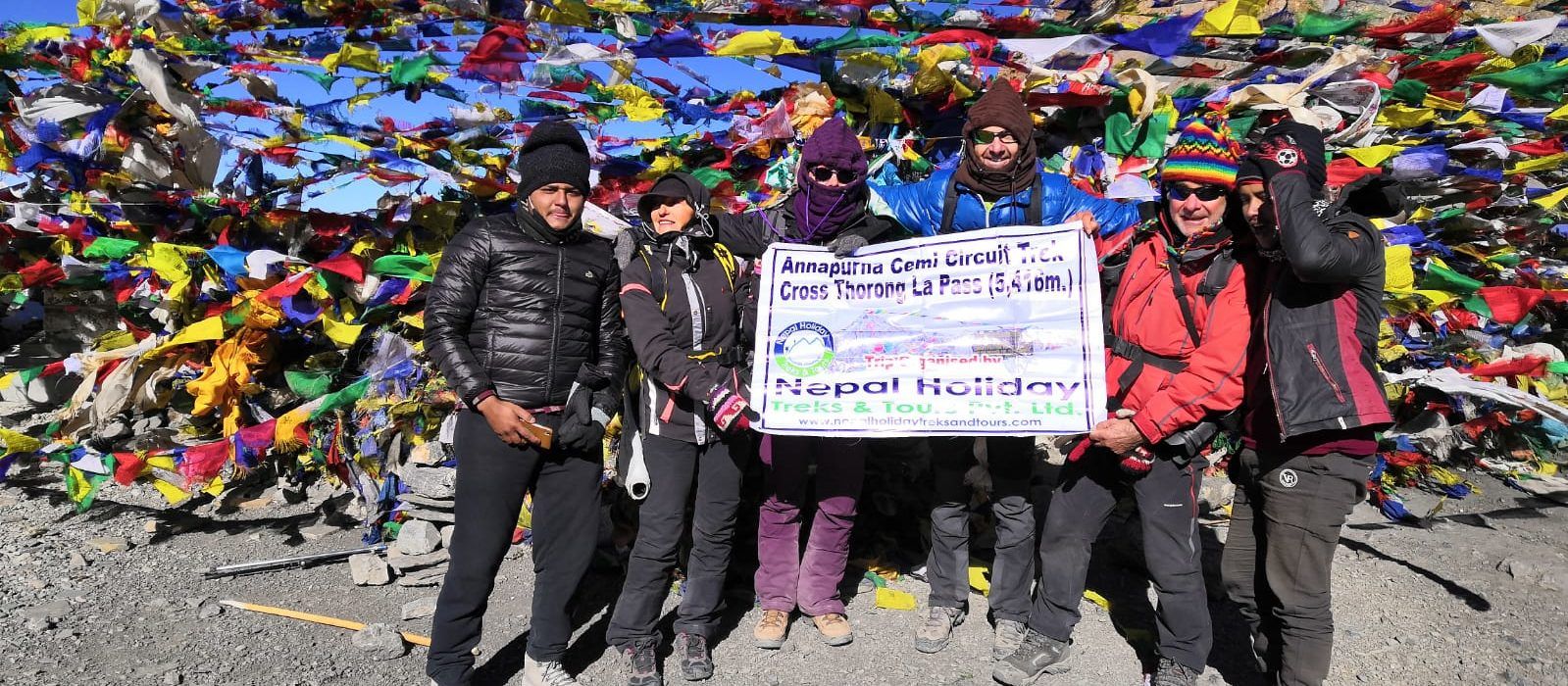
Annapurna Circuit Trek – 29 Days
The Annapurna Circuit Trek is one of the most breathtaking and rewarding trekking journey in the World. In this...
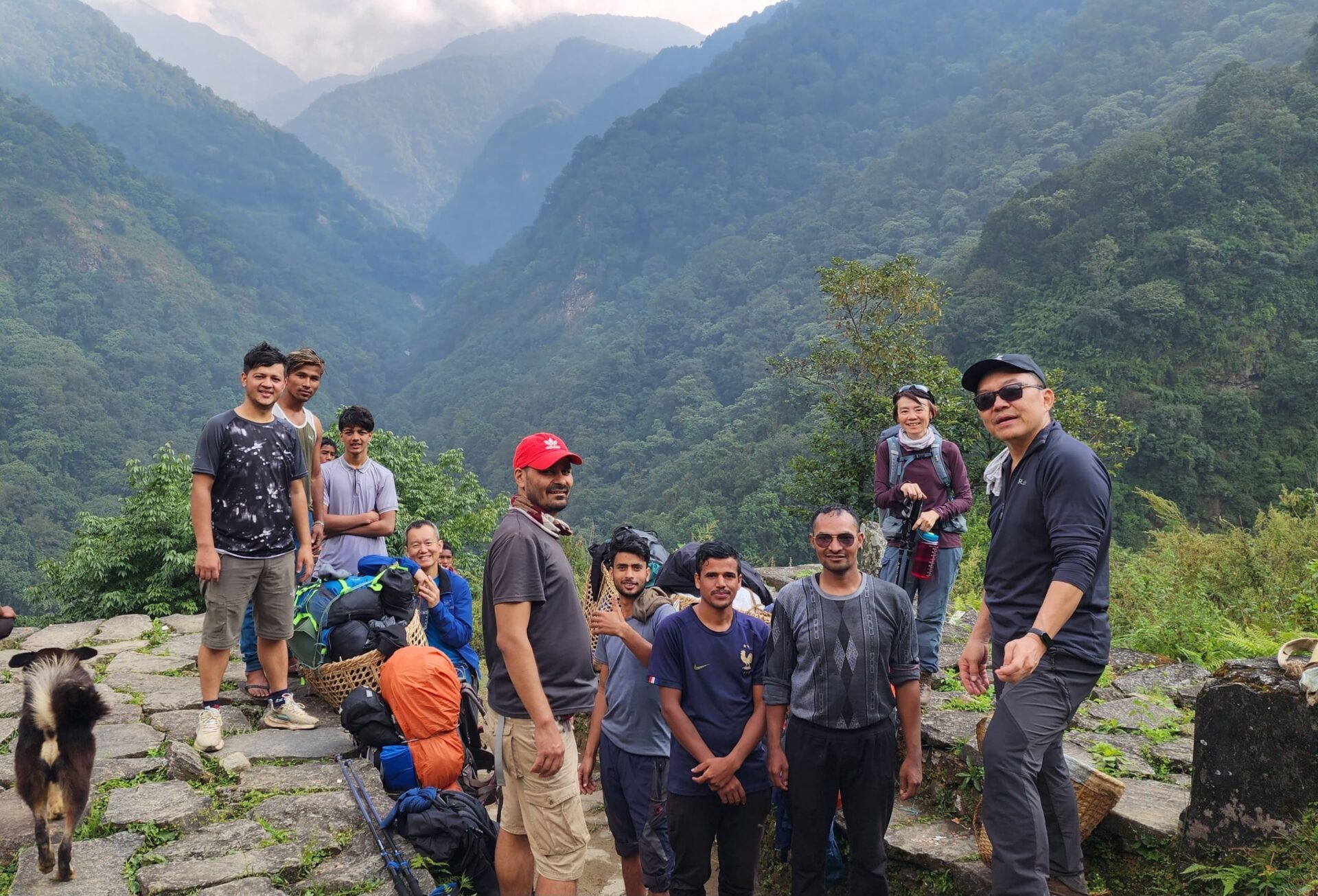
Manaslu With Annapurna Circuit Trek
The Manaslu with Annapurna Circuit Trek is an excellent means of experiencing two of Nepal’s most renowned trekking areas....
Nar phu Valley Trek – 13 Days
Nar Phu is one of those regions in Nepal that the vast majority of trekkers are completely unaware of....
Short Manaslu Tsum Valley Trek
An 17 days trek, the Short Manaslu and Tsum Valley Trek engages trekkers to an adventure close to Mt....