
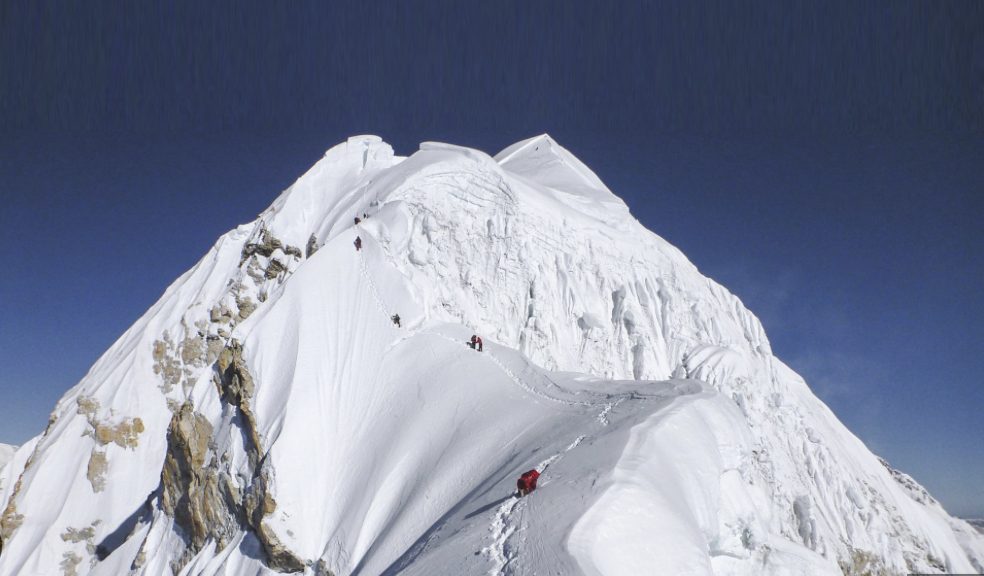

Baruntse Expedition Overview
The formidable mountain of Mount Baruntse lies within the less touristy Makalu Barun National Park of eastern Nepal, bordered by Sagarmatha National Park in the west. Mount Baruntse sits on a quiet limb of Makalu, seldom climbed, owing to a tough approach route.
The mountain occupies a central position between Makalu and Everest, bordered by Barun Glacier in the east, Hunku Glacier in the south, and Imja Glacier in the northwest.
The first ascent of the mountain was done in 1954 by Colin Todd and Geoff Harrow via South Ridge, who belonged to an expedition party from New Zealand, led by Sir Edmund Hillary.
If you have experience in climbing peaks of nearly 6,000 meters, this 7,129-meter mountain is an excellent one to properly polish your mountain-climbing skills.
The Mount Baruntse expedition consists of “base camp” (5400m/17,717f ft), “camp I” (6100m/20,013f), and “camp II” (6400M/20,997f ft) before making the final assault on the peak, with additional days for acclimatization at camp II.
A view of the capital’s five highest mountain peaks will greet you atop Baruntse. These include Mount Everest (8848.86M/29,032f ft), Mount Lhotse (8516M/27,940f ft), Mount Cho-Oyu (8201M/26,906f ft), Mount Makalu (8463M/27,766f ft), and Mount Kanchenjunga (8586M), along with many other mountains.
Our expert expedition guide will discuss all the details about climbing Mt. Baruntse with the client. The accumulated 10 years of experience assure you a successful trip to the summit.
Our company will provide the climbing arrangement services of the highest quality for the Baruntse Expedition, along with our expert licensed climbing guides who have been experienced in the Nepal Himalayas for decades.
Baruntse Expedition in the Spring Season.
The spring season is the best time for climbing Baruntse. Spring consists of the months March, April, and May. During the season, the weather remains warmer than that of autumn, both in the day and at night. There must also be available a better weather window available for the summit during this season. Usually, it seems dry, and chances of snowing are very rare which keeps the ice hard if it does snow-on, therefore good status for crampons.
Baruntse Expedition in the Autumn Season.
The Autumn season is the next most favorable season for climbing Baruntse. The autumn season consists of the months of September, October, and November.
In this weather, it is turned pleasant during the day; nights are a bit cold, with few chances of snow. Mornings are normally clear, but by the afternoon, clouds build up, though this season does provide a good weather window for the summit before the afternoon.
How to get to the trailhead of Baruntse base camp?
There are two main access routes to Baruntse Base Camp: the first is to fly to Lukla airport, then trek along the beautiful Hinku valley, crossing Mera-La to Seto Pokhari, and from there to Baruntse Base Camp.
The second, a less common approach, is to fly into Tumlingtar Airport and trek towards Makalu Base Camp and from there to Baruntse Base Camp.
How much does the Baruntse climbing permit cost?
Baruntse climbing permit fees are subject to change with regard to the season. If you want to go for the climb in Spring (March, April, May), you will be charged USD 500 per person.
During the Autumn season (September, October, and November), hence the permit will cost half the amount, i.e., USD 250 per person. Then come the summer (June, July, August) and winter (December, January, February) seasons when permit costs got down to USD 125 per person.
On this expedition, we also included summiting Mera Peak as part of the preparations for Baruntse climbing, which cost separately USD 250 per person.
Baruntse Expedition Highlights
- A scenic flight to Lukla.
- Exploring Beautiful Hinko Valley.
- Stunning view from the Mera Peak summit.
- Experience Sherpa culture and tradition.
- Great experience of the Himalayan wilderness adventure.
- Stunning view of mountains from the summit of Baruntse.
- Mesmerizing Lakes, rivers, and glaciers.
- Witness Khumbu Valley and Sherpa capital (Namche Bazaar).
Baruntse Expedition Itinerary
Expand allDay 1: Fly Kathmandu ➜ Lukla (2,840 m) & trek to Chutanga (~3,050–3,200 m)
Trek: 3–4 hrs, ↑300–400 m
Arrive on the short Lukla airstrip and ease into the trek through pine and rhododendron forest to Chutanga. A gentle first walk to settle in, check gear, and review next day’s pass strategy.
Highlights: First views of Khumbu foothills, quiet forested trails, smooth start for acclimatization.
Day 2: Chutanga ➜ Thuli Kharka (~4,300–4,350 m) via Zatrwa La (~4,600 m)
Trek: 6–7 hrs, ↑1,200 m / ↓800 m
Steady ascent to the Zatrwa La (or Zatrwa Og/La passes) for your first high pass crossing, followed by a descent on the Hinku side to Thuli Kharka’s grazing meadows.
Highlights: Pass crossing with big ridgeline panoramas; transition into the Hinku Valley.
Day 3: Thuli Kharka ➜ Kothe (~3,550–3,600 m)
Trek: 4–5 hrs, ↓700–800 m
Descend through juniper and birch to the Hinku Khola. Kothe is a pleasant riverside stop, good for rest and warm meals.
Highlights: Lush river gorge, first teasing glimpses up-valley toward Mera.
Day 4: Kothe ➜ Thangnak (a.k.a. Tangnag, ~4,350 m)
Trek: 4–5 hrs, ↑800 m
Follow the widening valley floor past yak pastures and summer herders’ huts to Thangnak beneath the moraines of the Dig Glacier.
Highlights: Glacial scenery ramps up; comfortable lodges; perfect acclimatization step.
Day 5: Acclimatization day in Thangnak
Short acclimatization hikes to 4,700–4,900 m viewpoints; rest and hydration.
Highlights: Side-trip to Sabai Tsho/nearby ridges; AMS prevention focus.
Day 6: Thangnak ➜ Khare (~5,045–5,100 m)
Trek: 3–4 hrs, ↑700–800 m
Gradual climb along lateral moraines to Khare, the Mera Peak staging point. Review glacier approach line and practice knots in the afternoon.
Highlights: Striking views of Mera’s north-facing glaciers; solid teahouse hub for climbers.
Day 7: Khare—Acclimatization, training & instruction
Crevasse-rescue basics, jumaring and abseil practice on fixed lines, crampon and axe drills; gear check.
Highlights: Hands-on mountaineering refresher; finalize summit strategy.
Day 8: Khare ➜ Mera High Camp (~5,780 m) via Mera La (~5,410–5,415 m)
Ascent: 5–6 hrs, ↑700–800 m
Rope up on the glacier from Khare, crest the Mera La, and continue to the sheltered high camp on rock ledges. Early hot drinks, big dinner, and early lights-out.
Highlights: Sunset over Everest, Lhotse, Makalu—one of the best panoramas in Nepal.
Day 9: Mera Peak Summit (~6,461 m) ➜ descend to Mera La (~5,410 m)
Climb: 8–10 hrs round trip, ↑700 m / ↓1,050 m (to La)
Pre-dawn start on low-angled glacial slopes. The last 30–40 m steepens (often a short fixed rope). Enjoy a massive 360° Himalayan view before descending to Mera La for recovery.
Highlights: 5-eight-thousander skyline (Everest, Lhotse, Makalu, Cho Oyu, Kangchenjunga on the horizon), confidence boost for Baruntse.
Day 10: Mera La ➜ Kongme/Kongma Dingma (~4,700–4,900 m)
Trek: 5–6 hrs, ↓500–700 m
Drop into the upper Hinku basin toward Kongma Dingma’s broad meadows—now into quieter, wilder country. Shift from teahouses to camping as facilities thin out.
Highlights: Remote valley ambience; relaxed post-summit day.
Day 11: Kongma Dingma ➜ Seto Pokhari (~5,000–5,200 m)
Trek: 5–6 hrs, ↑300–500 m
Climb gently onto a high plateau of turquoise lakes—the “White Lake” zone. Camp by the water if conditions allow.
Highlights: High-alpine lakes, mirror reflections, big night skies.
Day 12: Seto Pokhari ➜ Baruntse Base Camp (~5,350–5,450 m)
Trek: 4–5 hrs, ↑200–300 m
Move onto the West Barun Glacier basin and establish a well-equipped base camp near Panch Pokhari. Team briefing on Baruntse route and rope strategy.
Highlights: Close-up of Baruntse’s elegant ridges; full expedition camp setup.
Day 13: Base Camp—Acclimatization
Active rest: short hikes above BC, fine-tune tents, radios, and kitchen. Health checks and weather review.
Highlights: Steady acclimatization; logistics optimization.
Day 14: Base Camp—Puja (worship) & final preparation
Morning blessing ceremony with the climbing team; organize loads, fix rope kits, and review climbing signals.
Highlights: Team unity and cultural immersion; risk briefing and contingency plans.
Day 15: Training day (glacier & fixed lines) from BC
Rehearse ascending devices, down-climbing on fixed rope, anchor transitions, and crevasse rescue systems on safe terrain.
Highlights: Muscle memory before committing to higher camps.
Day 16: Climb to Camp I (6,050–6,100 m)
Climb: 4–6 hrs, ↑600–700 m
Glacier approach to the lower West Col area. Establish C1 on safe platforms. Monitor winds and snow stability.
Highlights: First night above 6,000 m; commanding views back to the Hinku basin.
Day 17: Ascend to Camp II (~6,350–6,450 m)
Climb: 4–5 hrs, ↑300–400 m
Climb steeper snows/ice with fixed sections as needed to position for summit. Early dinner and strict rest protocol.
Highlights: High-camp atmosphere; clear starlit sky if weather cooperates.
Day 18: Camp II—Acclimatization/contingency
Buffer day for weather or rest. Short oxygen-efficient shuffles on fixed lines to keep the body primed.
Highlights: Summit-window flexibility; safety margin.
Day 19: Baruntse SUMMIT (7,162 m / 23,497 ft) ➜ descend to Camp II
Climb: 8–12+ hrs, ↑700–800 m / ↓700–800 m
Alpine start. Expect sustained 35–45° snow/ice with steeper steps on the summit ridge. Careful descent to C2 after photos and a brief summit stay.
Highlights: Major 7,000er achievement; far-reaching views toward Makalu, Everest, and the Hongu/Barun massifs.
Day 20: Descend C2 ➜ Base Camp
Climb/Descent: 5–7 hrs, ↓900–1,100 m
Clear C1 on the way down (if established) and return to the comforts of BC. Celebration meal and thorough rehydration.
Highlights: Hot food, proper sleep, and debrief.
Day 21: Base Camp ➜ Amphu Laptsa Base (~5,300 m)
Trek: 4–5 hrs, mixed glacier & moraine
Traverse toward the head of the Hongu/Imja watershed. Establish a pass-base for the next day’s technical crossing.
Highlights: Stark glacial landscapes; quiet camp beneath serrated ridges.
Day 22: Cross Amphu Laptsa Pass (~5,845 m) ➜ descend to Chhukung (4,730 m)
Traverse: 7–9 hrs, ↑500–600 m / ↓1,100 m+
A technical pass with fixed rope sections on the descent into the Imja Valley. After the crux, trail eases to Chhukung’s teahouses.
Highlights: One of Nepal’s most dramatic passes; shift back to cozy lodges and hot showers.
Day 23: Chhukung ➜ Namche Bazaar (3,440 m)
Trek: 6–7 hrs, mostly ↓
Follow the Imja Khola to Pangboche and the classic Everest trail through Tengboche’s monastery and forest to vibrant Namche.
Highlights: Monastery stop, forests and suspension bridges, cappuccino and bakeries in Namche!
Day 24: Namche ➜ Lukla (2,840 m)
Trek: 6–7 hrs, ↓ and rolling
Retrace via Monjo and Phakding, enjoying a final valley day and team dinner in Lukla.
Highlights: Last riverwalks and bridge crossings; expedition wrap-up vibes.
Day 25: Fly Lukla ➜ Kathmandu (1,400 m)
Morning flight to KTM. Transfer to hotel, gear sorting, and celebration dinner in Thamel.
Highlights: Hot showers, city comforts, farewell meal.
If the above Baruntse Expedition itinerary does not meet your needs, we can design individualized travel plans based on your preferences and specifications.
Plan My TripUpcoming Departures
Customer Reviews
Write a ReviewSimilar Tours
Larke Peak Climbing – 16 Days
Larke Peak (20,502ft/6249m) is one of the most rewarding trekking peaks in Nepal, it is situated in a perfect position...
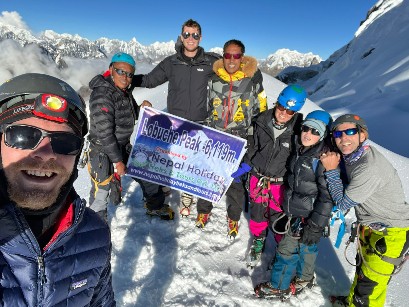
Everest Three High Pass Trek with Lobuche Peak
Overview If you want to experience the best Everest adventure in Nepal, this is it. The Everest Three High Pass...
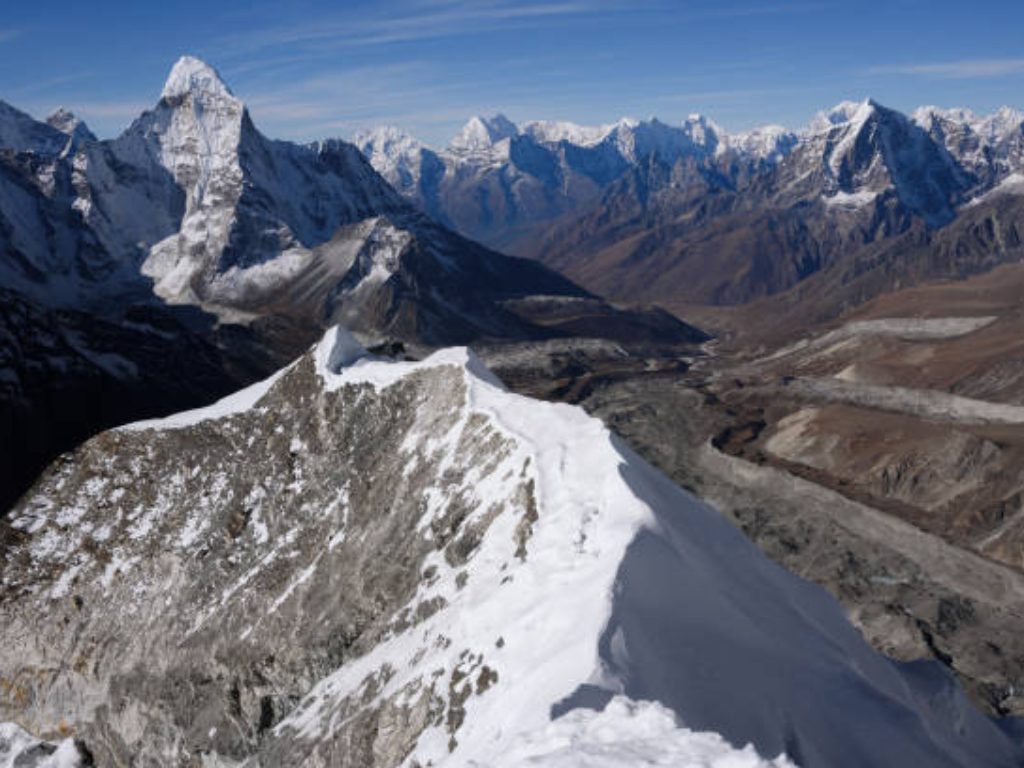
Everest Base Camp Trek with Island Peak Climbing
Island Peak Climbing and Everest Base Camp Trek is a thrilling experience that combines two of Nepal’s most in-demand...
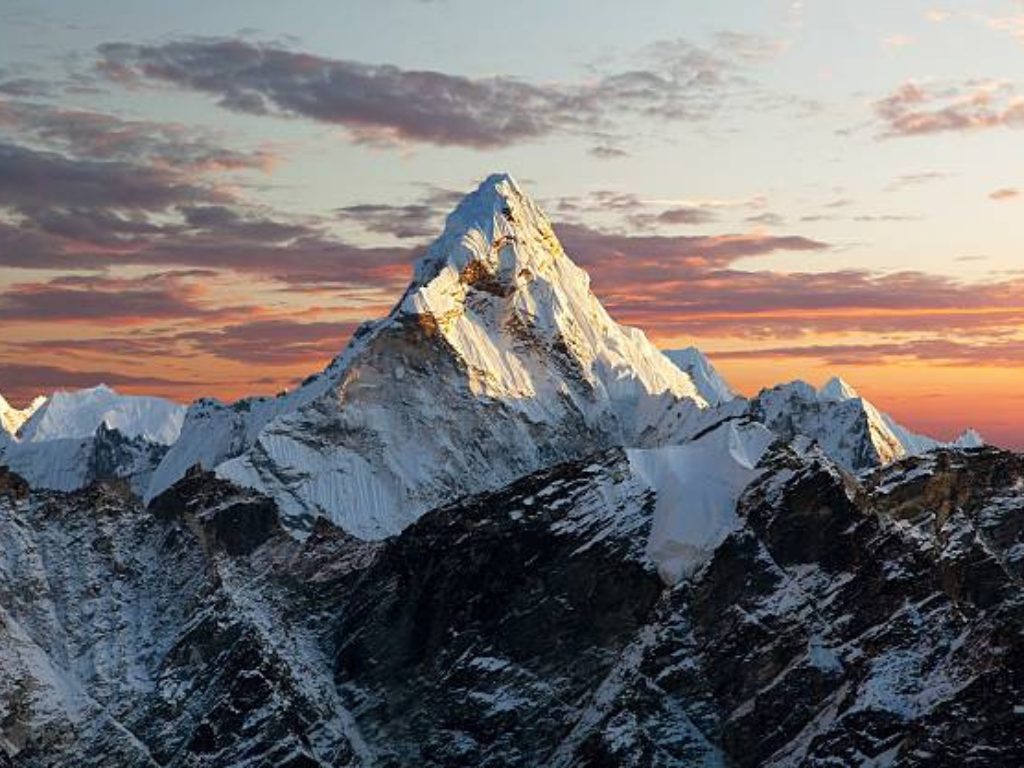
Ama Dablam Expedition
There are mountains you hike up and there are mountains you really climb. Ama Dablam is definitely that second one and...
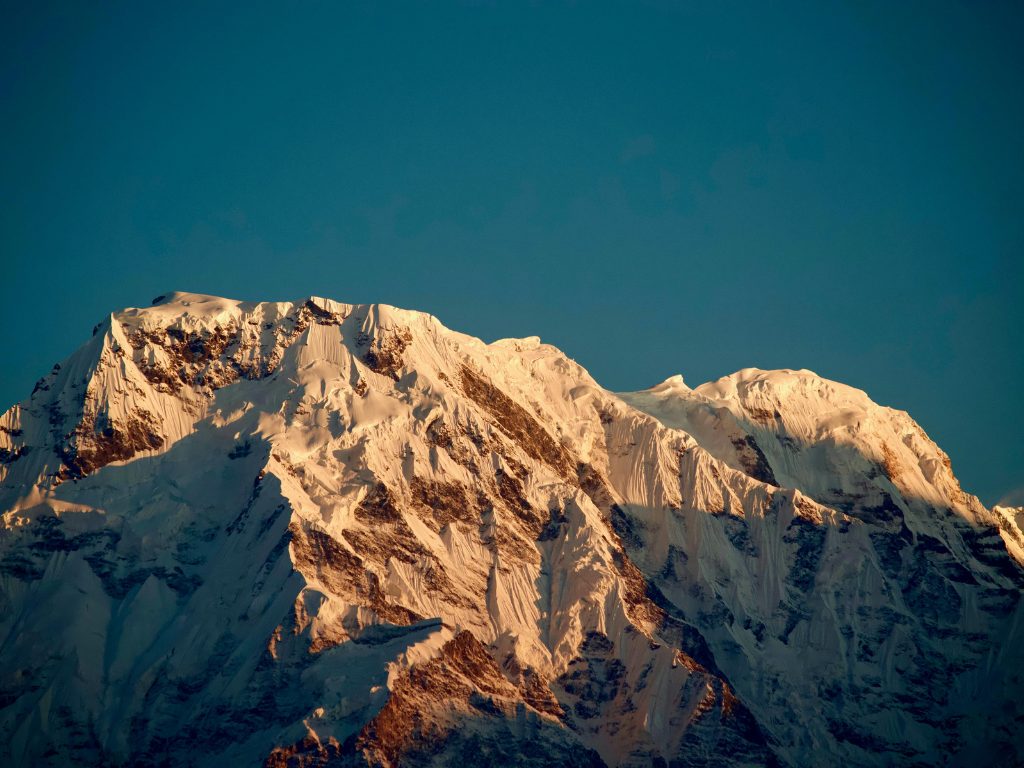
Mera Peak Climbing From Khare – 3 Days
Mera Peak Climbing from Khare is the ultimate experience for mountaineers seeking a stunning Himalayan panorama and a thrilling...