
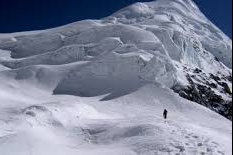


Mera Peak Climbing – 19 Days Overview
Mera Peak is the highest permitted trekking peak in Nepal standing at 6,476 meters (21,247 feet) and that single fact tells you why climbers from across the world put this summit on their list. Located deep in the wild and remote Hinku Valley of the Khumbu region, Mera Peak sits far from the busy Everest trails in a part of Nepal that feels genuinely untouched.
From the summit, you will stand face with five of the world’s 8,000 meters giants such as Everest, Lhotse, Cho Oyu, Makalu and Kanchenjunga, all visible at once. It is one of the widest Himalayan panoramas any climber can witness from a trekking peak. People who have stood on dozens of summits still describe this view as something that stopped them completely.
The approach through the Hinku Valley is itself a highlight – ancient forests, high alpine meadows and remote Sherpa villages that see a fraction of the foot traffic of the standard Everest routes. You are not just climbing a mountain. You are crossing into a corner of the Himalayas that most people never reach.
The climb is classified as advanced, with glacier travel, crampons and fixed ropes on the upper slopes. No prior mountaineering experience is required, your guide will train you before the summit push. What you do need is solid fitness, genuine commitment and a deep respect for what 6,476 meters demand from your body. The full expedition takes 19 days.
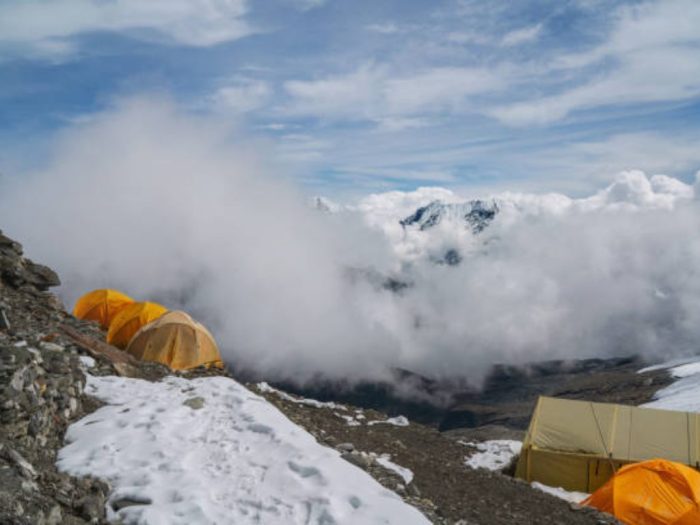
Mera Peak Summit Height
The mountain has three summits – Mera Central, Mera North and Mera South. Mera Central 6,476m is the main summit and the one our climbers stand on. It is the defining moment of the entire expedition.
What makes this height truly special is the panorama it unlocks. From 6,476m you can see five of the world’s 8,000m giants at once – Mt. Everest, Lhotse, Makalu, Cho Oyu and Kanchenjunga stretched across the horizon in every direction. It is a view that very few people on this planet will ever witness and standing in the middle of it after days of trekking and climbing through the remote Himalayas makes it all the more extraordinary.
For a first high altitude summit, 6,476m is a number that means something real. It is high enough to challenge you, high enough to require proper acclimatization and high enough to give you a summit experience you will carry for the rest of your life.
Best Time to Climb Mera Peak
Timing your Mera Peak expedition correctly makes the difference between a smooth, successful summit and a frustrating battle against weather. At Nepal Holiday Treks and Tours, we recommend two seasons and we will be honest about the rest.
Best Seasons
Spring (March to May): Spring is the most popular and arguably the best time to climb Mera Peak. The days are warm, the skies are clear and the Hinku Valley comes alive with rhododendron blooms and wildflowers. Daytime temperatures at high altitude range between 100C to 170C while nights at base camp and high camp drop to around -100C to140C. Visibility is excellent and conditions on the upper glacier are generally stable, giving you the best possible window for a successful summit.
Autumn (September to November): Post monsoon autumn brings crisp, dry and crystal clear mountain views. The trails are lush and green after the summer rains and the skies are reliably clear of cloud cover. Temperatures are slightly cooler than spring with daytime highs between 50C to 150C and nights dropping to -150C or below at high camp by late November. Many experienced climbers actually prefer autumn for the sharper visibility and quieter trails.
Seasons to Avoid
Monsoon (June to August): Monsoon brings heavy rainfall, slippery trails, poor visibility and a genuine risk of landslides on the approach through the Hinku Valley. Attempting Mera Peak during monsoon is not something we recommend.
Winter (December to February): Winter is extreme at this altitude. Temperatures at high camp can plunge well below -200C, snowfall is heavy and the risk of frostbite severe weather increases significantly. That said, experienced and well-equipped climbers who want complete solitude on the mountain sometimes attempt Mera in December, if that appeals to you, talk to our team first.
How Difficult is Mera Peak Climbing?
Mera Peak is classified as a trekking peak by the Nepal Mountaineering Association but do not let that fool you. At 6,476m, this is a serious high altitude climb that demands real physical effort, mental toughness and a genuine respect for the mountain. Most guides rate it as moderately difficult, challenging enough to be a true achievement but not so technical that it requires years of prior climbing experience.
What makes it difficult:
- The altitude is the biggest hurdle. At 6,476m your body works with far less oxygen, making even simple movements feel exhausting
- The approach is long and remote with significant elevation gain and loss across multiple days before you even reach summit day.
- Summits day starts as early as 2 am – crampons on, headlamp lit, pushing through glacial terrain for several hours in the cold and dark.
- Weather can change fast. High winds, snowfall and sudden temperature drops are all part of the reality on this mountain.
Physical Fitness Required for Mera Peak Climbing
You do not need to be an elite athlete but you need to show up genuinely fit. Mera Peak rewards those who put in the work before they ever land in Kathmandu.
- Build your cardiovascular base with regular hiking, running, cycling or stair climbing in the months before your trip.
- Focus on leg and core strength – Long ascent days with a loaded pack will test both.
- Practice hiking with a weighted backpack on uneven terrain to stimulate real trail conditions.
- If you can comfortably complete a full day of mountain hiking without feeling destroyed, you are heading in the right direction.
- Prior trekking experience above 4,000m is not mandatory but strongly recommended.
Why Choose Mera Peak Climbing?
If you have ever looked at the Himalayas and wondered which peak to climb first, Mera Peak has a very convincing answer. Standing at 6,476m in the heart of the remote Khumbu region, it is one of the highest trekking peaks in Nepal and one of the most rewarding climbs you will ever do. It strikes that rare balance of being genuinely challenging without requiring years of technical mountaineering experience, which makes it the perfect first high altitude summit for a well prepared and motivated trekker.
The approach itself is half the adventure, the trail winds through the wild and untouched Hinku Valley, far from the busy trekking crowds, passing through ancient Sherpa villages, centuries old monasteries and landscapes that feel completely removed from the rest of the world. And then there is the summit. Standing on top of Mera Peak on a clear day with Everest, Lhotse, Makalu, Cho Oyu and Kanchenjunga all stretched out before you is the kind of moment that is genuinely difficult to put into words. It is not just a view, it is a perspective shift.
Mera Peak Climbing – 19 Days Highlights
- Trek through the remote and untouched landscapes of the Khumbu region, where raw Himalayan wilderness stretches as far as the eye can see.
- Soak in breathtaking panoramic views from the summit with five of the world’s highest mountains – Mt. Everest, Lhotse, Makalu, Cho Oyu and Kanchenjunga.
- Walk through traditional Sherpa villages and experience the kind of warm, genuine hospitality that no hotel in the world can replicate.
- Escape the crowds entirely, this route offers a deep sense of solitude and wilderness, far away from the busy trekking highways of the Himalayas.
- Build real mountaineering skills as you navigate glaciers, snowfields and high altitude terrain under the guidance of experienced Sherpa climbers.
- Discover ancient monasteries tucked into the mountains and feel the quiet power of prayer flags fluttering in the wind and Mani stones lining the trail.
- Connect with Sherpa culture up close, their traditions, their stories and their extraordinary relationship with these mountains are as memorable as the climb itself.
- Witness one of the nature’s most humbling moments – a Himalayan sunrise from the summit, where the first light of dawn spills across the peaks in shades of gold, orange and pink.
- Keep your eyes open for Himalayan wildlife along the way – musk deer, Himalayan tahr, the elusive snow leopard and a rich variety of mountain bird species call this landscape home.
Mera Peak Climbing – 19 Days Itinerary
Expand allDay 01: Arrival in Kathmandu
Upon your arrival in Kathmandu, you will be greeted by our team and transferred to your hotel. You can relax, refresh, and take in the vibrant atmosphere of Nepal’s capital city. This is a good opportunity to get acquainted with the local culture, prepare for your adventure, and adjust to the time zone before starting your trek.
Day 02: Preparation for Mera Peak Climbing
Today is reserved for final preparations for your Mera Peak climb. You’ll meet your experienced climbing guides, receive a detailed briefing on the climb and safety protocols, and check your climbing gear. This is also a great opportunity to ask any last-minute questions and ensure you’re fully ready for the upcoming journey.
Day 03: Fly to Lukla then Trek to Chutanga (3000m)
After an early flight from Kathmandu to Lukla, where you’ll catch your first glimpse of the Himalayan mountains, the real adventure begins. Your trek to Chutanga (3000m) will take about 5 hours, allowing you to gradually adjust to the altitude while walking through scenic Sherpa villages and lush forests.
Day 04: Trek to Thulikharka from Chutanga (4300m)
Today, you’ll embark on a 6-hour trek that takes you to Thulikharka (4300m) via the Zatrwa La Pass (4610m). The high-altitude pass offers stunning views of the surrounding peaks, including Mount Numbur and the valleys below. This challenging day helps with acclimatization to the higher altitudes.
Day 05: Trek to Kothe from Thulikharka (3691m)
The trek to Kothe (3691m) will take approximately 6 hours, taking you through alpine forests and scenic landscapes. As you descend into the valley, you’ll pass several remote villages, offering glimpses of the local Sherpa way of life.
Day 06: Trek to Thangnak from Kothe (4350m)
Continuing your journey, today’s trek to Thangnak (4350m) will take around 6 hours. The trail weaves through alpine meadows, and as you ascend, the views become more spectacular with each step. The landscape becomes more barren as you near the high-altitude zone.
Day 07: Trek to Khare from Thangnak (5000m)
On this 6-hour trek, you will reach Khare at 5000m, a small village that serves as a base for climbers attempting Mera Peak. The challenging terrain and high altitude make this day important for acclimatization. The view of the surrounding snow-capped peaks is breathtaking, making this a memorable trek.
Day 08: Rest Day at Khare / Training for Peak Climbing
This day is set aside for acclimatization and training for the Mera Peak climb. You’ll rest and take part in climbing drills, learning how to use the equipment and preparing mentally for the summit push. Rest is crucial at this altitude to allow your body to adjust properly.
Day 09: Trek to Mera Peak High Camp from Khare (5800m)
A demanding 7-hour trek brings you to the Mera Peak High Camp at 5800m. The trek today is a steep climb, and you’ll spend the night in tents, with spectacular views of the surrounding peaks. The environment at High Camp is rugged and surreal, making it the perfect staging point for the summit push.
Day 10: Summit Mera Peak (6470m) and Return to Khare
The day of the summit! You will leave the High Camp early in the morning and aim for the top of Mera Peak (6470m). After a challenging 10-hour round trip, you’ll descend back to Khare, where the sense of accomplishment will be overwhelming. The panoramic views of Everest, Makalu, and Cho Oyu make the effort worthwhile.
Day 11: Trek Back Down to Kothe from Khare (3691m)
After summiting, it’s time to descend. The 6-hour trek back to Kothe provides a welcome change of pace and gives your body a chance to adjust after the high-altitude effort. The walk is easier but still offers incredible views of the Himalayas.
Day 12: Trek to Chetra Khola from Kothe (2150m)
You will trek for 6 hours to reach Chetra Khola, passing through dense forests and remote villages. The changing landscape from high alpine terrain to subtropical valleys makes this part of the trek particularly scenic.
Day 13: Trek to Ramilo Danda from Chetra Khola
The 7-hour trek to Ramilo Danda takes you through quiet villages and picturesque valleys, providing you with a glimpse into the rural life of Nepal. The trails are less traveled, offering a peaceful retreat after the intensity of the climb.
Day 14: Trek to Pangom from Ramilo Danda (2850m)
A long 8-hour trek today leads you to Pangom (2850m), a charming village with views of the mountains. The trek takes you through thick forests, and the stunning landscapes make the effort well worth it.
Day 15: Trek to Kharikhola from Pangom (2300m)
You’ll trek for 5 hours through serene forested paths to reach Kharikhola (2300m). The gradual descent gives you a chance to relax and take in the peaceful atmosphere of the valley, while immersing in the nature around you.
Day 16: Trek to Phaplu from Kharikhola (2364m)
A 6-hour trek will bring you to Phaplu, a small settlement nestled in the mountains. This village offers an excellent place to reflect on your trek and connect with locals who are eager to share their stories and culture.
Day 17: Drive to Kathmandu from Phaplu
After a scenic 7-hour drive back to Kathmandu by jeep, you’ll have the opportunity to relax and reflect on the unforgettable journey you’ve just completed. The drive offers spectacular views of the hills and valleys surrounding the capital.
Day 18: Rest Day in Kathmandu
Take the day to rest and enjoy Kathmandu’s rich cultural offerings. You can explore the city’s historical sites, relax, or shop for souvenirs to bring home, soaking in the vibrant local life.
Day 19: Departure
On your final day, you’ll be transferred from your hotel to the airport for your flight home. After an incredible journey through the Himalayas, you’ll depart with memories that will last a lifetime.
If the above Mera Peak Climbing – 19 Days itinerary does not meet your needs, we can design individualized travel plans based on your preferences and specifications.
Plan My TripMera Peak Climbing – 19 Days Cost Includes
- Airport Pick up and drop by private vehicles.
- Three times Three meals a day- Breakfast, Lunch, Dinner and 3 cup’s of tea/Coffee a day during the trek.
- Accommodation in tea house during the trek.
- In a day time tea break with cookies every day.
- Nepal Holiday Treks and Tours, (-20 degree sleeping bag) and a duffel bag for the trekking, but you need to refund to the office after the trip.
- 3 nights accommodation in Kathmandu (3 star hotel) on the BB plan, 1 night before starting the trek and 1 night the day after returning from the trek.
- An experienced, helpful, knowledgeable, friendly, English speaking well trained, government license holder trekking Guide with all his salary, food, Drinks, accommodation, equipment, transport, and insurance
- One porter for two trekkers
- Kathmandu to Lukla by flight. and Phaplu to Kathmandu by jeep
- You will be under observation with a pulse oximeter to have your oxygen levels and heart rate measured twice a day during the trek. This is to catch the signs of Altitude Mountain Sickness (AMS) early, thus making trekking safer.
- Climbing Gear: Crampons, Ice axe, Helmet, harness, Climbing boot, and Carabineers are included.
- Arrangement of Emergency helicopter service (paid by your travel insurance company)
- Normal First aids kit box
- Nepal Holiday Treks And Tours trip completion certificate from the company side.
- All the government taxes and company operating charges
Mera Peak Climbing – 19 Days Cost Excludes
- International airfare and visa fees
- Lunch and dinner in Kathmandu
- Personal expenses of bar and beverage bills, wifi, hot shower, bottle of water, extra porters, laundry or any other things which are not mentioned by the company.
- Your trekking gears and extra nights in a certain destination
- Your travel insurance which should include the emergency rescue
- Tips for your guide and porters which is compulsory.
- A strong, helpful, porters with proper safety equipment and walking equipment his salary, food, drinks, accommodation, insurance, (one porter for two people he will carry bag pack max 20-25kg).
- Extra expenses due to any event such as strikes, weather conditions, or flight delays
Mera Peak Climbing – 19 Days Additional Info
Food, Accommodation and Drinking Water on Mera Peak Climbing
Meals
Throughout the Mera Peak expedition, you will be served three full meals a day – breakfast, lunch and dinner along with morning and afternoon tea, snacks and fresh seasonal fruit in the evenings. Teahouse kitchens in the Khumbu region are surprisingly good for how remote they are. Dal bhat, noodles, pasta, soups, eggs, porridge and pancakes make up the core of the menu – warm, filling and genuinely nourishing at altitude. As you climb higher and the villages get smaller, the menu simplifies but the food never stops coming and your cooking team at high camp will make sure you are properly fueled for summit day.
Accommodation
You will stay in teahouses throughout the trek in a family run lodges that are simple, clean and full of character. Rooms are typically twin sharing with basic beds and warm blankets. Do expect warmth, hot tea and a dining room full of fellow trekkers swapping stories from the trail. In Kathmandu, we put you in a comfortable 3 star hotel on a bed and breakfast basis, a proper rest before and after the mountain. From Kahre to Mera Peak High Camp, accommodation shifts to tented camps managed by our expedition crew, where the real mountain experience truly begins.
Drinking Water
This is one area where you simply cannot cut corners. Tap and unfiltered stream water in the Himalayas carry a real risk of waterborne illness – giardia, stomach infections and worse, all of which can end you trek before it really begins. Always drink boiled, filtered or purified water on the trail. Most teahouse
Sell boiled water or allow you to refill from their boiled supply for a small fee, which is far cheaper and far more sustainable than buying plastic bottles at every stop. Carry water purification tablets or a personal filter as a backup for moments when boiled water is not immediately available. Aim for three to four liter per day at altitude.
Permits Required for Mera peak Climbing
There are three permits required to legally climb Mera Peak and all are included in our package price. Our team handles every permit on your behalf so you can focus entirely on preparing for the climb.
- Nepal Mountaineering Association (NMA) Climbing Permit: This is the primary permit for all trekking peaks in Nepal, issued directly by the NMA. This is the permit that authorizes you to attempt the summit of Mera Peak and must be arranged before you begin the climb.
- Sagarmatha National Park Entry Permit: The Mera Peak route passes through Sagarmatha National Park, one of the most protected and biodiverse Himalayan wilderness area in the world. Entry fees are:
- Foreigners: NPR 3,000 per person
- SAARC nationals: NPR 1,500 per person
- Nepalese Citizens: NPR 100 per person
- Khumbu Rural Municipality Permit: This permit has replaced the traditional TIMS card for trekkers in the Khumbu region. Cost includes:
- First 4 weeks: NPR 2,000 per person
- Beyond 4 weeks: NPR 2,500 per person
This permit is issued at Lukla or Monjo only and cannot be issued in Kathmandu. Our team coordinates this seamlessly as part of your pre trek logistics.
Our Guide and Porter Service on the Mera Peak Climbing
Every step of this expedition is supported by a team that knows these mountains better than anyone. Our guides are experienced, licensed and deeply familiar with Mera Peak route, they have walked this trail in every season and every condition and their knowledge, judgement and calm presence on the mountain make a genuine difference to your safety and your experience.
Our Sherpa guides are more than just leaders on the trail. They are your motivation on hard days, your safety net on technical terrain and your connection to the culture and stories of these mountains that no guidebook can give you. From your first day in the Hinku Valley to the moment you step onto the summit at 6,476m, they are right there with you every step of the way.
Our porters carry the load so you can focus entirely on the climb. Professionally employed, fairly paid and properly equipped, they are an essential and respected part of our expedition team. We follow strict ethical standards when it comes to porter welfare – reasonable load limits, proper gear and fair treatment are non-negotiable for us.
Together, our guide and porter team is what makes this expedition run smoothly, safely and with a level of care that you will feel from day one to the last day on the trail.
Transportation and Flight for Mera Peak Climbing
Your Mera Peak expedition begins with a short but breathtaking 25 to 30 minute flight from Kathmandu to Lukla (2,860m) in a small mountain aircraft. During busy seasons, flights to Lukla depart from Ramechhap, which requires an early morning drive of around three to four hours from Kathmandu, something we arrange and factor into your itinerary in advance.
Once you land in Lukla, all travel is on foot. There are no roads in this part of the Himalayas, just ancient trails, remote Sherpa villages and the wild untouched landscapes of the Hinku Valley all the way to the summit. On the return, the trail finishes at Phaplu where a scenic drive brings you back to Kathmandu.
One thing worth keeping in mind is that mountain flights in Nepal are highly weather dependent. Building a flexible buffer around your flight days is always a smart move and something we strongly recommend to every climber on this expedition.
Insurance for Mera Peak Climbing
Mera Peak sits at 6,476m in a deeply remote corner of the Khumbu region. There are no roads in. There are no quick exits. If something goes wrong, a bad fall, severe altitude sickness 0r a sudden deterioration in your health. The only way out is by helicopter. And helicopter rescues in Nepal are not cheap. With proper coverage, a single evacuation can cost several thousand dollars out of your pocket. The right insurance policy makes sure that the only thing you are focused on is getting to safety, not the bill that comes after.
What Your Policy Must Cover
Not all travel insurance is created equal and this is where most people make mistakes. Here is exactly what to look for:
- High altitude mountaineering coverage up to at least 6,500m
- Emergency helicopter evacuation from remote mountain terrain
- Medical treatment and hospitalization costs
- Trip cancellation and interruption cover
- Gear and Equipment loss
- Personal accident and expedition liability coverage
Acclimatization and Altitude Sickness
Climbing to 6,476m means your body will be working in conditions of significantly reduced oxygen. Acclimatization is not optional, it is the foundation of a safe and successful summit. Our itinerary is carefully designed with this in mind, including a dedicated rest and training day at Khare (5,000m) before the final push to high camp and the summit, giving your body the time it genuinely needs to adjust.
Common symptoms of Acute Mountain Sickness (AMS) to watch out for include:
- Persistent headache
- Fatigue and weakness
- Nausea or vomiting
- Dizziness
- Loss of appetite
If you experience any of these, the most important thing to do is rest and not ascend any further. Our guides are fully trained in AMS recognition and response and every climber is monitored daily with a pulse oximeter to track oxygen saturation and heart rate throughout the expedition.
Here is how to give yourself the best possible chance of a healthy and successful climb:
- Ascend gradually and never rush the altitude
- Stay well hydrated – at least three to four liters of water per day
- Eat regularly even when your appetite disappears
- Sleep low whenever possible
- Always listen to your guide – their judgment on the mountain is everything
- Consider Diamox
The mountain will always be there. Your health comes first and every decision we make on this expedition is guided by that principle.
Why Choose Us for Mera Peak Climbing?
We are a locally based trekking agency in Nepal with years of hands on experience organizing Mera Peak expeditions. Our guides are passionate, licensed and deeply familiar with every corner of this route, they bring local knowledge, genuine warmth and a level of care that goes well beyond simply leading you up a mountain.
We keep our groups small, our service personal and our standards high. Every detail of your expedition – permits, accommodation, meals and safety is handled with full transparency so you can focus entirely on the experience ahead of you.
We also believe in responsible tourism. Our porters are fairly paid, properly equipped and genuinely respected as an essential part of our team.
Most importantly, when you climb with us, you are not just a booking. You are a guest in our mountains and we treat you exactly that way. That is a promise we make to every single climber who walks out of Lukla with us.
Upcoming Departures
Customer Reviews
Write a ReviewMera Peak Climbing – 19 Days FAQs
How long does it take to climb Mera Peak?
A standard Mera Peak expedition takes between 17 to 19 days including arrival and departure days in Kathmandu. This includes the trek in through the Hinku Valley, acclimatization days, the summit push and the return journey.
Do I need prior climbing experience for Mera Peak?
Prior technical climbing experience is not mandatory but some trekking experience at altitude above 4,000m is strongly recommended.
What is the success rate of Mera Peak?
Mera Peak has one of the highest summit success rates among all trekking peaks in Nepal, largely due to its non-technical nature and gradual ascent profile.
Is Mera Peak safe to climb?
Mera Peak is considered one of the safer high-altitude climbs in Nepal when undertaken with an experienced and licensed guide. The main risks are altitude sickness, sudden weather changes and glacial terrain, all of which are managed carefully by our trained team throughout the expedition.
How do I get Mera Peak base camp?
The journey to Mera Peak base camp begins with a flight from Kathmandu to Lukla, followed by several days of trekking through the remote Hinku Valley via Chutanga, Thulikharka, Kothe and Thangnak before reaching Khare which serves as the base for the summit push.
Can I rent trekking gear in Kathmandu?
Yes, trekking gear can be rented in Kathmandu’s Thamel at reasonable rates.
What is the difference between Mera Peak and Island Peak?
Both are popular trekking peaks in the Khumbu region but they differ in character. Mera Peak at 6,476m is higher but less technically demanding, with long glacier approaches and sweeping summit views. Island Peak at 6,189m involves more technical climbing including fixed ropes and steeper sections, making it a slightly more challenging objective overall.
What happens if I cannot summit due to bad weather?
Weather in the Himalayas is unpredictable and summit days can sometimes be delayed or cancelled due to high winds, snowfall or low visibility. Our guides make all summit decisions based on safety first. If conditions do not allow a safe summit attempt, your wellbeing always takes priority over the top.
Is Mera Peak Worth it?
Absolutely. Mera Peak offers one of the most extraordinary summit experiences available to a trekking peak climber anywhere in the world. The panoramic view of five 8,000m peaks from the top, the remote and untouched trail through the Hinku Valley and the genuine sense of mountaineering achievement make it worth every step of the journey.
How do I book a Mera Peak Climbing expedition?
Booking with us is simple, get in touch through our website, share your preferred travel dates and group size and our team will take care of everything from there. We handle all permits, logistics, accommodation, meals, guides and equipment support so all you need to focus on is showing up ready to climb.
Is the food on this journey is Vegetarian friendly?
Yes, majority of foods on this journey are vegetarian friendly.
Mera Peak Climbing – 19 Days Equipment Lists
General info:
- Sleeping Bag and duffle bag: Four-season sleeping bag with a rating of -20°C by company after you have to refund on company.
- Insulated Jacket: A puffy and warm down jacket suitable for winter by company after you have to refund on company.
- Daypack: 25-30 liter backpack rain cover to carry one’s daily essentials
Clothing:
- Thermal base layers
- Trekking shirts (quick-dry)
- Fleece jacket and down jacket
- Waterproof jacket and pants
- Trekking trousers
- Gloves (inner and outer)
- Warm hat and sun hat
- Trekking socks
Footwear:
- Sturdy trekking boots
- Camp shoes/sandals
- Gaiters (optional)
Accessories:
- Trekking poles
- Backpack (50-60L) and daypack (20-30L)
- Sunglasses (UV protection)
- Headlamp with extra batteries
- Water bottles and purification tablets
Similar Tours
Larke Peak Climbing – 16 Days
Larke Peak (20,502ft/6249m) is one of the most rewarding trekking peaks in Nepal, it is situated in a perfect position...
Everest Three High Pass Trek with Lobuche Peak
Overview If you want to experience the best Everest adventure in Nepal, this is it. The Everest Three High Pass...
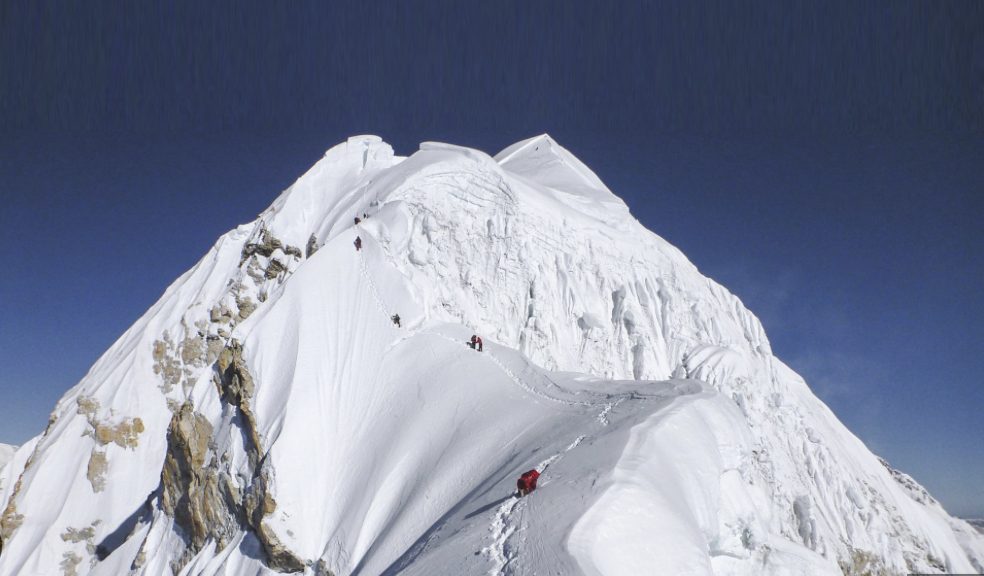
Baruntse Expedition
The formidable mountain of Mount Baruntse lies within the less touristy Makalu Barun National Park of eastern Nepal, bordered...
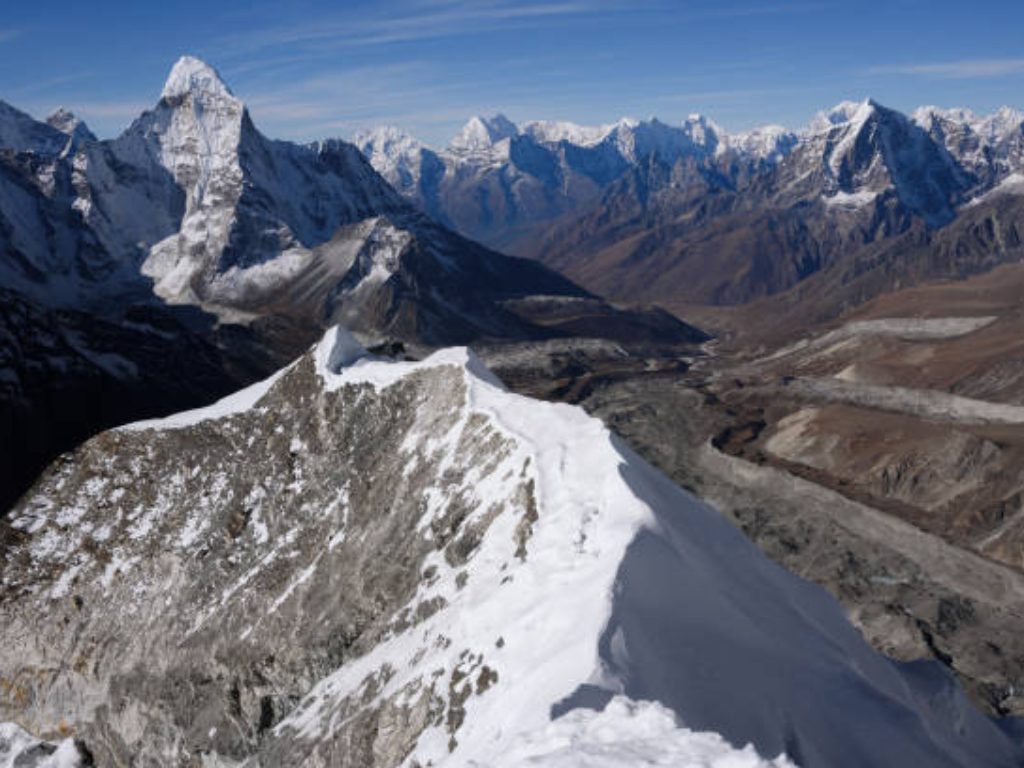
Everest Base Camp Trek with Island Peak Climbing
Island Peak Climbing and Everest Base Camp Trek is a thrilling experience that combines two of Nepal’s most in-demand...
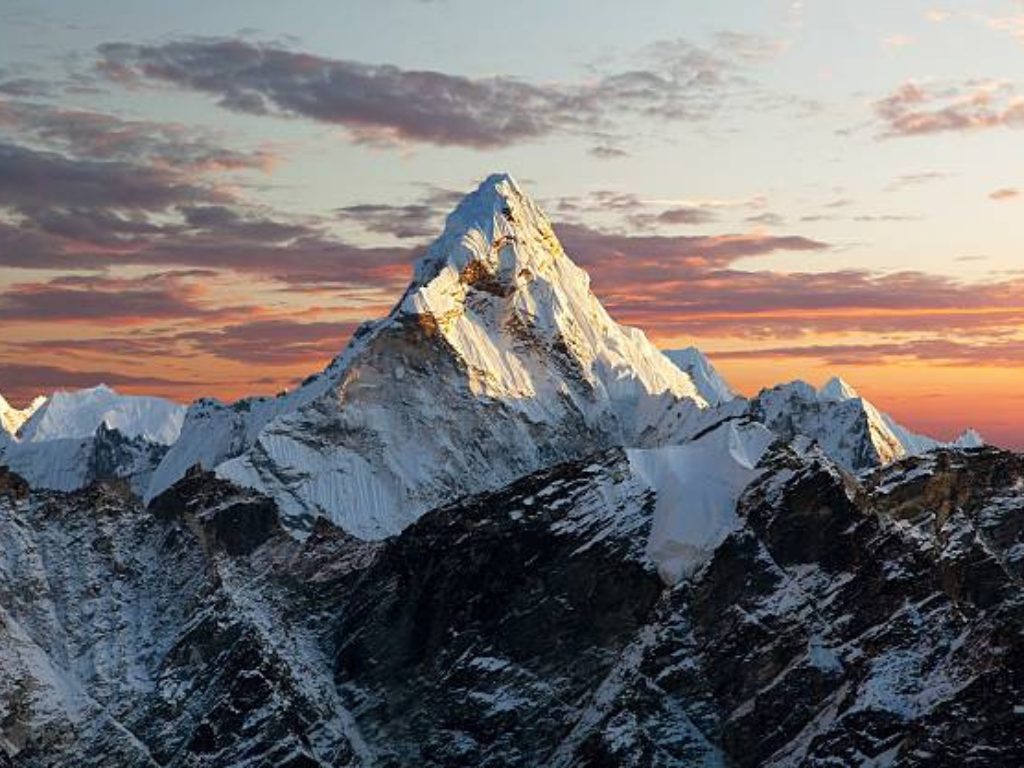
Ama Dablam Expedition
There are mountains you hike up and there are mountains you really climb. Ama Dablam is definitely that second one and...