

Everest Three High Pass Trek with Lobuche Peak Overview
Overview
If you want to experience the best Everest adventure in Nepal, this is it. The Everest Three High Pass Trek with Lobuche Peak climbing is not a normal base camp trek it is a grand 19 day journey that takes you to three of the highest trekking passes in the Himalayas and also to the top of a real 6,119 meters peak.
Starting from Lukla, the trail meanders through the renowned Khumbu region, through the busy Sherpa town of Namche Bazaar, the glittering Gokyo Lakes and the classic Everest Base Camp – that’s all before you tackle Renjo La (5,360m), Cho La (5,420m) and Kongma La (5,535m). Each pass rewards you with jaw dropping panoramas of Everest, Lhotse, Makalu and Cho Oyu, that simply cannot be matched from any single trekking route.
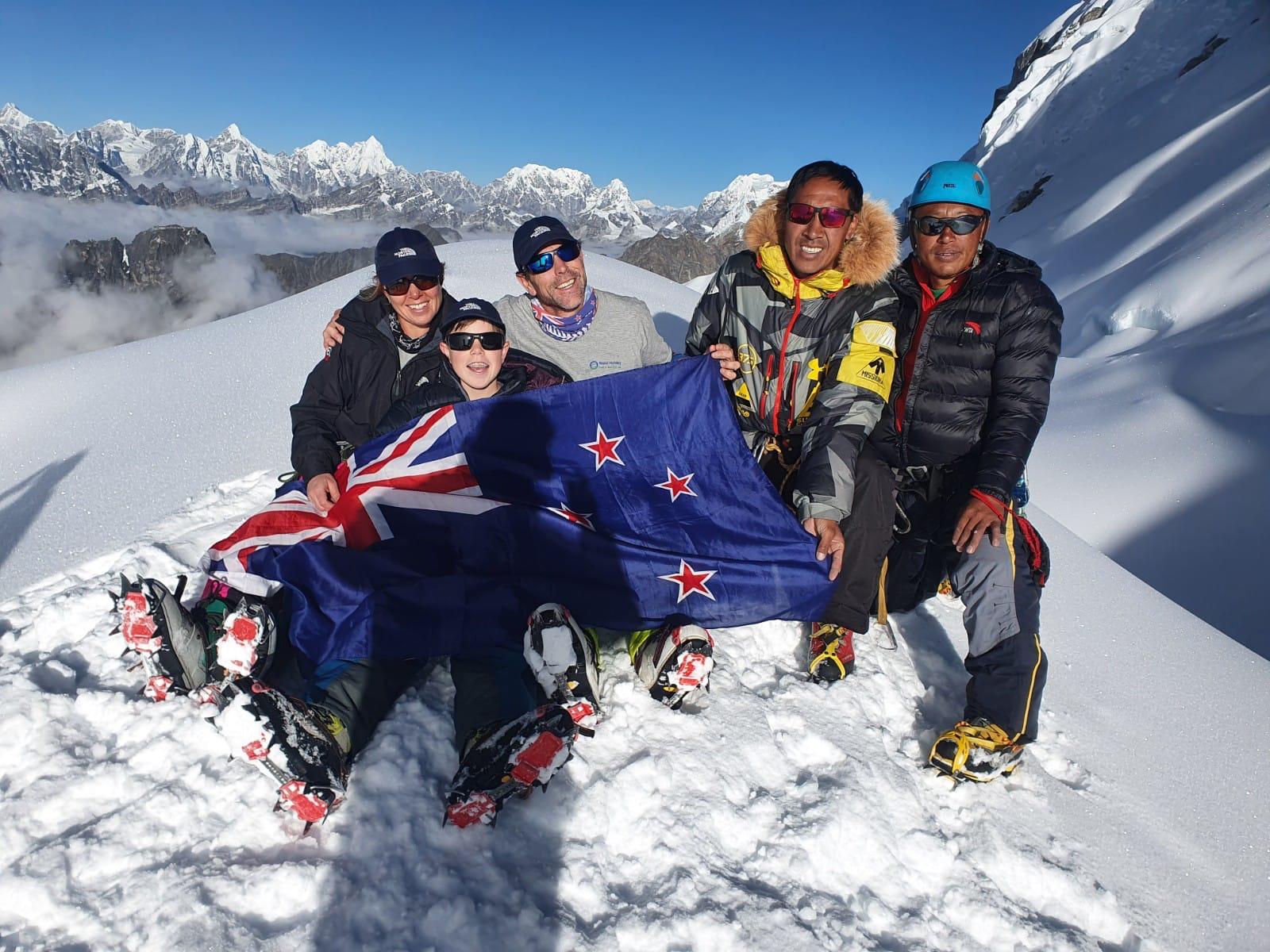
The centerpiece of the adventure is the summit push on Lobuche Peak. Rising at 6,119 meters this trekking peak provides a true mountaineering experience – crampons, ice axe, ropes, but is still accessible to trekkers with good high altitude experience and a strong will. When you stand on the summit at sunrise with Everest stretched across the horizon, it really is one of those things you will never forget.
Throughout the journey you will be accompanied by our knowledgeable local Sherpa guides, stay in comfortable, well-run teahouses and have all permits including the Lobuche Peak climbing permit taken care of. Your safety, your pace and your acclimatization are our concerns at all times.
Trek Difficulty of Everest Three High Passes with Lobuche Peak
Let’s be honest with you – this is not an easy trek. The Everest Three High Pass Trek with Lobuche Peak is classified as challenging to very challenging and it indeed gets that rating. But that is also exactly what makes it so exceptional.
In 19 days, you will cross three high passes in the Khumbu – Renjo La (5,360m), Cho La (5,420m) and Kongma La (5,535m) and push beyond to the summit of Lobuche Peak at 6,119 meters. You spend several days at altitudes well above 5,000 meters, where the air is thin, it is cold and your body is continuously working harder than it would at lower elevations.
Except long trekking days of 6 -10 hours steep rocky climbs, glacier crossings, and a midnight summit on Lobuche. The high altitude makes everything more difficult but that’s what makes this more than just another trek in the region.
You don’t have to be a pro mountaineer, but you need a reasonable amount of prior high-altitude trekking experience, good fitness and mental determination are essential. There are acclimatization days included in the schedule and our Sherpa guides keep an eye on your well-being from start to finish, so you are never up against the mountain alone.
Best Time to do the Everest Three High Pass Trek with Lobuche Peak
Choosing the right season is not only a matter of travel preference – for a trek as demanding as this, it is a matter of safety. With three high passes above 5,000 meters and a challenging 6,119m summit climb, weather and trail conditions will have a direct impact on how you fare. Here is what you need to know.
Spring (March to May)
Spring is often regarded the best season for the Everest Three High Pass Trek with Lobuche Peak and there is really no question as to why. Temperatures at lower altitude places as Namche Bazaar stay nice between 5-100C in daytime, while at high camp on Lobuche at night the temperature can fall to somewhere between -10 to -150C. Weather windows are more dependable, snow conditions on the passes are more stable and longer daylight hours mean more time on the trail. Beneath the snowline, rhododendron forests burst into bloom, splashing color on your trek through the Khumbu. If you want the most complete, safe experience – spring is your season.
Autumn (September to November)
Autumn is actually the most popular trekking season across Nepal along with spring. After the monsoon season clears the skies, the visibility in the Everest area is breathtaking – the kind of clearness that makes you think you can reach out and grab the mountains. On the trail, day temperatures vary 5° to 15°C at mid-level and -10°C or less on the high passes at night. The trails are dry and well-marked, the passes are solid and the cultural heat of Dashain and Tihar will warm you on your way. The trade-off is that trails tend to be more crowded than in spring, but the views more than make up for it.
Winter (December to February)
Winter in the Khumbu is equally brutal and beautiful. Temperatures during the day at high altitudes get warmer than -5°C and nights on the high passes can get as cold as -20°C or more. Renjo La, Cho La and Kongma La can be closed off by heavy snow and teahouses in isolated regions often cease operations in winter. The Lobuche Peak ascent is far more technical during winter conditions. That said if you are a well prepared, experienced high altitude trekkers who can handle extreme cold, the peace and dramatic winter scenery are truly extraordinary. This is not a season for the first time trekkers.
Monsson (June to August)
The monsoon rains bring continuous rainfall, fog and limited visibility to the whole Everest area. Trails get slick, muddy and wild-slippery, flights to Lukla are often delayed and cancelled and the high passes can be true killers. Mountain views – the whole reason you are her are largely obscured by dense cloud for weeks at a time. We do not recommend you to do this trek in monsoon season.
Why choose the Everest Three High Pass Trek with Lobuche Peak ?
The Everest Three High Passes Trek and Lobuche Peak is usually regarded as the final trek in the Everest region providing more adventure, more variety and more exploration as compared to any other one-way route.
This trek is ideal if you want:
- Not only the Everest Base Camp but a complete tour of the Everest territory.
- To provoke oneself with three Himalayan passes.]
- To be on a 6000 meters top with the sights of Everest and other giants.
- Less traffic and more natural wilderness.
- Good combination of adventure, culture and personal accomplishment.
In addition to the physical task, the trip will offer the trekkers dramatic mountain scenery, intimate experience of Sherpa culture and a great feeling of achievement that other trekking experiences in the world could ever provide.
Permits Required
To complete the Everest Three High Pass trek with Lobuche peak, trekkers need three main permits . These permits ensure legal access to the Everest region and allow the ascent of Lobuche Peak .
- Sagarmatha National Park Entry Permit
This permit is required to enter Sagarmatha National Park , a UNESCO World Heritage Sites that cover most of the Everest Region and allow the ascent of Lobuche Peak . - Khumbu Pasang Lhamu Rural Municipality Permit
This is local area permit required for trekking in the Khumbu region . It replaces the old TIMS card foe Everest trek and is checked at entry points along the trail. - Lobuche Peak Climbing Permit
Since this trek includes climbing Lobuche Peak ( 6,119m ) , as a separate climbing permit issued by the Nepal Mountaineering Assosiation (NMA) is mandatory. The cost may be differs as per season .
(All these permits make your Everest Three La Passes Trek with Lobuche Peak safe, legal, and environmentally responsible.)
Everest Three High Pass Trek with Lobuche Peak Highlights
- Cross the legendary high passes of thr Everest region : Renjo La ( 5,360m) , Cho La (5,420m) and Kongma La ( 5,355m) .
- Summit Lobuche Peak ( 6,119m ) with panaromic views of Mount Everest , Lhotse and Ama Dablam.
- Explore the stunning Gokyo Lakes and Gokyo Valley
- Walk beyond the busy Everest Base Camp trail into remote and less crowded routes
- Visit iconic landmarks including Everest Base Camp and Kala Patthar
- Experience authentic Sherpa culture in vilaages like Namche Bazaar
- Trek through Sagarmatha National Park , a UNESCO World Heritage Sites
- Combine high altitude trekking with 6,000m peak climbing in one epic adventure
- Enjoy some of the best mountain views in the Himalays
- Achieve one of the Nepal’s most challenging and rewarding trekking accomplishment.
Everest Three High Pass Trek with Lobuche Peak Itinerary
Expand allDay 01: Fly to Lukla ( 2860m ) and trek to Phakding ( 2,610m ) about 4-5 hours of walk
In first day we take a dramatic flight to Lukla, flying eye to eye with the mountains in clear weather. Begin the ascent of the Dudh Koshi River as we head out from Lukla and after a couple of hours arrive at the big village of Phakding (8,700 ft.), another Sherpa village set among green agricultural terraces. The trail is gradual so your body can become acclimated to the high altitude. We will spend the night in Phakding .
Day 02: Trek from Phakding to Namche Bazaar ( 3,440m ) about 6-7 hours of walk
Cross the renowned Hillary Suspension Bridge and continue up to into Sagarmatha National Park. You’ll get a mix of forest trails and little villages. Hike up for a few hours to arrive in Namche Bazaar, the center of Sherpa culture. Afternoon at leisure to visit local markets, coffee shops and museums.
Day 03: Acclimatization Day in Namche Bazaar / Hike to Everest view hotel
Successful high altitude trekking requires proper acclimatization. The tourists will spend their day in Namche Bazaar by visiting its markets and bakeries and its museums. After that we Hike to Everest View Hotel which offer breathtaking panoramic views of Everest and Lhotse and Ama Dablam while they assist your body in altitude adjustment.
Day 04: Trek from Namche Bazaar to Marulung (4,210m ) about 5-6 hours of walk
The trail starts to become quieter after you exit Namche because it leads toward the Three Passes route less traveled areas. The path to Marulung provides visitors with tranquil scenery and authentic yak grazing areas and a more complete experience of Himalayan remote nature.
Day 05: Trek from Marulung to Gokyo via Renjo La Pass (5,360m) about 8-9 hours of walk
This is one of the most scenic and rewarding days of the trek as you cross the Renjo La Pass (5,360 m). The steady climb is challenging but incredibly satisfying, offering spectacular panoramic views of Mount Everest, Cho Oyu, Lhotse, and the surrounding Himalayan peaks. From the top of the pass, the landscape opens into a dramatic alpine world before you begin a scenic descent toward the famous Gokyo Lakes. The day ends at Gokyo village, where the striking turquoise lakes and peaceful mountain setting provide a perfect place to rest and reflect on this unforgettable Himalayan crossing.
Day 06: Rest Day at Gokyo and Hike to Gokyo Ri (5,357m) about 1-1.5 hours
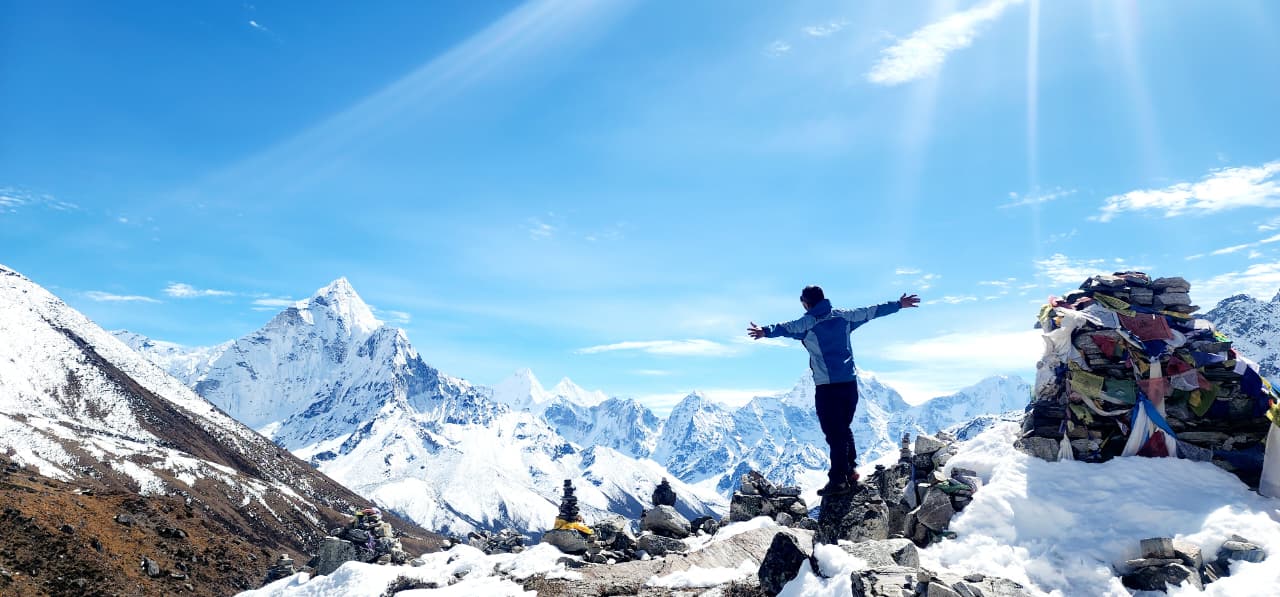
An early morning hike to Gokyo Ri (5,357 m) offers one of the finest panoramic viewpoints in the Everest region, with sweeping views of Mount Everest, Lhotse, Makalu, and Cho Oyu. As the sun rises, the Himalayan giants glow in golden light, making the climb truly worthwhile. After descending, the rest of the day is dedicated to relaxing by the serene Gokyo Lakes, giving your body time to recover and acclimatize before crossing the next high mountain pass..
Day 07: Trek from Gokyo to Dragnag (4.700m) about 4 hours of walk
Today’s trail follows the edge of the massive Ngozumpa Glacier, the longest glacier in Nepal, offering close up views of its rugged ice formations and dramatic moraine landscape. This is a relatively short and gentle trekking day, allowing ample time to rest, acclimatize, and prepare both physically and mentally for the upcoming high-altitude pass crossings in the Everest region.
Day 08: Trek from Dragnag to Dzongla via Cho – La Pass ( 5,420m) about 9-10 hours of walk .
Today’s route links remote valleys and rugged Himalayan terrain, taking you deeper into the heart of the Everest region. As the trail gradually ascends, the landscape becomes more alpine, with rocky paths, high pastures, and sweeping mountain vistas. Approaching the Everest Base Camp trekking area, the scenery grows increasingly dramatic. The day concludes at Dzongla, a scenic mountain settlement known for its striking views of surrounding snow-capped peaks and tranquil high altitude setting.
Day 09: Trek from Dzongla to Labuche (4,940m) about 5 hours of walk
Today’s trail joins the classic Everest Base Camp trekking route, following a well-defined path through the heart of the Khumbu region. As you gradually ascend, you pass the moving Everest climbers’ memorials, dedicated to mountaineers who lost their lives on the world’s highest peak—powerful reminders of Everest’s scale and strength. The day ends at Lobuche, a stark high-altitude settlement set beneath towering Himalayan giants, where the thin air and dramatic surroundings make the altitude truly felt.
Day 10: Trek to Gorak Shep (5,160m) and Hike to Everest Base Camp (5,364m) about 4-6 hours of walk
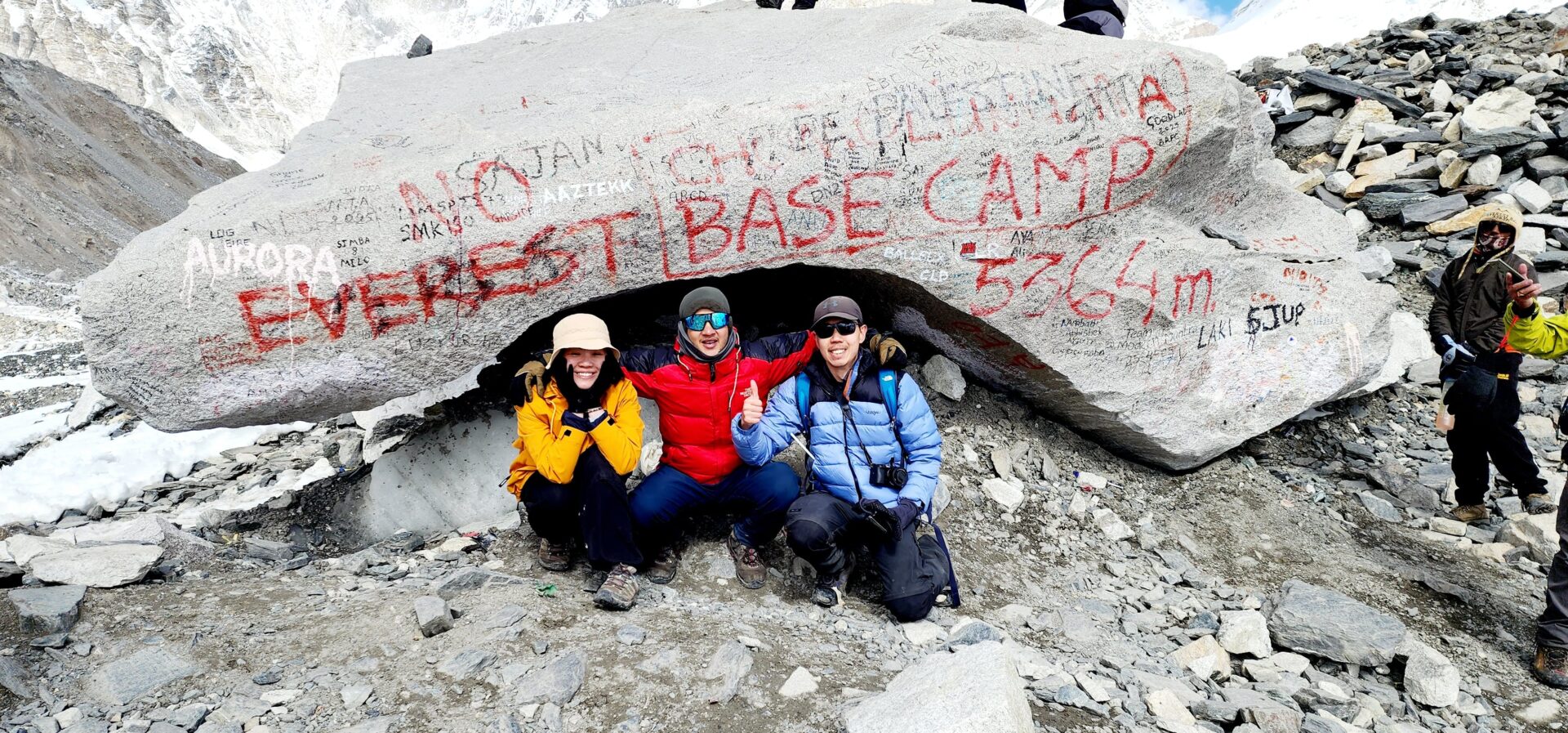
Today is one of the most exciting days of the trek as you hike to Gorak Shep, the final settlement before Everest Base Camp. After a short rest and acclimatization break, you continue toward Everest Base Camp (5,364 m), trekking across glacial moraine with dramatic views of legendary Himalayan peaks such as Nuptse, Pumori, and Khumbu Icefall. Standing at the foot of the world’s highest mountain is a truly unforgettable moment. After exploring the area and taking photos, you retrace your steps back to Gorak Shep for an overnight stay.
Day 11: Early Morning Hike to Kala Patthar (5,545m) and Trek back to Lobuche (4,940m) - about 3 hours of walk and then get to rest
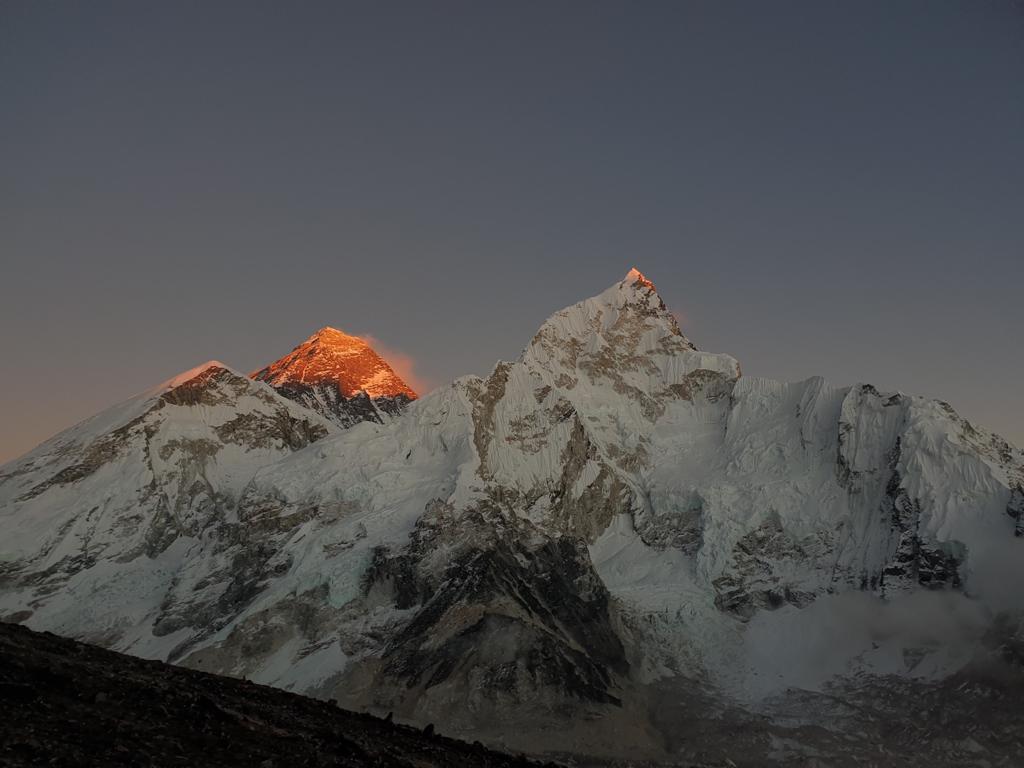
Before sunrise, you make an early morning ascent to Kala Patthar (5,545 m), the most famous viewpoint for close-up views of Mount Everest. As the sun rises, the surrounding Himalayan peaks glow in shades of gold, offering one of the most iconic panoramas in the Everest region. After soaking in the breathtaking sunrise views, you descend back to Gorak Shep for breakfast before trekking back to Lobuche, retracing your steps through dramatic high altitude alpine terrain.
Day 12: Trek to Chhukung via Kangma La Pass ( 5,535m) about 8-10 hours of walk
Crossing Kongma La Pass (5,535 m) is one of the most challenging yet rewarding sections of the Three Passes Trek. The ascent is steep, remote, and physically demanding, but the effort is fully rewarded with spectacular panoramic views of Ama Dablam, Lhotse, Makalu, and the surrounding Himalayan peaks. From the top of the pass, the trail descends into the scenic Imja Valley, leading you to the high-altitude village of Chhukung, where you can rest after this unforgettable mountain crossing.
Day 13: Trek from Chhukung to Thukla ( 4,620m) about 6-7 hours of walk
A gradual descent leads you back toward familiar trails in the Everest region, making today’s trek more relaxed and comfortable. The walk to Thukla allows plenty of time to rest, recover, and mentally prepare for the upcoming Lobuche Peak climb, while still enjoying the stark beauty of the high-altitude Himalayan landscape.
Day 14: Trek to Lobuche High Camp (5,400m) and Pre – Climbing Training about 4-5 hours of walk
Today’s trek takes you up to Lobuche High Camp, marking a crucial stage of the Lobuche Peak climbing adventure. After settling into camp and resting, your experienced climbing guide conducts essential pre-climb training. You’ll learn how to properly use crampons, ice axes, ropes, and practice key safety and movement techniques required for summit day. As night falls, final preparations begin, and around midnight the team gets ready for the summit push, aiming to take advantage of stable early morning mountain conditions.
Day 15: Summit Lobuche Peak (6,119m) and Descend to Pheriche (4,371m)
The summit climb of Lobuche Peak begins between 12:00 to 1:00 AM, taking advantage of stable early-morning conditions. Reaching the summit around sunrise, you are rewarded with breathtaking panoramic views of Mount Everest, Lhotse, Nuptse, and Ama Dablam, making every step of the climb worthwhile. After celebrating this major achievement and capturing summit photos, you descend carefully back to High Camp for a well earned meal. The journey then continues downhill to Pheriche, marking the end of an intense yet unforgettable peak-climbing day.
Day 16: Trek from Pheriche to Tengboche (3,867m) about 5 hours of walk
The trail descends gradually through dramatic alpine landscapes and rhododendron forests to Tengboche, home to the most famous monastery in the Everest region. Surrounded by towering Himalayan peaks, this spiritual center offers a peaceful atmosphere and sweeping mountain views, making it an ideal place to relax and reflect after days of high-altitude trekking.
Day 17: Trek from Tengboche to Namche Bazaar about 5-6 hours of walk
Descending through lush rhododendron forests and traditional Sherpa villages, the trail leads you back to Namche Bazaar, the vibrant hub of the Everest region. After weeks spent in the high Himalayas, the comforts of Namche feel especially rewarding hot showers, hearty meals, and a comfortable lodge offer the perfect chance to relax, refresh, and celebrate how far you have come.
Day 18: Trek from Namche Bazaar to Lukla about 6-7hrs of walk
Your final trekking day follows familiar trails back to Lukla, bringing your journey through the heart of the Everest region to a close. Walking past mountain villages and river valleys one last time, it’s a perfect opportunity to reflect on the incredible adventure across Everest’s high passes. Reaching Lukla marks the successful completion of the trek and a moment to celebrate the memories, challenges, and achievements of this unforgettable Himalayan journey.
Day 19: Fly From Lukla to Kathmandu
An early morning flight brings you back to Kathmandu, marking the end of your Everest Three Passes Trek with Lobuche Peak. As the Himalayas fade into the distance, you carry home memories of a truly unforgettable adventure defined by high mountain challenges, rich Sherpa culture, and some of the world’s most spectacular alpine scenery.
If the above Everest Three High Pass Trek with Lobuche Peak itinerary does not meet your needs, we can design individualized travel plans based on your preferences and specifications.
Plan My TripEverest Three High Pass Trek with Lobuche Peak Cost Includes
- Three times Three meals a day- Breakfast, Lunch, Dinner a day during the trek.
- Accommodation in tea house during the trek.
- Seasonally fruits and desserts on the trek after dinner every day.
- Climbing Gear: Crampons, Ice axe, Helmet, harness, Climbing boot, and Carabiner are included.
- Flight ticket to Lukla from Kathmandu or Ramechhap including airport transfer to domestic airport. Round trip.
- An experienced, helpful, knowledgeable, friendly, English speaking, well trained, government license holder Climbing Guide with all his salary, food, Drinks, accommodation, equipment, transport, insurance, etc.
- Pick up and drop from Domestic airport to hotel and vice versa.
- National park Trekking permits & local government permit and TIMS Card.
- Nepal Holiday Treks and Tours, (-20 degree sleeping bag) and a duffel bag for the trekking, but you need to refund to the office after the trip.
- Special Climbing peak permits.
- One night stay in tent and camping.
- An experienced, helpful, knowledgeable, friendly, English speaking well trained, government license holder Trekking Guide with all his salary, food, Drinks, accommodation, equipment, transport, and insurance
- Insurance, daily wages, equipment, meals and accommodation for trekking guide and climbing guide and porter.
- You will be under observation with a pulse oximeter to have your oxygen levels and heart rate measured twice a day during the trek. This is to catch the signs of Altitude Mountain Sickness (AMS) early, thus making trekking safer.
- Nepal Holiday Treks and Tours trip completion certificate from the company side.
- Arrangement of Emergency helicopter service (paid by your travel insurance company)
- Normal First aids kit box.
- All taxes and company service charges.
Everest Three High Pass Trek with Lobuche Peak Cost Excludes
- International airfare and visa fees.
- Lunch and dinner in Kathmandu.
- Airport pickup and hotel transfers by Private Vehicle.
- Any accommodation in Kathmandu – 2 Nights with Breakfast included.
- Personal expenses of bar and beverage bills, Wi-Fi, hot shower, bottle of water, extra porters, laundry, or any other things that are not mentioned by the company.
- Your trekking gear and extra nights in a certain destination.
- A strong, helpful porter with proper safety equipment and walking equipment, his salary, food, drinks, accommodation, and insurance (one porter for two people, he will carry a bag pack max 20-25 kg).
- Your travel insurance, which should include the emergency rescue.
- Tips for your guide and porters, which is compulsory.
- Extra expenses due to any event such as strikes, weather conditions, or flight delays.
Everest Three High Pass Trek with Lobuche Peak Additional Info
Accommodation and Food
Accommodation
Accommodation during the Everest Three High Pass trek with Lobuche Peak is mainly tea houses (mountain lodges) throughout the Everest region . These lodges offers basic but comfortable rooms , usually with twin beds, mattresses , blankets and shared bathrooms . In lower villages like Namche Bazaar , tea houses are more developed , while facilities become simpler at higher altitudes.
Up high near Lobuche Peak, climbers sleep in tents at High Camp where support teams handle the logistics. Most teahouses offer hot showers and places to charge devices, though these extras tend to come with a fee as you go higher.
Food
Food on the trek is fresh, filling and designed for high altitude trekking . Meals are prepared in tea house kitchens using locally available ingredients .
Common meals include:
- Dal Bhat (rice, lentils, vegetables)
- Noodles, pasta, fried rice, and soups
- Potatoes, eggs, pancakes, porridge, and bread
(You can choose any items available in the menu)
Note : It is recommended not to eat non- veg food because non – veg food are not fresh their which can cause diarrhea and stomach pain problems while trekking .
As altitude increases , menu options become more limited but meals remains nutritious and rich in energy. Hot drinks like tea, coffee and ginger lemon honey are widely available and help with acclimatization .
Wi-Fi and Connectivity
Wi-Fi is available in main villages like Lukla, Namche, Dingboche, and Gokyo via Everest Link, but there is no signal on the high passes or at Lobuche Peak Base Camp. Mobile networks work only in lower areas, so expect a digital detox with epic mountain views.
Permits Required
To complete the Everest Three High Pass trek with Lobuche peak, trekkers need three main permits . These permits ensure legal access to the Everest region and allow the ascent of Lobuche Peak .
- Sagarmatha National Park Entry Permit
This permit is required to enter Sagarmatha National Park , a UNESCO World Heritage Sites that cover most of the Everest Region and allow the ascent of Lobuche Peak . - Khumbu Pasang Lhamu Rural Municipality Permit
This is local area permit required for trekking in the Khumbu region . It replaces the old TIMS card foe Everest trek and is checked at entry points along the trail. - Lobuche Peak Climbing Permit
Since this trek includes climbing Lobuche Peak ( 6,119m ) , as a separate climbing permit issued by the Nepal Mountaineering Assosiation (NMA) is mandatory. The cost may be differs as per season .
(All these permits make your Everest Three La Passes Trek with Lobuche Peak safe, legal, and environmentally responsible.)
Insurance and Visa
A tourist visa for Nepal is required to trek the Everest Three High Passes & Climb Lobuche Peak, which you usually get on arrival at Kathmandu airport or apply for online. You should consider travel insurance as a necessity for your safety be sure it covers trekking at high altitude (to 6,200m), emergency helicopter evacuation, and climbing. Without adequate insurance, a rescue can cost you thousands, so don’t skimp on it better safe than summit-less.
Guide and Porter
For the Everest Three High Passes Trek with Lobuche Peak, guide and porter hire services are not merely useful , they are required. It is one of the most toughest trekking in nepal, with high altitude passes and a technical climbing segment. Our local guides have been trained in altitude safety, navigation, and climbing support, so you can rest assured your journey will be a safe and successful one. Porters carry your heavy gear, so you can concentrate on the adventure and not on your backpack. With our team, you are not just trekking – juyou’re trekking smart, safe, and supported every step of the way.
Transportation and Flights
Getting to the Everest Three High Passes Trek with Lobuche Peak begins with a breathtaking journey by air from Kathmandu to Lukla, the gateway to the Khumbu area. Flights are short, (approximately 30 minutes) but dependent on weather, so delays are common. Alternative, for those who need more flexibility, is to fly from Ramechhap Airport instead. All the ground transport, airport transfers, and domestic flights are booked as part of your trip – you just concentrate on trekking and we take care of the travel .
Altitude Sickness and its Safety Measures
The Everest Three High Passes Trek with Lobuche Peak reaches extreme altitudes, with multiple days spent above 5,000 meters and a summit climb to 6,119 meters. Because of this, altitude sickness (Acute Mountain Sickness – AMS) is one of the most important safety concerns on this trek.
Altitude sickness can affect anyone, regardless of age or fitness, once trekking above 3,000 meters in the Everest Region. Common symptoms include headache, nausea, dizziness, loss of appetite, fatigue, and difficulty sleeping. If ignored, AMS can develop into more serious conditions like HAPE or HACE.
Due to the high passes like Renjo La, Cho La, Kongma La and the climb of Lobuche Peak, proper acclimatization is essential.
Key Safety Meausres and prevention
- Gradual ascent and proper acclimatization days, especially in Namche Bazaar and higher villages
- Stay well hydrated by drinking plenty of water throughout the day
- Walk slowly and maintain a steady pace
- Avoid alcohol and smoking at high altitude
- Eat enough food, even if appetite is low
- Listen to your body and report symptoms early
Guides regularly monitor oxygen levels and symptoms, and itineraries are designed to reduce altitude risks.
If someone suffers from altitude sickness in the journey , they should inform the guide immediately and rest for 2-3 days . If also they didn’t recover they will be return back from the journey through bus , if access but in case of not access of bus they should return through the helicopter managed by the travel agency which cost extra payment .
Culture and Lifestyle
Trekking the Everest Three High Passes with Lobuche Peak is not only a high altitude adventure but also a deep cultural journey through the heart of Sherpa homeland in Nepal’s Everest region .
Sherpa Culture and Tradition
Khumbu is the native place of Sherpa people who are well known in the world because of their mountaineering talent, hospitality and strong Buddhist faith. You can notice that as you walk across a village, such as Namche Bazaar, the life there is framed by mountains in the form of yaks taking their loads, locals operating teahouses, and prayer flags blowing in the wind.
Buddhism in Everyday Life
Buddhism is a major aspect of the local life. On the way you would see mani walls, prayer flags , chortens and monasteries including Tengboche Monastery which is very famous. Trekker is supposed to walk counter clockwise in religious monuments and observe local practices.
Simple Mountain Lifestyle
The Everest is a very close to nature life. The locals are dependent on trekking tourism, farming, and herding of yaks. The architecture of homes and lodges is such that it can survive down to -30 C (Himalayan winters are cold), and community life is robust, particularly in remote villages located on the high pass routes.
Cultural Respect on the Trail
Tourists are advised to dress decently, seek some permission before taking pictures of individuals, and observe local customs. A greeting of Namaste is enough to establish obligatory relationships with the locals.
Why Book with us ?
Choosing the right team matters on a journey as demanding as the Everest Three High Passes Trek with Lobuche Peak. Here is why trekking with us makes a real difference:
Knowledgeable in the Everest Region: Our experience is practical in arranging high altitude treks and peak climbing in the Everest area where all the arrangements are well prepared and managed professionally.
Safety Comes First: The safety of you is our priority. We have all the essential plans to acclimatize properly as well as trained guides, emergency aid, and altitude awareness, so we move virtually in a responsible and conscientious way.
Local Sherpa Guides & Crew: Our hikes are accompanied by seasoned local Sherpa climbers who are more familiar with the roads, weather, culture, and mountains than anybody- this will bring reality and trust to your hike.
Best Value for Your Money: We provide transparent and reasonable rates without any effort to cut corners or sacrifice safety, service, and experience, and this provides the best value deal on an ultimate Himalayan adventure.
Personalized Tourist Itineraries: Every trekker is different. We create the itineraries according to your pace, fitness, time and interests to make it a more comfortable and rewarding experience.
99 % Repeated Customers: At our travel agency , many of our trekkers don’t just travel with us once, they come back again and again . From Everest Base Camp trek to Manaslu from Annapurna to Nar phu , our returning guests are true proof of the care , safety and honesty we deliver on every journey.
With us, you don’t just book a trek , you travel with a team that cares about your experience, safety, and success in the Himalayas.
Upcoming Departures
Everest Three High Pass Trek with Lobuche Peak Gallery
Customer Reviews
Write a ReviewEverest Three High Pass Trek with Lobuche Peak FAQs
How long does the Everest Three La Passes Trek with Lobuche Peak take?
The trek usually takes 20 to 22 days, including acclimatization days and the Lobuche Peak climbing schedule. The duration can be customized based on fitness and time. And we had made the best possible itinerary covering all activities in just 19 days which saves your excess time and money .
Is altitude sickness a serious concern?
Yes, altitude sickness is the main risk on this trek due to extreme elevations. Proper acclimatization, slow ascent, hydration, and experienced guides greatly reduce the risk.
How do we reach the starting point of the trek?
You first fly to Kathmandu and from Kathmandu or Ramechhap ( in season) you take a scenic mountain flight to Lukla, where the trek officially begins.
Why choose this trek over Everest Base Camp?
The Everest Three High Passes Trek with Lobuche Peak offers more adventure, fewer crowds, three high passes, remote valleys, and a Himalayan summit, making it the most complete Everest trekking experience.
Is this trek safe?
Yes, with proper planning, acclimatization, experienced local guides, and safety measures, the trek is safe and well managed, even though it is physically tough.
Can this trek be customized?
Yes, the itinerary can be fully customized based on your time, fitness level, acclimatization needs, and trekking goals.
Is this trip more challenging than the Everest Base Camp trek?
Yes , the Everest Three High Pass Trek with Lobuche Peak is much more tough than the standard Everest Base Camp Treks as it pass through several high passes and a technical peak climb.
Do we visit Everest Base Camp during this trek ?
Yes, the majority of itineraries do take you to Everest Base Camp (5,364m) and Kala Patthar (5,545m) for spectacular views of Mt Everest.
Everest Three High Pass Trek with Lobuche Peak Equipment Lists
Head and Face Protection
- Warm woolen or fleece hat
- Lightweight sun hat or cap
- Balaclava or face mask
- UV- protection sunglasses
- Neck gaiter or buffer for wind and cold protection
- High SPF Sunscreen
Upper Body Clothing
- Moisture- wicking thermal base layer (at least two)
- Mid-layer fleece jacket
- Water proof and wind proof jacket
- Two or three light weight trekking shirts for daily wear
- Lightweight insulated jacket for the middle altitude sections
Lower Body Clothing
- Thermal base layers leggings
- Water proof and wind proof trekking pants
- Comfortable trekking trousers
- Warm fleece or insulated pants for high camp on Lobuche
Footwear
- Sturdy water proof high ankle trekking boots
- Mountaineering boots suitable for crampons
- Warm camp sandals or lightweight shoes for teahouse evenings
- Moisture wicking trekking socks (at least five pairs)
- Gaiters to keep snow out pf your boots on glacier and pass crossings
Backpacks and luggage
- Main duffel bag for you porter to carry
- Day pack that you carry yourself each day with essentials
- Waterproof rain cover for both bags
- A few dry bags to keep electronics and documents dry inside your pack
Sleeping Gear
- A high quality sleeping bag rated to at least -200C (provided by us and you have to return after your trek is completed)
- A sleeping bag liner for extra warmth and hygiene
- A lightweight inflatable pillow if you prefer comfort in tea houses
Climbing Equipment for Lobuche Peak
- Crampons
- Ice axe
- Climbing harness
- Helmet
- Carabiners and ascenders
- Fixed ropes – set and managed by your climbing guides
Trekking Accessories
- Trekking poles
- Headlamp with extra batteries
- Personal water bottles
- Water purification tablets or a portable filter to avoid buying plastic bottles at altitude
- High energy snacks – nuts, dried fruit, energy bars, chocolate, etc.
Toiletries and Personal Hygiene
- Hand sanitizer
- Wet wipes for days when showers aren’t available
- Toilet paper and a small towel foe emergencies above the teahouse zones
- Personal sanitary items as needed
Medical and First Aid Kit
- First aid kit (provided by us)
- Diamox for altitude sickness prevention
- Ibuprofen and paracetamol for pain and fever
- Antihistamines and anti-diarrhea medication
- Blister plasters and moleskin
- Antiseptic cream and bandages
- Personal prescription medications with enough supply for the full trip plus extra
- A pulse oximeter (provided by us)
Electronics and Powers
- A universal power bank
- Universal travel adaptor
- Spare camera batteries
- Waterproof phone case or dry bags for your phone
- Earphones for long teahouse evenings
Similar Tours
Everest Base Camp Trek with Helicopter Return
Everest base camp trek with Helicopter Return is a popular and challenging trekking adventure in Nepal that takes you...
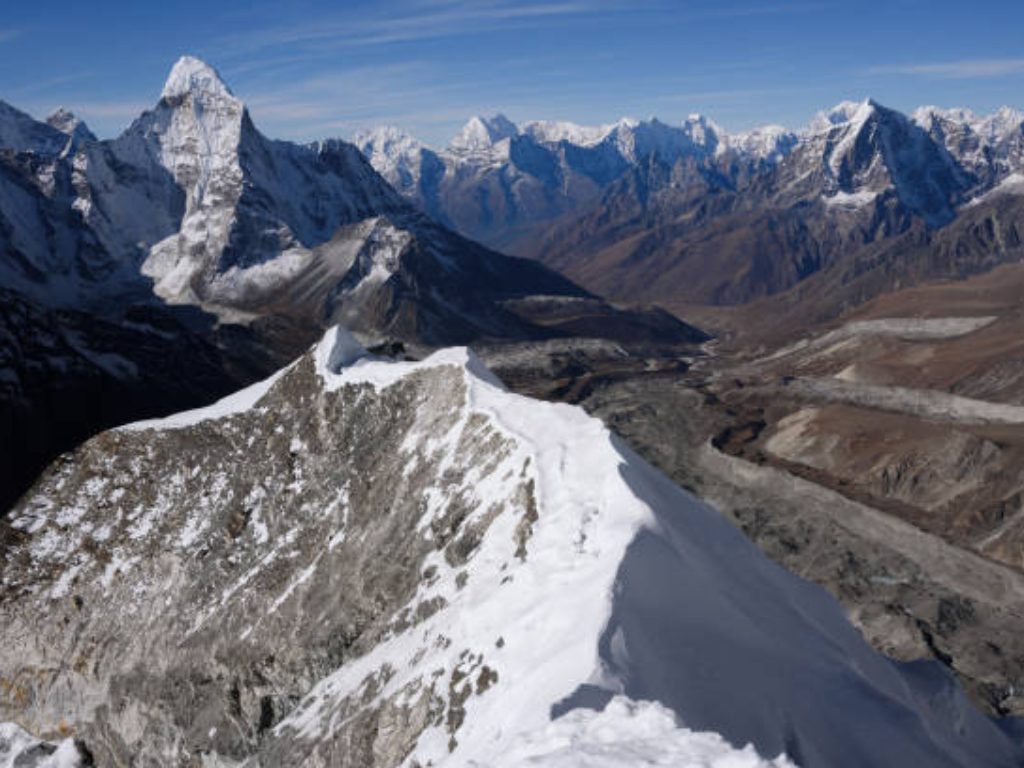
Everest Base Camp Trek with Island Peak Climbing
Island Peak Climbing and Everest Base Camp Trek is a thrilling experience that combines two of Nepal’s most in-demand...
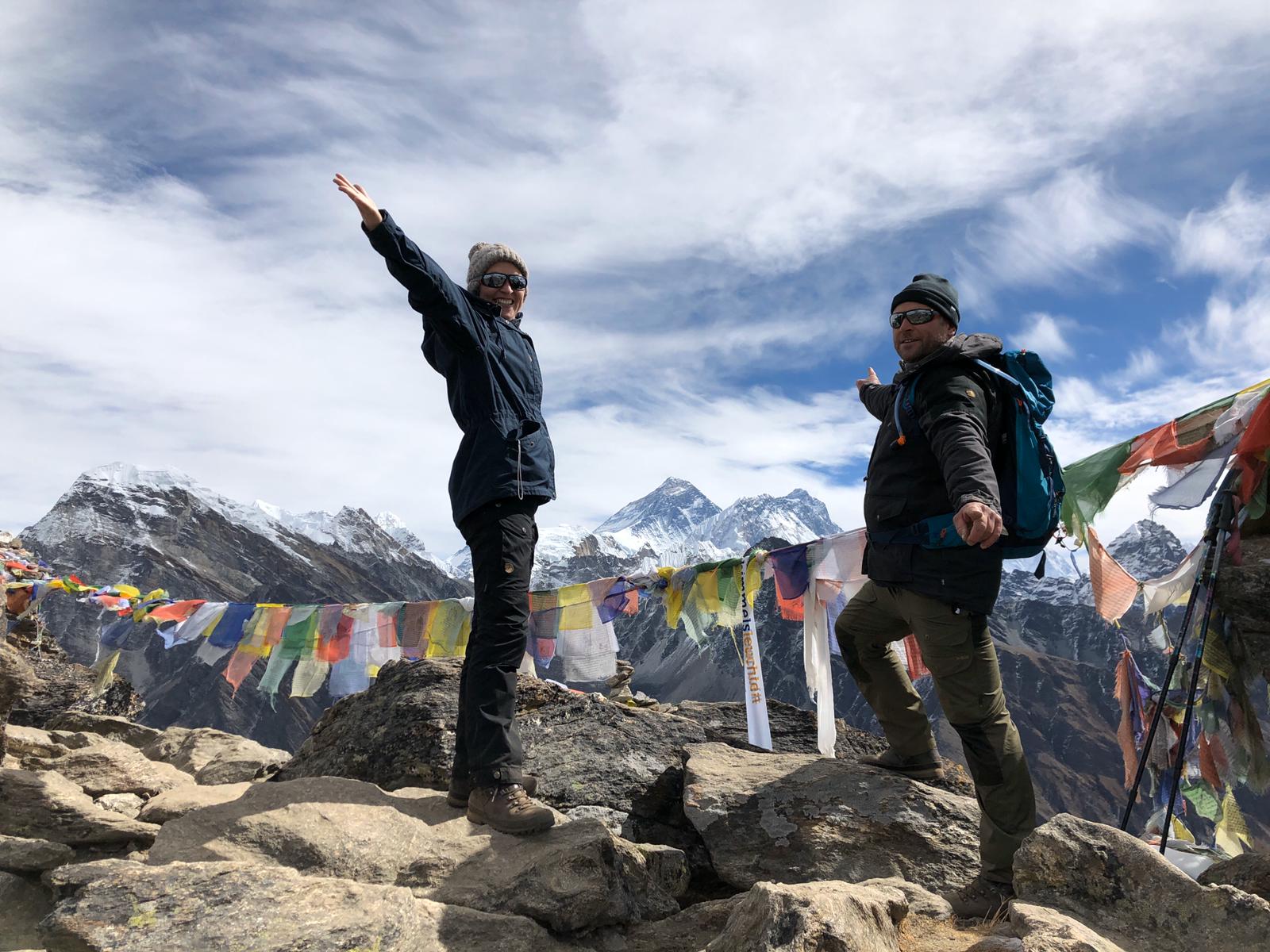
Everest Base Camp via Cho-la Pass with Gokyo Valley Trek
The Everest Base Camp via Cho-La Pass trek is one of the most adventurous routes in the Khumbu region....