
Langtang Valley Trek – Frequently Asked Questions
Posted by: Nepal Holiday Treks and Tours on September 21, 2026
Introduction
Planning a Langtang Valley Trek often comes with questions about the route, difficulty, altitude, permits, best season, accommodation, food, transportation, and preparation. This FAQ guide answers the most common questions trekkers ask before visiting the Langtang region.
The Langtang Valley Trek takes you from the lower hills toward Kyanjin Gompa through forests, Tamang villages, river valleys, and alpine landscapes. The route reaches around 3,800 meters at Kyanjin Gompa, with optional higher hikes such as Kyanjin Ri and Tserko Ri.
This guide covers practical details to help you understand what to expect before starting the trek, including trekking permits, TIMS requirements, accommodation, food, weather, altitude, transportation, packing, and daily walking conditions.
FAQ’s
1. What is the Langtang Valley Trek?
The Langtang Valley Trek is a popular trekking route in Nepal that takes you through Tamang villages, forests, mountain landscapes, glaciers, and the upper Langtang Valley. The trek usually continues to Kyanjin Gompa, the main destination in the valley.
2. Where is the Langtang Valley Trek located?
The Langtang Valley Trek is in northern Nepal, close to the Nepal–Tibet border. The region lies within Langtang National Park and is about 130 km north of Kathmandu.
3. How long does the Langtang Valley Trek take?
A standard Langtang Valley Trek generally takes around 7 to 10 trekking days, depending on the itinerary, transportation, acclimatization, and walking pace.
4. What is the highest point of the Langtang Valley Trek?
The highest point depends on the itinerary. Kyanjin Gompa is around 3,800 meters (12,467 feet), while trekkers who climb Kyanjin Ri or Tserko Ri reach higher elevations.
5. How high is Kyanjin Gompa?
Kyanjin Gompa is located at approximately 3,800 meters (12,467 feet) above sea level. It is the main overnight destination in the upper Langtang Valley.
6. How difficult is the Langtang Valley Trek?
The Langtang Valley Trek is generally considered moderate. You should be comfortable walking several hours a day on uneven mountain trails with regular uphill and downhill sections.
7. Is the Langtang Valley Trek suitable for beginners?
Yes. The Langtang Valley Trek can be suitable for beginners with reasonable fitness and proper preparation. The route does not require technical climbing skills.
8. Can beginners climb Tserko Ri during the Langtang Trek?
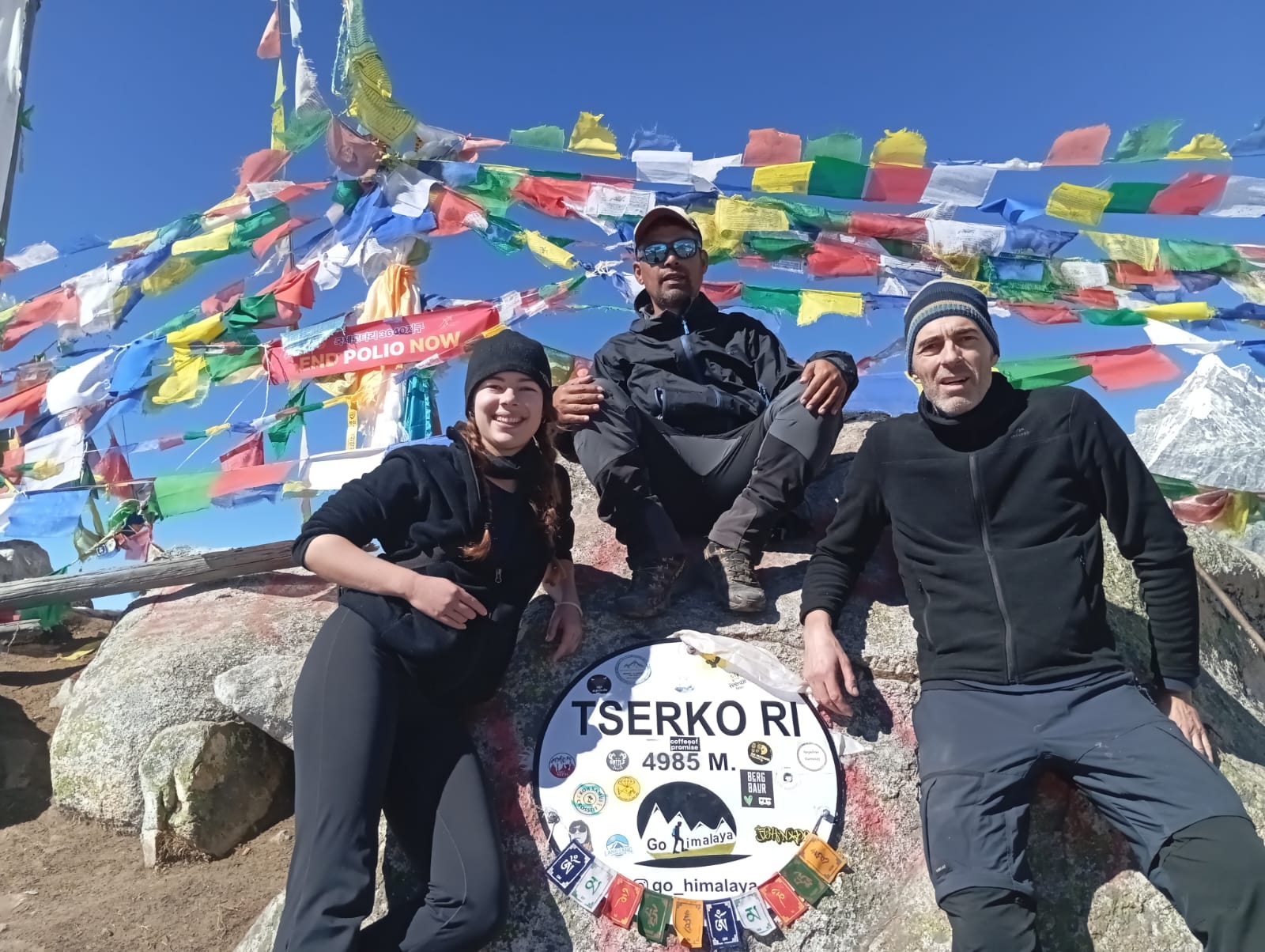
Fit beginners can attempt Tserko Ri with proper acclimatization, but it is considerably more demanding than reaching Kyanjin Gompa. Weather, altitude, fitness, and trail conditions should be considered before attempting the climb.
9. Is a guide required for the Langtang Valley Trek?
Yes. Under Nepal’s current trekking regulations, the Langtang Trek is among the routes where trekkers must be accompanied by a licensed trekking guide and obtain a TIMS card through an authorized trekking agency.
10. Do I need a TIMS card for the Langtang Valley Trek?
Yes. A TIMS card is required for the Langtang Trek under the current Nepal Tourism Board provisions. The current listed fee is NPR 1,000 for SAARC nationals and NPR 2,000 for other nationalities.
11. Do I need a Langtang National Park permit?
Yes. Trekkers entering Langtang National Park need a park entry permit. The current Nepal Tourism Board listing shows NPR 3,000 for foreign visitors and NPR 1,500 for SAARC nationals.
12. Where does the Langtang Valley Trek start?
The common trekking route starts from Syabrubesi, which is reached by road from Kathmandu.
13. How far is Syabrubesi from Kathmandu?
Syabrubesi is north of Kathmandu and is the usual road-access point for the Langtang Valley Trek. Travel time can vary considerably depending on road and traffic conditions.
14. How do I get from Kathmandu to Syabrubesi?
You can travel from Kathmandu to Syabrubesi by public bus, shared vehicle, or private jeep. A private vehicle generally provides greater flexibility and comfort.
15. How long is the drive from Kathmandu to Syabrubesi?
The drive commonly takes several hours, but the actual duration depends on road conditions, traffic, weather, and the type of vehicle.
16. What is the main destination of the Langtang Valley Trek?
Kyanjin Gompa is the main destination of the classic Langtang Valley Trek. From here, trekkers can explore nearby viewpoints and high ridges.
17. What can I see during the Langtang Valley Trek?
The trek offers mountain views, forests, Tamang villages, rivers, waterfalls, glaciers, alpine landscapes, monasteries, and the upper Langtang Valley. Langtang Lirung is one of the major mountains visible in the region.
18. Can I see Langtang Lirung on the trek?
Yes. Langtang Lirung is one of the prominent peaks of the Langtang region and rises to approximately 7,245 meters.
19. What villages are visited on the Langtang Valley Trek?
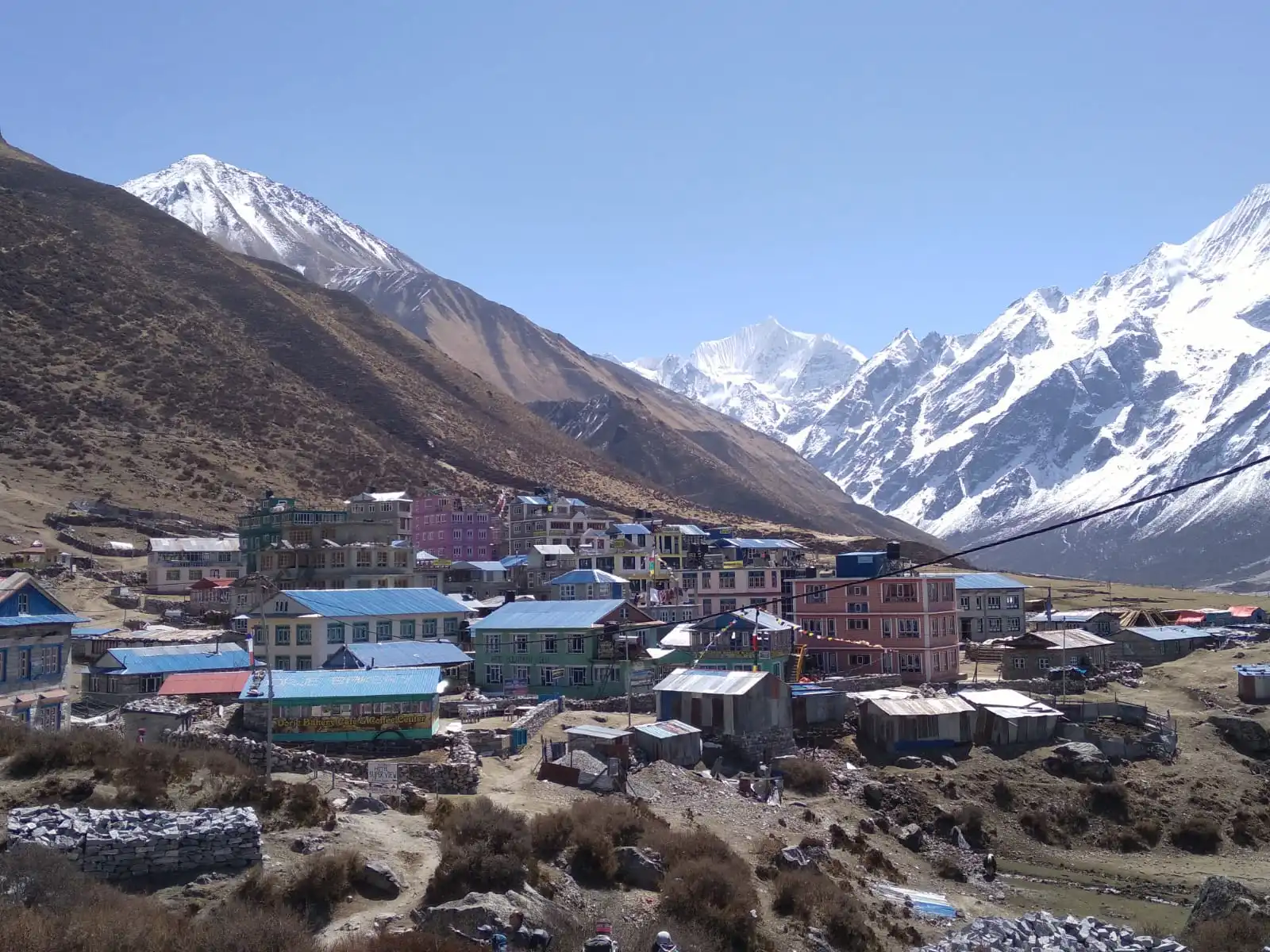
Depending on the itinerary, the route can pass through villages and settlements such as Syabrubesi, Bamboo, Lama Hotel, Ghoda Tabela, Langtang Village, and Kyanjin Gompa.
20. What is Lama Hotel on the Langtang Trek?
Lama Hotel is a common overnight stop along the lower section of the Langtang Valley trail. It sits along the forested route between Syabrubesi and the higher settlements.
21. What is Ghoda Tabela?
Ghoda Tabela is an important stop on the trail toward Langtang Village. It sits at around 3,000 meters (9,843 feet) according to Nepal Tourism Board trekking information.
22. What is Langtang Village?
Langtang Village is one of the main settlements on the route toward Kyanjin Gompa. The village lies at approximately 3,307 meters (10,850 feet).
23. What is Kyanjin Gompa known for?
Kyanjin Gompa is known as the upper destination of the Langtang Valley Trek and provides access to nearby viewpoints and higher hiking routes.
24. Can I hike Kyanjin Ri during the Langtang Valley Trek?
Yes. Kyanjin Ri is a popular side hike from Kyanjin Gompa. It provides higher-altitude views of the surrounding mountains and valley.
25. Can I climb Tserko Ri on the Langtang Trek?
Yes. Tserko Ri can be included as a challenging side trip from Kyanjin Gompa. It requires an early start, good fitness, and suitable weather conditions.
26. Which is higher, Kyanjin Ri or Tserko Ri?
Tserko Ri is generally higher than the commonly used Kyanjin Ri viewpoint routes. Exact elevations can vary depending on the summit point and route used.
27. Is there an acclimatization day on the Langtang Valley Trek?
Many itineraries include an acclimatization or exploration day at Kyanjin Gompa. This allows trekkers to rest and explore higher areas before descending.
28. Is altitude sickness a concern on the Langtang Trek?
Yes. Altitude sickness can become a concern as you climb above 3,000 meters. Walking gradually, staying hydrated, taking rest days, and paying attention to symptoms are important.
29. How can I prevent altitude sickness on the Langtang Trek?
Ascend gradually, avoid overexertion, drink enough fluids, sleep properly, and allow your body time to adjust to increasing altitude. If serious symptoms develop, descending to a lower elevation is important.
30. What is the best time for the Langtang Valley Trek?
The main trekking seasons are spring (March to May) and autumn (October to November). Nepal Tourism Board identifies these months as favorable periods for visiting the Langtang region.
31. Can I do the Langtang Valley Trek in winter?
Yes, but winter brings colder temperatures and possible snowfall at higher elevations. Proper winter clothing and preparation are necessary.
32. Can I trek Langtang Valley during the monsoon?
It is possible, but June to September generally brings monsoon rain, wet trails, clouds, and possible landslide-related travel problems.
33. Is Langtang Valley Trek crowded?
The Langtang region generally receives fewer trekkers than the most heavily visited Everest and Annapurna routes. Nepal Tourism Board describes Langtang as a trekking destination with fewer visitors.
34. What kind of accommodation is available on the Langtang Trek?
Teahouses and lodges are available along the main trekking route. Nepal Tourism Board notes that the Langtang region is well served by teahouses and lodges.
35. Can I get Wi-Fi during the Langtang Valley Trek?
Wi-Fi may be available at some teahouses, but the quality and reliability vary. Do not depend on a continuous internet connection throughout the trek.
36. Is mobile network available on the Langtang Trek?
Mobile coverage varies by location and elevation. Some settlements have connectivity, while more remote sections may have weak or no signal.
37. Is electricity available on the Langtang Trek?
Electricity is available at many teahouses, although charging facilities and power reliability can vary between settlements.
38. Can I charge my phone on the Langtang Trek?
Yes, charging is available at many lodges and teahouses, usually for an additional fee. Carrying a power bank is still useful.
39. Do teahouses provide hot showers?
Many teahouses offer hot showers, particularly in larger settlements, although availability can vary and may cost extra.
40. What food is available during the Langtang Valley Trek?
Teahouses generally serve meals such as dal bhat, noodles, rice, pasta, soup, potatoes, eggs, bread, and other simple trekking foods.
41. Is vegetarian food available on the Langtang Trek?
Yes. Vegetarian meals are commonly available at teahouses along the route.
42. Can I drink tap water during the Langtang Trek?
It is better to treat natural or tap water before drinking it. Trekkers commonly use water purification tablets, filters, or other suitable purification methods.
43. How much water should I carry while trekking?
A reusable water bottle or hydration system with enough capacity for the day’s walking is recommended. You can usually refill water along the route, but treatment is important.
44. What should I pack for the Langtang Valley Trek?
Essential items include trekking shoes, warm layers, rain protection, a sleeping bag, backpack, water bottle, sunscreen, sunglasses, personal medication, first-aid supplies, and comfortable trekking clothes.
45. Do I need trekking boots for Langtang Valley?
Yes. Comfortable trekking boots with good grip are recommended because the trail includes rocky, uneven, muddy, and steep sections.
46. Do I need a sleeping bag for the Langtang Trek?
A sleeping bag is recommended, especially during colder months and at higher elevations. Some trekking agencies provide sleeping bags as part of their equipment.
47. How much does the Langtang Valley Trek cost?
The cost depends on the itinerary, transportation, guide, porter, accommodation, permits, meals, group size, and services included in the package.
48. Is a porter necessary for the Langtang Valley Trek?
A porter is not essential for every trekker, but hiring one can make the trek more comfortable by reducing the amount of luggage you need to carry.
49. Can I do the Langtang Valley Trek without a porter?
Yes, but you should keep your backpack light and carry only what you can comfortably manage for several hours of walking each day.
50. Is the Langtang Valley Trek safe?
The trek is generally manageable with proper preparation, a licensed guide, suitable equipment, and attention to weather and altitude. Conditions can change in mountainous areas, so following local guidance is important.
51. Is Langtang Valley Trek suitable for families?
It can be suitable for families with older children who are comfortable with several days of mountain walking. The itinerary should be adjusted according to the family’s fitness and experience.
52. Can children do the Langtang Valley Trek?
Children with good physical fitness can potentially complete the trek, but age, previous hiking experience, altitude tolerance, and itinerary length should be considered carefully.
53. Can senior citizens do the Langtang Valley Trek?
Yes, some senior trekkers complete the Langtang Valley Trek. However, fitness, previous trekking experience, altitude tolerance, and medical advice where appropriate should be considered before departure.
54. What wildlife can be seen in Langtang National Park?
Langtang National Park is home to wildlife including red panda, Himalayan black bear, Himalayan tahr, musk deer, serow, ghoral, pika, and other species.
55. Can I see a red panda during the Langtang Trek?
Red pandas live in Langtang National Park, but seeing one in the wild is not guaranteed. They are elusive and usually found in forest habitats.
56. What type of landscape is found on the Langtang Trek?
The trail passes through forests, river valleys, alpine terrain, rocky landscapes, mountain settlements, and higher Himalayan surroundings.
57. Is the Langtang Valley Trek culturally interesting?
Yes. The route passes through Tamang communities where trekkers can experience local traditions, architecture, food, and village life.
58. What is the Tamang culture in Langtang?
The Tamang people are one of the main ethnic communities of the Langtang region. Their language, traditional dress, houses, crafts, and local customs are an important part of the trekking experience.
59. How many hours do I walk each day on the Langtang Trek?
Most trekking days involve roughly 4 to 7 hours of walking, although the exact duration depends on the itinerary, trail conditions, elevation gain, and individual pace.
60. How many kilometers is the Langtang Valley Trek?
The total distance varies depending on the starting point, itinerary, side hikes, and transportation arrangements. A standard itinerary is often planned around the main Syabrubesi–Kyanjin Gompa route.
Conclusion
Langtang Valley Trek – 9 Days
Langtang Valley Trek is a Himalayan valley in the mountains of the north- central Nepal known for its trekking...
The Langtang Valley Trek is a well-established Himalayan route that combines mountain scenery with Tamang culture and changing landscapes within Langtang National Park. From Syabrubesi, the trail gradually climbs through forests and mountain settlements toward Kyanjin Gompa and the higher viewpoints around the upper valley.
Before starting the trek, prepare for changing weather, several hours of walking each day, and increasing altitude. Make sure your required permits and TIMS card are arranged according to the latest regulations, and follow your guide’s advice throughout the journey.
With proper preparation, suitable equipment, and a realistic itinerary, the Langtang Valley Trek provides a direct way to experience the mountains and local communities of northern Nepal.
Related Blogs

Namche Bazaar: The Heartbeat of the Everest Region
Ask any trekker who has walked to Everest Base Camp and most of them will tell you the same thing. It’s just not a random village in the Khumbu region. Namche Bazaar is the town that stays in your heart forever. It is the heart of Khumbu, where you can get luxury services with backdrop […]
Everest Base Camp Vs Annapurna Base Camp : Which Trek Is Better?
If you are dreaming of trekking in Nepal, you have probably heard of two legendary trails: Everest Base Camp (EBC) and Annapurna Base Camp (ABC). Both trails are famous around the world. Both take you deep into the Himalayas. But they are not the same trek. In this guide, we will compare both treks in […]
How Difficult is the Langtang Valley Trek
I still remember the first time I stood at Kyanjin Gompa and gazed out at the Langtang Lirung glacier, an ice and rock wall so massive it seemed to be breathing. Behind me, a party of trekkers I had led from Kathmandu was hushed, their hands around cups of butter tea, utterly enraptured. One of them looked […]