
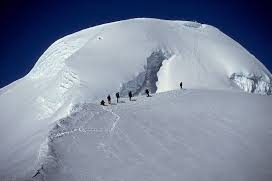


Short way to Mera Peak Summit Overview
Some mountains you climb and there is Mera Peak, the kind of summit that quietly changes something inside you and stays with you long after you have come back down.
Rising to 6,476 meters in the heart of Nepal’s legendary Solu Khumbu region, Mera Peak is one of those rare places where the thrill of high altitude mountaineering meets the soul of classic Himalayan journey. This is not just a climb. This is a full on adventure that takes you through remote valleys, ancient Sherpa villages, glacial rivers and breathtaking mountain passes before delivering you to one of the most rewarding summits in all of Nepal.
The short way to Mera Peak summit is designed for those who want to exercise the magic of this incredible mountain without unnecessary detours. Every single day on this route has a purpose. Every step takes you deeper into a landscape so raw, so untouched and so breathtaking beautiful that you will find yourself completely lost in it.
As you make your way through the peaceful Hinku Valley, you leave behind the crowded trails of the Everest Base Camp route and enter a world that very few travelers ever get to see. Yak herding camps, isolated kharkas, glacial landscapes and teahouses perched in the middle of nowhere, this is the real Himalaya.
And then comes the summit. Standing on top of Mera Peak at 6,476 meters, you are treated to one of the most extraordinary panoramas on the planet. Everest, Lhotse, Makalu, Cho Oyu and Kanchenjunga – five of the world’s fourteen eight thousand mountains are all visible in a single sweeping glance. There are very few places on earth where you can see this much of the world at once.
If you are looking for your first serious Himalayan summit or simply your next great mountain adventure, the short way to Mera Peak is waiting for you.
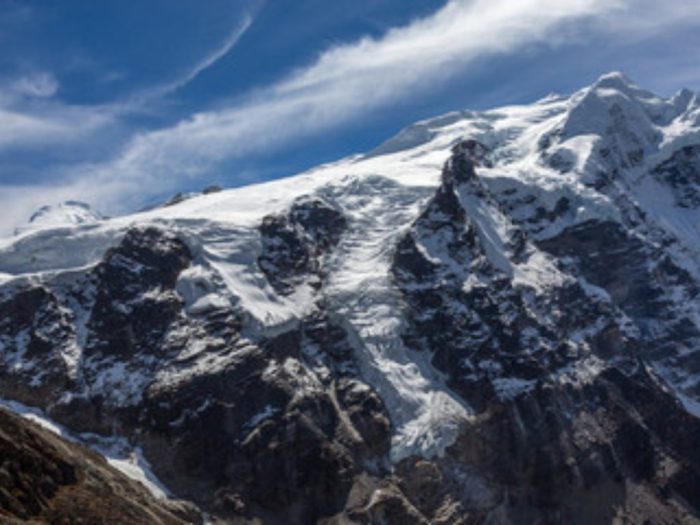
Best Time to Climb Mera Peak
Timing matters deeply in the mountains and Mera Peak has two golden windows that climbers swear by.
Spring (March to May): Spring is widely regarded as one of the best times to attempt the Short Way to Mera Peak Summit. The skies are clear, the weather is stable and the trails come alive with blooming rhododendrons painting the hillside in brilliant shades of red and pink. Daytime temperatures at altitude hover around 10 to 15 degree Celsius, while nights at higher camps are generally at their most forgiving, making this a wonderful season for both first time climbers and experienced mountaineers.
Autumn (September to November): After the monsoon washes the landscapes clean, autumn arrives with crisp, dry air and some of the clearest mountain views you will ever see. The trails are lush and green from the summer rains, the skies are brilliantly blue and the mountains seem impossibly close. Temperatures are slightly cooler than spring, ranging from 5 to 12 degrees Celsius during the day and dropping to around -15 degrees Celsius at higher elevations toward late November. But the stunning visibility and solid climbing conditions make every cold moment absolutely worth it.
Seasons to Avoid
Monsoon (June to August): Heavy rainfall makes the trail slippery and difficult, visibility drops significantly and the risk of landslides and avalanches increases considerably. Climbing Mera Peak during the monsoon is strongly not recommended.
Winter (December to February): Extreme cold and heavy snowfall make this a very challenging season. December is possible for well-equipped and highly experienced climbers who prefer solitude on the trail but it requires serious preparation and caution.
Why Choose the Short Way to Mera Peak Summit?
With so many incredible mountains in Nepal, why Mera Peak? Here is the honest answer.
Mera Peak sits in that rare sweet spot that very few mountains can claim. It is a genuine high altitude summit raw, real and deeply rewarding and yet it is within reach of determined trekkers who are ready to take their first serious step into Himalayan mountaineering. You do not need to be an elite expedition climber to dream about standing on this summit. You just need the will to get there.
But what truly sets the Short Way to Mera Peak apart is everything that surrounds the climb itself. You are not just scaling a mountain. You are trekking through the remote and hauntingly beautiful Hinku Valley, a trail so peaceful and so isolated that it feels like your own private corner of the Himalayas. You are crossing high mountain passes, walking beside ancient glaciers and spending nights in teahouses nestled beside yak herding camps under skies so full of stars it takes your breath away.
And then there is that summit moment. Five of the world’s fourteen eight thousand visible all at once. Everest, Lhotse, Makalu, Cho Oyu and Kanchenjunga. There are very few places on this planet where you can stand and see that much of the world spread out before you.
Whether this is your first peak above 6,000 meters or simply your next big adventure, the Short Way to Mera Peak delivers in every possible way.
Major Attractions of Short Way to Mera Peak Summit
Mera Peak offers a combination of natural and cultural richness: via the so-called “short way” to its summit, one of the most spectacular treks in the Khumbu region, along with views of some of the highest peaks of the world: Everest, Lhotse, and Makalu. As you go uphill, the trek route will give the chance to pass through thick forests, alpine grasslands, and typical villages of Sherpas-a perfect mixture between cultural exploration and nature. Besides that, it’s a peaceful trek, avoiding the crowds on other trek routes, and where one can have a closer intimacy with nature.
The other major attraction factor is the rewarding summit of Mera Peak at 6,476 meters. It is a pretty easy climb in the range, offering views for trekkers to take in some high-altitude mountain climbing without having extreme technical difficulties with the summit. The top offers great, breathtaking views at 360 degrees of the surrounding Himalayan giants like Everest, Lhotse, Makalu, and Cho Oyu, together with stunning glaciers and dramatic landscapes. It is a perfect combination of adventure and achievement, promising unforgettable memories and a sense of accomplishment to those who reach the top.
Scenic Beauty of the Short Way to Mera Peak Summit
This condensed route to the summit of Mera Peak includes some of the most fantastic scenery in the Khumbu area, as lush greenery makes a startling turn to dramatic, high-altitude landscapes. Picking a course through thickets of rhododendron, pine, and juniper, trekkers find the natural beauty on display changing endlessly. On route, the vistas of the white-peaked, snow-covered giants like Everest, Lhotse, and Makalu get better and better with time. These towering mountains provide a fantastic backdrop, furthering the feeling of grandeur and adventure defining the journey to Mera Peak. The serenity of the valleys, the rivers, and alpine meadows, together with the enchanting Sherpa villages, allows for full immersion on this trek.
It provides a very outstanding 360° view from Mera Peak-unequalled views of some of the giants of the high Himalayas are in clear sight: Everest, Lhotse, Makalu, Cho Oyu, besides many other grand Himalayas, all ringed together by an assortment of glaciers and scree fields. This incredible beauty amidst fragile snowfields, incised ridges, and huge, raw acres has just about no parallels. The contrasting lush valleys beneath and the inhospitable, virginal wilderness at the high-altitude summit evoke feelings of accomplishment and wonder, making it once in a lifetime for adventurers seeking serene beauty at the front door of the Himalayas.
Cultural Encounters in the traditional villages in the short way to Mera Peak Summit
The short route to Mera Peak is not only a trail of awesome natural beauty but also one that is culturally rewarding through the land of the Sherpa, the traditional inhabitants of the Khumbu region. As trekkers pass through villages such as Chhutang, Khothey, and Thangnak, they are accorded a vital cultural landscape that has been crafted over centuries. These villages happen to be hosts to the very Sherpas, renowned for warm hospitality, steeped in Buddhistic heritage, and attached with a sense of ownership to nature. Travelers get to take part in some real Sherpa culture, ancient Buddhist monasteries, a prayer wheel, and stupas, besides an opportunity to comprehend local customs and traditions of these people.
Moreover, the trek allows trekkers to actively interact with their hosts, the Sherpas. Showing warm, traditional Sherpa hospitality, sharing stories with local families, and observing daily life, the villages are rewarding in these remote mountain settlements. The significance of the Sherpa people, so well-acknowledged for their mountaineering skills, comes alive as the trekker observes their deep respect for the mountains with strong spiritual practices. Besides, these cultural exchanges depict the rich heritage of the region, which adds to the experience during a trek to Mera Peak. Put together, the stunning landscapes and meaningful cultural interactions make the journey even more memorable.
How Difficult is the Short Way to Mera Peak Summit?
Let us be completely honest with you. The Short Way to Mera Peak is not a stroll in the hills. But it is also not the kind of climb that should frighten you away.
Mera Peak carries a moderate difficulty level. The approach trek follows a well-established trail that gradually builds your strength and acclimatization day by day. By the time you reach Khare camp and then high camp, your body and mind are ready for what lies ahead.
The summit push involves glacier walking, crampons, ice axe use and moving together as a roped team on steep slopes. You do not need extreme technical skills but a basic understanding of mountaineering equipment and movement on snow and ice is important. It is challenging enough to feel genuinely earned and accessible enough that thousands of motivated trekkers successfully reach this summit every year.
The real challenge on Mera Peak are the altitude, the cold and the physical endurance required to keep pushing forward day after day. Good fitness, solid preparation and patient acclimatization are your greatest allies on this mountain.
The summit day itself is long, it is up to 12 to 15 hours of moving. But when you finally stand at 6,476 meters with five of the world’s highest peaks surrounding you, every single step will have been completely worth it.
Fitness Level Required for the Short Way to Mera Peak Summit
You do not need to be a professional athlete. But you do need to show up genuinely prepared.
The Short Way to Mera Peak demands a good to strong level of physical fitness. Long trekking days through remote terrain, significant altitude gain and a demanding summit push mean your body needs to be truly ready before you arrive in Nepal.
We recommend starting your preparation at least 2 to 3 months before departure. Focus on regular cardio training such as running, cycling or swimming, combined with leg and core strength work. Weekend hikes with a loaded backpack are especially valuable, they replicate the real demands of the trail better than any gym session.
Prior high altitude experience is a definite advantage but a strong base, genuine determination and a positive attitude will carry you a very long way on this mountain.
Train well. Arrive ready. Mera Peak will take care of the rest.
Outline Itinerary
Day 1: Drive from Kathmandu to Salleri (8-9 hr drive) ( 130 km | 2,400 meters )
Day 2: Drive from Salleri to Paiya (8-9 hr drive) ( 2,800 m | 17 km)
Day 3: Trek from Paiya to Lukla (6-7 hr walk) ( 2,860 m | 12 km)
Day 4: Trek from Lukla to Chutanga (3000m) (5-6 hr walk)
Day 5: Trek from Chutanga to Thulikharka (4300m) (6 hr walk)
Day 6: Trek from Thulikharka to Tashing Ongma (3691m) (7-8 hr walk)
Day 7: Trek from Tashing Ongma to Gondishung (4350m) (6 hr walk)
Day 8: Trek from Gondishung to Thangnak (5000m) (6 hr walk)
Day 9: Trek from Thangnak to Khare Camp (6-7 hr walk)
Day 10: Rest Day at Khare / Traning for peak climbing
Day 11: Trek from Khare to Mera peak High Camp (5800m) (7 hr walk)
Day 12: Summit Mera peak (6470m) And Back Down to Khare (12-15 hr walk)
Day 13: Trek back Down from Khare to Gondishung (3691m) (6 hr walk)
Day 14: Trek from Gondishung to Tashing Ongma (2150m) (6 hr walk)
Day 15: Trek from Tashing Ongma to Thulikharka ( 3,300 m | 10 km ) (7 hr walk)
Day 16: Trek from Thulikharka to Lukla (2850m) (8 hr walk)
Day 17: Trek from Lukla to Paiya (2300m) (5 hr walk)
Day 18: Drive from Paiya to Salleri (2364m) (8-9 hr drive)
Day 19: Drive from Salleri to Kathmandu (8-9 hrs drive)
Short way to Mera Peak Summit Highlights
- Stand on the summit of Mera Peak at a magnificent 6,476 meters
- Witness a breathtaking 360 degree panoramic view of five 8,000 peaks (Everest, Lhotse, Makalu, Cho Oyu and Kanchenjunga)
- Trek through the remote and untouched Hinku Valley, far from the crowded trails
- Cross glacial river, walk beside ancient glaciers and experience the raw wilderness of the Himalayas
- Discover charming Sherpa villages including Chhutang, Khothey and Thangnak and experience genuine mountain hospitality
- Explore ancient Buddhist monasteries, prayer wheels and stupas along the trail
- Encounter rare Himalayan wildlife including snow leopards, Himalayan thar and musk deer
- Walk through lush rhododendron forests, alpine meadows and dramatic high altitude landscapes
- Experience a non-technical yet genuinely challenging and rewarding Himalayan summit
- A summit victory that stays with you for a lifetime
Important Notes
Nepal Holiday Treks and Tours Pvt. Ltd. has years of experience with Himalayan trekking and can help make some enduring memories for you as a visitor. For a comfortable and laid-back trekking experience, we have optional services for which you may choose below.
Weather Condition during Trek
The flight to Lukla is greatly dependent on fine weather and smooth conditions. Instable changes in weather usually bring in delays or postponements that might extend your trekking program. To cater for any unforeseen interruptions, we strongly recommend additional buffer days being included into the itinerary.
For long flight delays, helicopter transfer is also possible, but this comes at an additional cost and is not included in the general trek package. While helicopters do get to fly in some instances when planes cannot, extreme weather conditions will also see them grounded. If it becomes necessary, we can arrange a helicopter charter, although this is limited and on the basis of weather, as this too can cause delays.
Your tact and wisdom in such a situation are greatly appreciated. If the flights are grounded for a long period of time, another option is to drive by car to Tham Danda—a 20-hour grueling ride—where the trek can begin. But this trail too has its difficulties, particularly in inclement weather, with the necessity of added days and patience. If it becomes impossible to trek to Everest Base Camp due to recurring weather patterns, we can offer alternative trekking routes, such as Annapurna Base Camp or Langtang Gosainkunda. Although these routes do not end at Everest, they provide beautiful scenery and a rewarding trekking experience.
We thank you for your flexibility and understanding in dealing with these uncertainties, ensuring a worthwhile experience regardless of which route is taken.
✅ Porter Service – USD $Let’s relax and stroll in comfort! Our porters are professional and can handle a maximum of 25 kg of luggage, which can be shared between two travelers. Enjoy the stunning views without the burden of heavy gear.
✅ Private Jeep Transfers – USD $
Enhance your trekking experience by taking a private jeep transfer to and from trek starting points, in a comfortable and hassle-free manner without using public means of transport.
✅ Helicopter Return Facility – USD $
For those on a time crunch and seeking a luxurious end to their trek, we offer helicopter return services from top locations such as Annapurna Base Camp, Samagaun (Manaslu region), and Kyanjin Gompa (Langtang region). Enjoy thrilling bird’s eye views of the Himalayas while saving travel time.
✅ Upgraded Accommodation – USD $
Upgrade your trek with enhanced lodges having attached bathrooms strategically located. Enjoy more comfort and relaxation after tired trekking days.
✅ Extra Night in Kathmandu – USD $/night
Early arrival or extended stay? Add extra nights at our partnered 3-star hotel in Kathmandu, with breakfast, to relax prior to or post-trekking.
How to Customize Your Trek:
- Choose Your Trek Departure Date.
- Specify the Number of Travelers.
- Click ‘Book Now’ or ‘Add to Cart.’
- Choose Your Preferred Add-on Options.
- Complete Your Booking and Payment.
Required Experience:
This trek is ideal for active trekkers who can hike 6 to 7 hours a day carrying a light daypack. On certain days, the trekking is longer and the altitude increases the difficulty level of trekking. The trails are generally good, but there could be boulder and uneven patches in between.
Itinerary and Schedule: We try to follow the itinerary planned; yet trekking in distant mountain regions means uncertainty. Factors such as weather and trekkers’ well-being may make readjustments necessary. Your guide and Sherpa crew will try to stick to the trail as designed but flexibility is a must. Your safety is our topmost priority and also to get you back to Kathmandu before your scheduled departure.
What will the temperature be like during trek?
Weather conditions can vary significantly depending on the season and can change rapidly, especially at higher elevations. If your trek takes you above 3,000m, you should be prepared for temperatures ranging from -10°C to 25°C in a single day. It’s essential to have proper protection against sun exposure and strong winds. For helpful weather insights, refer to reliable source. Feel free to reach out to us for a recommended packing list tailored to your trekking itinerary.
How much money should be we bring?
You’ll require Nepali Rupees for any expenditure not covered by your package itinerary. Such costs might include bottled water, night hot shower, extra snacks, extra hot drinks, repairing or replacing equipment, battery charging, souvenirs, and tips. In case you want to shop, Thamel is an excellent place to shop on your last day. You are welcome to come to our office prior to your trek for individual counsel and assistance with money exchange.
Electricity, telephone, and internet access are available at most lodges and guesthouses along the Short Way to mera peak summit, but with some additional charges. While the trek itself does not have widespread access to electricity, many lodges rely on solar power or generators to provide energy. You can recharge your devices like cameras, mobiles, and laptops at these places, although it usually comes at an extra cost. If you need to make phone calls or access the internet, some accommodations offer limited telephone and Wi-Fi services. You can obtain an internet password from the lodge, but keep in mind that these services typically incur additional fees.
Fill your life with adventures, not things. Have stories to tell, not stuff to show. Hurry up! Adventure is waiting for you and mountains are calling you.
This trip is fully customization. Importantly, this trip is available on both a fixed departure and a private group basis. Moreover, we can also customize the trip as per your needs, please contact us at Whatsapp (+977-9843770916) or email us at [email protected]. Let us know how we can help you, and we will do our best to give you the best customer service you’ll get anywhere else.
Furthermore, Nepal holiday treks and tours Pvt. Ltd. is a reputable and reliable company serving relentlessly in the field of tourism to fulfill the dreams of diverse adventure seekers around the globe into reality where they can feel most alive. So, we recommend you to reserve seat for yourself by booking with us right away for a wonderful and unforgettable trip experience.
Short way to Mera Peak Summit Itinerary
Expand allDay 1: Drive from Kathmandu to Salleri (8-9 hr drive) ( 130 km | 2,400 meters )
Take a fascinating drive through the heart of Nepal’s varied landscapes as you travel from Kathmandu to
Salleri. You’ll wind through verdant terraced fields and charming mountain villages as you leave the busy
streets of Kathmandu behind. The scenery is made up of towering peaks and majestic hills. The Sunkoshi
River meanders alongside the road, providing beautiful views of the surrounding vegetation and the water
in motion. You’ll pass by traditional Nepali settlements and take in the lively rural culture along the route.
Along with breathtaking views, this scenic drive fosters a profound appreciation for Nepal’s rich cultural
heritage and natural beauty.
Day 2: Drive from Salleri to Paiya (8-9 hr drive) ( 2,800 m | 17 km)
Take an exciting drive from Salleri to Paiya to experience the unadulterated beauty of Nepal’s mountainous landscape. The route meanders through thick forests and outlying villages as you come down from the tranquil heights of Salleri, providing expansive views of the surrounding hills and valleys. The route winds along the banks of glittering rivers and passes through colorful terraced fields, creating a visually stimulating environment for your travels. You will encounter the serene beauty of the Himalayas and the allure of rural life at every turn, making this drive through Nepal’s unspoiled landscapes an unforgettable experience.
Day 3: Trek from Paiya to Lukla (6-7 hr walk) ( 2,860 m | 12 km)
Take off on a fulfilling hike from Paiya to Lukla, which takes about 6-7 hours and provides a deep
experience in the heart of the Khumbu region. You’ll travel through a varied terrain of verdant forests,
terraced fields, and charming villages as you go, and every step will showcase the Himalayas’
breathtaking natural beauty. The trail winds gently up and down through quaint Sherpa settlements, giving you a close-up look at traditional mountain life. This hike is the ideal balance of physical difficulty and stunning scenery because you’ll be treated to breathtaking views of snow-capped peaks and lush valleys along the way.
Day 4: Trek from Lukla to Chutanga (3000m) (5-6 hr walk)
Take off on an exciting adventure that takes you from Lukla to Chutanga, a distance of 5 to 6 hours that
reaches 3,000 meters. The trail gradually gains altitude as it winds through verdant meadows and lush
forests, leaving the busy Lukla airstrip behind. With breathtaking views of the surrounding peaks and the
tranquil beauty of the Khumbu region, you’ll travel a number of undulating paths. The trek offers a rich
cultural and natural experience as it passes through traditional Sherpa villages and over roaring rivers.
When you finally reach Chutanga, you’ll be rewarded with expansive views and a serene alpine setting,
which will leave you with unforgettable memories of this exhilarating hike.
Day 5: Trek from Chutanga to Thulikharka (4300m) (6 hr walk)
Trekking from Chutanga to Thulikharka is a beautiful way to see the untamed beauty of Nepal’s highlands.
The journey, which is defined by a gradual ascent, passes through a mosaic of verdant meadows, open
ridges, and dense forests. As you climb, the trail offers stunning views of distant peaks and the serene
beauty of the surrounding landscape. After forging through multiple small streams and rocky paths, you’ll
arrive at Thulikharka, a charming village offering serene relaxation and breath-taking views. This portion of your trip combines breathtaking scenery with the peace and quiet of isolated mountain living to create an unforgettable experience.
Day 6: Trek from Thulikharka to Tashing Ongma (3691m) (7-8 hr walk)
Set out on an exciting 7-8 hour trek from Thulikharka to Tashing Ongma, which climbs to a breathtaking
elevation of 3,691 meters. The trail starts out as it climbs steadily through untamed landscapes and alpine
forests before opening up to spectacular views of the surrounding Himalayan peaks. As you ascend, you’ll
pass through a number of high-altitude meadows and follow rocky paths with breathtaking views of deep
valleys and snow-capped mountains at every bend. When you reach Tashing Ongma, the high viewpoint
offers a calm and breathtaking view, rewarding your effort with breathtaking mountain vistas and a feeling of peaceful seclusion deep within the Himalayas.
Day 7: Trek from Tashing Ongma to Gondishung (4350m) (6 hr walk)
Set out on an exciting journey that highlights the varied splendor of the Himalayas, a picturesque trek from Tashing Ongma to Gondishung. The trail offers a welcome change of scenery as it gradually winds down from the high-altitude tranquility of Tashing Ongma through verdant valleys and enchanted forests. Views of local life and culture are offered as the path winds through terraced fields and traditional Sherpa
villages. The journey is highlighted by breathtaking views of the surrounding peaks and peaceful river
crossings, and it ends when you reach Gondishung, a charming village tucked away in the rugged
surroundings. This leg of your trip is an unforgettable adventure because it combines natural beauty with
cultural immersion.
Day 8: Trek from Gondishung to Thangnak (5000m) (6 hr walk)
Set out on an amazing 6-hour journey from Gondishung to Thangnak, which reaches an astounding 5,000
meters in altitude. The trail climbs steadily through alpine terrain as it leaves the peaceful village of
Gondishung behind, passing through lush forests and into rocky, high-altitude landscapes. You will travel
through rocky paths and glacial valleys as you go, and every step you take will bring you closer to the
breathtakingly beautiful high Himalayas. The journey culminates in your arrival at Thangnak, where the
elevated setting offers breathtaking vistas and a sense of triumph in reaching this high-altitude destination. The trek offers breathtaking panoramic views of snow-capped peaks and expansive glaciers.
Day 9: Trek from Thangnak to Khare Camp (6-7 hr walk)
Take a rejuvenating hike through the untamed and striking Himalayan landscape from Thangnak to Khare Camp, which takes about 6-7 hours. The trail gradually climbs through rocky moraines and glacial
landscapes as you leave Thangnak behind, providing breathtaking views of the surrounding peaks and ice
formations. Every step along the route highlights the untamed beauty of this far-flung area as it meanders
past the breathtaking scenery of high-altitude landscapes and across the Khumbu Glacier. Arriving at
Khare Camp will reward you with a beautiful view of the snow-capped peaks and a sense of achievement
because this high-altitude camp provides an ideal location for rest and acclimatization prior to going on
adventures.
Day 10: Rest Day at Khare / Traning for peak climbing
Enjoy a crucial rest day at Khare, where you’ll focus on acclimatization and training for peak climbing. This day is essential for adjusting to the high altitude and preparing for the challenging climbs ahead. Take advantage of this time to refine your mountaineering skills with expert guidance, practice essential
techniques, and participate in safety briefings. You’ll also have the opportunity to explore the stunning
surroundings, taking in the dramatic peaks and glaciers that make this area so spectacular. This rest day
not only helps your body acclimate but also ensures you’re fully prepared and confident for the ascent,
making it a vital component of your climbing journey.
Day 11: Trek from Khare to Mera peak High Camp (5800m) (7 hr walk)
Set out on an exciting 7-hour ascent to reach 5,800 meters on a challenging trek from Khare to Mera Peak
High Camp. The trail steadily climbs out of Khare through a craggy landscape of glaciers and moraines,
providing stunning views of the surrounding Himalayan peaks. The route offers breathtaking views of Mera Peak and its towering neighbors as it winds through icy terrain and rocky paths. When you first arrive at High Camp, you’ll be met by a striking alpine scene, expansive vistas of the snow-capped peaks, and a thrilling sense of achievement. This high-altitude camp provides an incredible setting for rest and
acclimatization, and it’s the last stop on your summit preparation journey.
Day 12: Summit Mera peak (6470m) And Back Down to Khare (12-15 hr walk)
Mera Peak (6470m) summit day is an arduous but thrilling experience that starts well before dawn. To get
ready for the climb, the day begins with an early wake-up call at one or two in the morning. Starting from
High Camp (5800m), climbers will traverse through rocky and icy terrain in the dark, using headlamps as a navigational aid. This is a strenuous climbing route, with steep, snow-covered sections that frequently call for the use of crampons and fixed ropes. Awe-inspiring panoramic views of the Himalayan giants, including Everest, Lhotse, and Cho Oyu, await you at the summit as the sun rises. After admiring the breathtaking vista and shooting pictures, climbers start the equally strenuous descent. The journey back to Khare (5000m) entails a cautious descent over the same rough terrain, interspersed with stops to prevent fatigue and guarantee safety. After a long and exhausting day, climbers can reflect on their accomplishment and refuel in Khare, where the journey culminates with a well-earned rest, lasting roughly 12 to 15 hours.
Day 13: Trek back Down from Khare to Gondishung (3691m) (6 hr walk)
Starting from Khare, we will set out on a 6-hour journey to Gondishung, which offers a gradual descent
from high altitudes and a refreshing change of scenery. The trail winds through rocky areas and descends
through alpine meadows as it leaves the high-altitude camp behind. Along the way, it offers expansive
views of the majestic peaks and tranquil valleys below. The trail winds through verdant forests and
traditional Sherpa villages, bringing you closer to the region’s varied topography. This descent provides an
opportunity to appreciate the lower altitude as well as to take stock of your accomplishments and take in
the serene beauty of the Himalayas.
Day 14: Trek from Gondishung to Tashing Ongma (2150m) (6 hr walk)
Trekking from Gondishung to Tashing Ongma, which drops from 3,691 meters to 2,150 meters in 6 hours,
is a rewarding experience. The trail gradually descends through terraced fields and lush forests as you
leave Gondishung, providing a welcome change of scenery from the high-altitude terrain you’ve been
through. You’ll travel through charming Sherpa villages where people live their traditional lives in the
mountains surrounded by breathtaking scenery and an abundance of greenery. Beautiful views of far-off
peaks and rolling hills can be seen throughout the trek, which ends at Tashing Ongma, a serene location
that expertly combines the beauty of the outdoors with a feeling of seclusion.
Day 15: Trek from Tashing Ongma to Thulikharka ( 3,300 m | 10 km ) (7 hr walk)
Set out on an exciting 7-hour journey through the varied terrain of the Khumbu region as you embark on a
scenic trek from Tashing Ongma to Thulikharka. The trail starts off as it gradually climbs to higher
elevations through open meadows and lush forests as you leave the quaint settlement of Tashing Ongma.
You’ll travel over rocky trails and peaceful streams while taking in breath-taking views of the surrounding
valleys and peaks. The journey culminates in Thulikharka, where you’ll find a picturesque setting and a
sense of accomplishment from your day’s adventure. The trek offers a blend of vibrant landscapes and
tranquil natural beauty.
Day 16: Trek from Thulikharka to Lukla (2850m) (8 hr walk)
From Thulikharka to Lukla, an 8-hour trek that gradually drops from 3,000 meters to 2,850 meters, set out on a rewarding adventure. The trail offers a welcome change of scenery as it meanders through verdant forests, terraced fields, and quaint Sherpa villages, eschewing the tranquil heights of Thulikharka. Enjoying expansive views of the surrounding hills and valleys, you’ll traverse multiple suspension bridges and meander through a number of picturesque river valleys. The walk ends in Lukla, where the lively vibe of the town contrasts with the peacefulness of your most recent high-altitude hike, capping an amazing
journey through the heart of the Himalayas.
Day 17: Trek from Lukla to Paiya (2300m) (5 hr walk)
Set out on a picturesque 5-hour trek from Lukla to Paiya, which descends from the busy Lukla airstrip to
the tranquil Paiya village at 2,300 meters. The trail offers expansive views of the rolling hills and lush
valleys as it gently winds through verdant fields and lush forests, eclipsing you from the bustling vibe of
Lukla. You’ll see charming Sherpa villages and take in the allure of mountainous rural living. The walk
offers a delightful fusion of scenic beauty and cultural immersion, culminating in the tranquil village of
Paiya, where you can relax and take in the breathtaking scenery of this region of the Himalayas.
Day 18: Drive from Paiya to Salleri (2364m) (8-9 hr drive)
A thrilling 8 to 9-hour drive through Nepal’s breathtaking scenery will await you on the drive from Paiya to Salleri. The road winds through hillside villages, thick forests, and picturesque terraced fields as you leave Paiya. You’ll travel through rough terrain and around a number of tight turns that provide breathtaking views of the valleys and mountains in the area. A breathtaking view of the region’s natural beauty and a vibrant glimpse into rural Nepali life await you as you drive up to Salleri, a peaceful village at 2,364 meters that serves as the peaceful conclusion to your picturesque road trip.
Day 19: Drive from Salleri to Kathmandu (8-9 hrs drive)
Take a beautiful drive from Salleri to Kathmandu, which takes about 8 to 9 hours and leads you from the
peaceful highlands to the busy capital. The route descends through verdant terraced fields, quaint villages,
and meandering river valleys as it leaves Salleri, providing breathtaking views of the shifting scenery. For a
while, the road follows the Sunkoshi River, offering beautiful views and an insight into rural life. The
peaceful mountain landscape gives way to the energetic energy of Kathmandu as you get closer, capping
an amazing journey that offers a striking contrast between the bustling metropolis and the tranquil
countryside.
If the above Short way to Mera Peak Summit itinerary does not meet your needs, we can design individualized travel plans based on your preferences and specifications.
Plan My TripShort way to Mera Peak Summit Cost Includes
- Airport pickups and drops by private vehicle.
- All ground transportation as per the itinerary by Sharing Jeep.
- Three times Three meals a day- Breakfast, Lunch, Dinner and 3 cup’s of tea/Coffee a day during the trek.
- Accommodation in tea house during the trek.
- In a day time tea break with cookies every day.
- Seasonally fruits and desserts on the trek after dinner every day.
- You will be under observation with a pulse oximeter to have your oxygen levels and heart rate measured twice a day during the trek. This is to catch the signs of Altitude Mountain Sickness (AMS) early, thus making trekking safer.
- 3 nights accommodation in Kathmandu (3 star hotel) on the BB plan, 1 night before starting the trek and 1 night the day after returning from the trek.
- Nepal Holiday Treks and Tours, (-20 degree sleeping bag) and a duffel bag for the trekking, but you need to refund to the office after the trip.
- All necessary paperwork: Gaurishanker National Park Permit Fee, Trekking Permits, TIMS Card, and Mera Peak Permit.
- Group mountaineering (climbing) equipment such as ropes, harnesses, helmets, ice screws, and snow bars.
- Nepal Holiday Treks And Tours trip completion certificate from the company side.
- Climbing Gear: Crampons, Ice axe, Helmet, harness, Climbing boot, and Carabineers are included.
- Travel and Rescue arrangements for the Mera Peak expedition.
- Company services and all required government taxes.
Short way to Mera Peak Summit Cost Excludes
- Visa fees, international airfare & departure taxes.
- Travel and rescue insurance.
- Personal expenses e.g. phone calls, laundry, bar bills, hot showers, and other expenses.
- Tips for drivers, guides, and porters.
- Services don’t includes an in-service inclusive column.
- Personal climbing equipment–can be hired in Kathmandu.
- Lunch and dinner in the city.
- A strong, helpful, porters with proper safety equipment and walking equipment his salary, food, drinks, accommodation, insurance, (one porter for two people he will carry bag pack max 20-25kg).
- Nepal Entry Visa (Visa can be acquired easily after your arrival at Tribhuvan International Airport in Kathmandu with a fee of 30$ for 15 days visa, 50$ for 30 days visa and 125$ for 90 days visa).
Short way to Mera Peak Summit Additional Info
Food, Accommodation and Drinking Water on the Short Way to Mera Peak
One of the great pleasures of the Short Way to Mera Peak is that even in the most remote corners of the Hinku Valley, a warm meal and a comfortable bed are never far away. And after a long day on the trail, that makes all the difference in the world.
Accommodation
From the very first night to the last, you will stay in traditional teahouses run by warm and welcoming local Sherpa families. Rooms are simple, clean and comfortable, exactly what your body needs after a full day of trekking through high altitude terrain. The teahouses along this route are built beside isolated kharkas and glacial landscapes, giving you the rare feeling of sleeping right in the heart of the wilderness.
Food
Teahouse kitchens along the Short Way to Mera Peak serve up surprisingly hearty and nourishing meals. Think steaming bowls of dal bhat, noodle soups, pasta, momo, porridge and warm chapatti, simple, honest food that fuels every single step forward. Your body burns a great deal of energy at altitude, so eat well and eat often. Three meals a day plus tea and coffee are included throughout the trek.
Drinking Water
Never drink tap or river water directly on this trail. Always drink boiled water, filtered water or water treated with purification tablets, all of which are widely available at teahouses along the route. Carrying a reusable bottle and purification tablets is highly recommended. Staying properly hydrated at altitude is not optional. It is one of the single most important things you can do for both your safety and your performance on the mountain.
Permits Level Required for the Short Way to Mera Peak Summit
Before you set foot on Mera Peak, there are three permits you will need and we will make sure every single one is taken care of for you.
NMA Climbing Permit: This permit is issued by the Nepal Mountaineering Association, this is the permit that officially authorizes you to attempt Mera Peak’s summit. No NMA permit, no climb. It costs around USD 250 per person (spring/autumn) and USD 125 per person (winter/summer).
Sagarmatha National Park Entry Permit: The Mera Peak route passes through Sagarmatha National Park which is one of the most breathtaking protected wilderness areas in the entire Himalaya. Entry fees are:
- Foreigners: NPR 3,000 per person
- SAARC nationals: NPR 1,500 per person
- Nepalese citizens: NPR 100 per person
Khumbu Rural Municipality Permit: This permit has replaced the old TIMS card for trekkers in the Khumbu region. Costs are:
- First 4 weeks: NPR 2,000 per person
- Beyond 4 weeks: NPR 2,500 per person
This permit is issued at Lukla or Monjo only and cannot be arranged in Kathmandu. Our team coordinates this seamlessly as part of your pre trek logistics.
Transportation for the Short Way to Mera Peak Summit
Your adventure begins the moment you leave Kathmandu behind.
The Short Way to Mera Peak starts with a long but fascinating overland journey from Kathmandu to Salleri, winding through Nepal’s incredible mid-hill landscape with terraced fields, river valleys, traditional villages and towering ridgelines at every turn. From Salleri, you continue by local jeep to Paiya, where the trail officially begins and your boots take over completely.
From Paiya, all travel is on foot. No roads, no shortcuts, just beautiful Himalayan trails passing through remote villages, ancient forests and high mountain passes, with yaks and porter teams as your companions along the way.
After summiting Mera Peak and completing your descent, you retrace the route back through Lukla, Paiya and Salleri before the final drive returns you safely to Kathmandu, carrying memories that will last a lifetime.
A word worth keeping in mind that mountain roads in this region can be affected by weather and seasonal conditions, so building a flexible and patient mindset into your journey is always a good idea.
Is the Short Way to Mera Peak Summit Right for You?
We get this question a lot. And we always answer it honestly.
The Short Way to Mera Peak is not for everyone. But for the right person, it is completely life changing.
The Short Way to Mera Peak is suitable for you if:
- You have previous trekking experience and you are genuinely ready for something bigger
- You dream of standing on a real Himalayan summit above 6,000 meters
- You are physically fit, mentally strong and committed to preparing properly
- You want remote wilderness, rich Sherpa culture and a genuine summit all woven into one journey
- You are a first time high altitude mountaineer ready to take that next serious step
The Short Way to Mera Peak may not be suitable for you if:
- You have zero previous trekking or outdoor experience
- You have serious heart conditions or known altitude related health concerns
- You are not willing to train and prepare meaningfully before departure
Our honest advice: If you are fit, motivated and the mountains genuinely call to you, the Short Way to Mera Peak will be one of the greatest things you ever do. It sits in that perfect sweet spot between truly challenging and absolutely achievable.
Altitude and Acclimatization for the Short Way to Mera Peak Summit
At 6,476 meters, altitude is not something you negotiate with. You respect it, you prepare for it and you let your body adapt completely on its own terms.
The good news is that the Short Way to Mera Peak itinerary is carefully structured to give your body exactly the time it needs. Each day the elevation rises gradually, from Lukla through Chhutanga, Thulikharka, Gondishung and Thangnak, allowing your body to quietly and steadily adjust to the thinning air around you.
A dedicated rest and training day at Khare camp is built into the itinerary for a very good reason. Use it wisely. Rest, take short acclimatization hikes to higher ground and return to sleep at a lower altitude. This simple but powerful routine makes an enormous difference when summit day finally arrives.
The golden rule of the mountains – climb high, sleep low.
Watch yourself carefully for early signs of Acute Mountain Sickness (AMS) such as persistent headaches, nausea, dizziness and unusual fatigue. If symptoms appear, the only right answer is to rest or descend immediately. No summit is worth your health or your life.
Stay well hydrated throughout the trek, avoid alcohol entirely, ascend slowly and listen carefully to what your body is telling you at every step. The mountain is not going anywhere. And neither should you until you are truly ready.
Respect the altitude and Mera Peak will reward you with one of the most glorious summits in the entire Himalayas.
Travel Insurance for the Short Way to Mera Peak Summit
This is one thing we never recommend to skip not even for a single day in the mountains.
Climbing Mera Peak at 6,476 meters means you are operating in a serious high altitude environment. Unpredictable weather, the risk of altitude sickness and the sheer physical demands of the climb mean that having the right travel insurance is not just a formality. It is your essential safety net.
Your insurance policy must cover:
- High altitude climbing up to at least 7,000 meters
- Emergency helicopter evacuation
- Medical treatment and hospitalization
- Trip cancellation and delays
- Loss of personal gear and equipment
Helicopter evacuation in the Himalayas can cost thousands of dollars without proper coverage. The right insurance means that if something unexpected happens and in the mountains it sometimes does. With proper travel insurance you can focus entirely on your recovery not on your bill.
Purchase your policy before leaving home, carry a printed copy with you on the trek and make sure your emergency contacts back home have all the details too.
Why Choose Us for the Short Way to Mera Peak Summit?
There are many companies that can take you up a mountain. But we do not just take you up a mountain. We take care of you like family, every single step of the way.
Here is why climbers from all over the world choose us:
We Know these Mountains Personally: Our team has spent years on these trails. We know Mera Peak, the Hinku Valley and every teahouse turn and terrain in between. That local knowledge and genuine mountain experience is something no guidebook can ever replace.
Your Safety is Always Our First Priority: We never cut corners when it comes to your safety. From careful acclimatization planning to trained wilderness first aid, pulse oximeter monitoring twice daily and emergency evacuation protocols, your wellbeing is always our absolute number one concern.
Small Groups, Personal Attention: We believe every climber deserves to feel genuinely seen and supported. Our small group sizes mean you never feel like just another in the crowd. You feel cared for, looked after and truly part of the team throughout the entire journey.
Transparent and Honest Pricing: No hidden fees, no surprises. What we quote is what you pay, with a full and clear breakdown of exactly what is included so you can plan your adventure with complete confidence.
Fully Customizable Itineraries: Your dream trip should feel exactly like yours. We are happy to build a completely custom itinerary around your schedule, fitness level and personal goals because no two adventures are ever the same.
Responsible and Sustainable Tourism: We love these mountains deeply and we are committed to responsible trekking practices that protect the environment, support local Sherpa communities and preserve these extraordinary landscapes for the generations that come after us. We work with local guides, local porters and local teahouses.
We are with you before, during and after your adventure from your very first enquiry to the moment you are safely back home.
Upcoming Departures
Customer Reviews
Write a ReviewShort way to Mera Peak Summit FAQs
Is the Short Way to Mera Peak suitable for beginners?
Yes, with the right preparation. You do not need prior technical climbing experience but you do need solid fitness, a determined mindset and proper physical training before you arrive. Mera Peak is non-technical but it is a serious high altitude climb and your body needs to be genuinely ready for it.
Is there Wi-Fi available on the Short Way to Mera Peak route?
Yes, but do not expect fast speeds up here. Most teahouses along the route offer basic Wi-Fi, usually for a small additional charge. Connectivity becomes weaker and more unreliable as you gain altitude, especially at higher camps.
Can I charge my electronics on the route?
Yes, most teahouses along the lower sections of the route offer charging facilities, again usually for a small fee. At higher elevations and camps, power sources become very limited, so carrying a portable power bank is strongly recommended.
What happens if my trip gets affected by bad weather?
Mountain weather can be deeply unpredictable and your safety always comes first for us. If severe weather forces a change of plans, we will work closely with you to adjust the itinerary, add buffer days or explore alternative options.
Are vegetarian and special diet meals available?
Absolutely. Teahouses along the route cater very well to vegetarian diets. If you have specific dietary requirements such as vegan, gluten free or any allergies, simply let us know in advance and we will do our very best to accommodate you throughout the entire journey.
Can I customize my Mera Peak itinerary?
Absolutely. We love building custom journeys. Whether you want extra acclimatization days, a different starting point or a private guided experience, just tell us and we will design the perfect trip around you.
How do I book the Short Way to Mera Peak Summit trip?
Simply reach out to our team through our website, email or WhatsApp. We will get back to you quickly, answer every question you have and get your dream Himalayan adventure started right away.
Short way to Mera Peak Summit Equipment Lists
What we provide:
- Four season sleeping bag (rated to -200C)
- First aid kit
- Trekking poles
- Crampons
- Ice axe
- Climbing Helmet
- Harness
- Climbing boots
- Carabiners
What you need to bring:
Clothing
- Thermal base layers (top and bottom)
- Quick dry trekking shirts (2-3)
- Down Jacket (extremely important for high altitude warmth)
- Warm insulated pants for base camp and summit height
- Waterproof jackets and pants
- Fleece jackets
- Trekking trousers
- Inner liner gloves
- Outer waterproof insulated gloves
- Sun hat or cap
- Balaclava or buff
- Trekking socks (4 to 5 pairs)
Footwear
- Sturdy waterproof trekking boots (well broken in)
- Camp shoes or sandals
- Thick wool or synthetic warm socks for summit night
- Gaiters (optional)
Accessories
- Large backpack
- Day Pack (20 -30 L)
- UV protection sunglasses
- Glacier goggles
- Insulated water bottle or hydration bladder
- Water purification tablets or personal filter
Personal Care
- Sunscreen SPF 50+
- Lip balm with SPF
- Personal medications
- Hand sanitizer and wet wipes
Electronics
- Camera or phone
- Portable power bank
- Universal travel adapter
- Torch light with spare batteries
Similar Tours
Larke Peak Climbing – 16 Days
Larke Peak (20,502ft/6249m) is one of the most rewarding trekking peaks in Nepal, it is situated in a perfect position...
Everest Three High Pass Trek with Lobuche Peak
Overview If you want to experience the best Everest adventure in Nepal, this is it. The Everest Three High Pass...
Baruntse Expedition
The formidable mountain of Mount Baruntse lies within the less touristy Makalu Barun National Park of eastern Nepal, bordered...
Everest Base Camp Trek with Island Peak Climbing
Island Peak Climbing and Everest Base Camp Trek is a thrilling experience that combines two of Nepal’s most in-demand...
Ama Dablam Expedition
There are mountains you hike up and there are mountains you really climb. Ama Dablam is definitely that second one and...