


Nar Phu Valley with Annapurna Circuit Trek Overview
The Nar Phu Valley Trek with Annapurna Circuit is basically two trips rolled into one. First half, you are walking into Nar Phu Valley – a hidden valley near the Tibet border that was closed to outsiders until 2002. Very few trekkers go there even now. You will see old stone villages, mule trains on the trail, monasteries that feel untouched by time. It is quiet, raw and honestly feels like walking into the past.
Then you cross Kang-la Pass and suddenly you are on the classic Annapurna Circuit, the trail everyone talks about. You will pass through Manang, take a side trip toward Tilicho Lake and cross Thorong La Pass, one of the highest trekking passes in the world. You finish down in Muktinath and Jomsom.
So in one trek, you get the hidden, offbeat side of Nepal and the famous, iconic side too. That is really what makes this route special, most people have to choose one or the other. Here, you get both.
It is 19 days, it is not easy and you need permits since part of it is a restricted area. But if you want something more than just another busy trail, this is it.
Nar Phu Valley: The Hidden Himalayan Village Frozen in Time
Nar Phu Valley is basically Nepal’s best kept secret. Tucked behind a narrow gorge near the Tibetan border, this valley was closed to outsiders until 2002 and even now barely anyone makes it out here.
You walk in along the Nar Phu River, past old stone villages, mule trains and monasteries that feel untouched by time. It is quiet, it is raw and honestly it feels like walking into the past.
The valley is split into two villages, Nar and Phu, both sitting high up, surrounded by cliffs and prayer flags. Life here still runs on farming and herding, barley and potatoes in the fields, yaks and goats on the slopes. Buddhism is woven into everything too, you will see it in the prayer flags, the Mani walls, small rituals people do without even thinking twice.
Above the Nar Village sits Tashi Lhakhang Gompa, one of the more important monasteries in the region. Smaller shrines and Chortens show up along the trail too, easy to miss if you are not paying attention.
So what really sets Nar and Phu apart from other Annapurna villages? Not much has changed here. Fewer teahouses, barely any tourist setup, just people living the way they always have. That is really the whole point, once you need a restricted permit and a guide just to get in, the crowds stay away and the culture stays exactly as it is.
What is Annapurna Circuit?
The Annapurna Circuit is one of the most famous treks in the world and once you are out there, it is easy to see why. The trail loops around the whole Annapurna range and the scenery just keeps changing on you. One day you are in green farmland, the next you are in pine forest, then suddenly it is dry, dusty highland desert that looks nothing like the Nepal you started in.
You begin down low, moving through small villages and terraced fields, then slowly work your way up toward Manang. By the time you get there, the whole landscape has shifted, it starts looking more like Tibet than anything else. A lot of people break off here for a side trip to Tilicho Lake too, one of the highest lakes anywhere in the world.
Then comes the part everyone’s really there for, Thorong La Pass. Over 5,400 meters, thin air, legs burning, and probably a few moments where you ask yourself why you signed up for this. But crossing it, standing up there that is the moment the whole trek is built around. Nobody forgets it.
After that it’s downhill into Muktinath, a small but important pilgrimage site for both Hindus and Buddhists, and then on to Jomsom, where the trek finally wraps up.
What keeps people coming back to this trail is not really one single thing, it is everything together. Farmland, forest, desert, a massive pass, temples along the way. Not many treks pack in that much variety and that is exactly why this one’s stayed a classic for so long.
Best Season to do Nar Phu Valley Trek with Annapurna Circuit
Timing matters a lot on a trek like Nar Phu Valley Trek with Annapurna Circuit, since you are crossing two high passes and spending days at serious altitude. Autumn, from September through November, is generally considered the sweet spot. The skies tend to stay clear, the air is crisp and the mountain views are about as good as they get. Spring, from March to May is the other strong option with warmer days, rhododendrons blooming across the lower hillsides and generally stable weather.
Winter season is best to avoid unless you are an experienced high altitude trekker, since heavy snow can close both Kang-La and Thorong La entirely. The monsoon months, roughly June through August bring their own problems with slippery trails, poor visibility and a higher risk of landslides on some sections. If you have flexibility, autumn and spring are where you will get the most out of this trek.
Trek Difficulty and Safety Precautions
Let’s be honest, this is not a trek for beginners. The Nar Phu Valley with Annapurna Circuit trek falls into the strenuous category and it earns that label. Over 19 days, you are covering long walking days on rough, sometimes narrow trails, climbing through remote terrain with no road access and crossing not one but two high passes above 5,000 meters, Kang-la Pass and Thorong la. Add in cold nights, thin air and basic teahouse accommodation along the way and it is clear why prior trekking experience and a solid level of fitness make a real difference here.
That said, difficulty does not have to mean danger not if you prepare well and take the right precautions. A few things go a long way toward keeping the trek safe and enjoyable.
- Train before you go: a few months of cardio and leg strengthening exercise beforehand makes the long walking days feel far more manageable
- Choose a licensed guide and agency: this is non-negotiable for Nar Phu anyway but a good guide also knows the terrain, the weather patterns and how to respond if something goes wrong.
- Pack the right gear: proper layering, a good sleeping bag rated for sub-zero temperatures, sturdy broken-in boots and trekking poles all matter more than people expect
- Build in buffer days: Weather can delay progress near the high passes, so a flexible itinerary is safer than a rigid one
- Carry a basic first aid kit and any personal medications
- Trust local advice: if a guide or lodge owner says a pass is unsafe to cross that day, listen, mountain weather changes fast and their read on it is usually right
None of this is meant to scare you off, treks like this are completed safely every season by people who prepare properly and respect the mountains. The difficulty is real but so is the sense of achievement waiting for you on the side of Thorong La.
Why Choose this Trek?
If you have ever looked at the Annapurna Circuit and thought, this is amazing but everyone does it, this trek is your answer. Adding Nar Phu Valley onto the front of it changes the entire feel of the journey. Instead of stepping straight onto a well-worn trail, you spend your first several days in a valley that only opened to outsiders in 2002 and still gets a fraction of the footfall. Stone villages, old monasteries, mule trains and long stretches where you won’t pass another trekker, that is a different kind of trekking experience and it is getting harder to find in Nepal.
Then, once you cross Kang-La Pass and join the classic Annapurna Circuit, you get everything that route is famous for. Manang’s dramatic backdrop, the turquoise pull of Tilicho Lake nearby and the big one, Thorong La Pass, one of the highest trekking passes in the world. So instead of choosing between a remote cultural trek and a big mountain classic, you get both, back to back, on one trip.
It is also a trek that rewards people who want more than just nice photos. Crossing two high passes, adjusting to serious altitude and spending nearly three weeks moving through changing landscapes and cultures, that takes some grit. But that is exactly why it sticks with people. It is not just a walk, it is an achievement and the kind of trip you will still be talking about years later.
If you want quiet trails, real culture and one of the world’s great mountain passes, all without picking just one, this is the trek that gives you all of it.
Outline Itinerary
Day 01: Drive from Kathmandu to Koto (2700m) (8-9 hrs Drive)
Day 02: Trek from Koto to Meta (3,560m) (6-7 hrs walk)
Day 03: Trek from Meta to Kyang (4,080m) (6-7 hrs walk)
Day 04: Trek from Kyang to Phu Gaon (4,110m) (6-7 hrs)
Day 05: Trek Back from Phu Gaon to Chyarko (6 to 7 hrs)
Day 06: Trek from Chyarko to Nar Phedi (5 to 6 hrs.)
Day 07: Trek from Nar Phedi to Nar
Day 08: Acclimatization and exploration of Nar (4,250m)
Day 09: Trek from Nar to Nawal (3675m) via Kang-La Pass (5,306m) (7-9 hrs)
Day 10: Trek from Nawal to Manang
Day 11: Acclimatization day at Manang
Day 12: Trek from Manang to Khangsar
Day 13: Trek from Khangsar to Tilicho Base Camp
Day 14: Trek back from Tilicho Base Camp to Shree Kharka
Day 15: Trek from Shree Kharka to Yak Kharka
Day 16: Trek from Yak Kharka to Thorong Phedi/Thorong High Pass
Day 17: Trek from Thorong la Phedi to Muktinath via Throng-La Pass
Day 18: Trek from Muktinath to Jomsom
Day 19: Fly from Jomsom to Pokhara (Drive to Pokhara/Kathmandu)
Nar Phu Valley with Annapurna Circuit Trek Highlights
- Passing through the most isolated regions of Nepal
- Yak hurdles around the trails of the Phu and Nar
- Numerous mani walls and chortens around the path
- Experience the astonishing view of Mt. Himlung and other mountain ranges from Phu village
- Unique culture, language, and lifestyle of the people
- Eye- catching view of the Annapurna?Annapurna? Annapurna? Ganga purna, Tilicho peak from Kang La Pass (5320 m)
- Stunning view from Koto of Mt. Lanjung and Mt. Manaslu
- Explore narrow and colorful George, the glacier of peaks, and monasteries
Nar Phu Valley with Annapurna Circuit Trek Itinerary
Expand allDay 01: Drive from Kathmandu to Koto (2700m) (8-9 hrs Drive)
The journey from Kathmandu to Koto is a scenic drive that takes about 8-9 hours, climbing from the bustling city streets to the tranquil mountain village of Koto at 2,700 meters. As you leave Kathmandu, you’ll witness a gradual shift from urban landscapes to verdant valleys and terraced hillsides. The road winds through riverside towns and along lush forests, with glimpses of the majestic Himalayan range in the distance. Koto marks the starting point of your Nar Phu Valley adventure, offering a quiet respite to acclimatize and prepare for the trails ahead.
Day 02: Trek from Koto to Meta (3,560m) (6-7 hrs walk)
The trek from Koto to Meta is an exhilarating 6-7 hour journey, leading you deeper into the wild beauty of the Nar Phu Valley. The trail ascends through dense pine forests, crossing suspension bridges over crystal-clear rivers and passing by small cave shelters used by local herders. As you climb higher, the scenery opens up, revealing striking views of snow-capped peaks and rugged landscapes. At 3,560 meters, Meta welcomes you with its peaceful surroundings and panoramic mountain vistas, offering a well-deserved rest and a taste of the remote Himalayan lifestyle.
Day 03: Trek from Meta to Kyang (4,080m) (6-7 hrs walk)
The trek from Meta to Kyang is a 6-7 hour journey into the heart of the Nar Phu Valley’s rugged wilderness. As you ascend to 4,080 meters, the landscape transforms into an otherworldly mix of high-altitude deserts and towering cliffs. The trail follows ancient pathways, passing by abandoned settlements and traditional yak pastures. Along the way, you’ll be rewarded with dramatic views of surrounding peaks and the sheer cliffs of the valley. Kyang, a remote seasonal herding village, offers a unique insight into the timeless culture of the valley’s inhabitants and a tranquil stop to recharge for the days ahead.
Day 04: Trek from Kyang to Phu Gaon (4,110m) (6-7 hrs)
The trek from Kyang to Phu Gaon is a captivating 6-7 hour journey that takes you deeper into the remote reaches of Nar Phu Valley. As you make your way toward Phu Gaon, perched at 4,110 meters, the landscape shifts into dramatic, windswept cliffs and open valley floors dotted with mani stones and ancient chortens, offering glimpses of the region’s Tibetan Buddhist heritage. Along the trail, you may encounter blue sheep grazing on rocky slopes and spot eagles soaring above. Arriving at Phu Gaon, you’ll find a traditional Himalayan village filled with ancient monasteries and timeless culture, making it a highlight of the trek.
Day 05: Trek Back from Phu Gaon to Chyarko (6 to 7 hrs)
The return trek from Phu Gaon to Chyarko takes around 6-7 hours and provides a chance to revisit the breathtaking landscapes of Nar Phu Valley from a new perspective. Descending from 4,110 meters to 3,850 meters, you’ll retrace your steps along ancient trails flanked by soaring cliffs, past colorful prayer flags and age-old chortens. As you pass through highland pastures and yak grazing grounds, take in the expansive valley views and reflect on the remote beauty and tranquility of the region. Kyang offers a familiar, peaceful resting spot to wind down after a rewarding day on the trail.
Day 06: Trek from Chyarko to Nar Phedi (5 to 6 hrs.)
The journey from Chyarko to Nar Phedi passes through untamed Himalayan scenery and picturesque paths dotted with old chortens and traditional stone walls. This route exposes hikers to the region’s rich cultural heritage while providing breathtaking views of the surrounding peaks. Travelers frequently pause at the tranquil Nar Phedi Monastery as they descend into Nar Phedi to take in the tranquil surroundings and the monks’ gracious hospitality. Despite being somewhat difficult, the hike this day offers you remarkable views of the natural world and peaceful spiritual surroundings.
Day 07: Trek from Nar Phedi to Nar
The trek from Nar Phedi to Nar is an exciting 6-7 hour journey through the rugged and remote beauty of Nar Phu Valley. As you ascend to 4,344 meters, the trail takes you along rocky paths, past grazing yaks, and through windswept landscapes framed by towering peaks. The route is adorned with prayer flags fluttering in the mountain breeze and chortens that hint at the region’s deep spiritual roots. Arriving in Nar, you’ll discover a traditional village rich in Tibetan culture, with stone-built houses and a warm, welcoming atmosphere—an ideal place to rest and immerse yourself in the Himalayan highlands.
Day 08: Acclimatization and exploration of Nar (4,250m)
Spending a day acclimatizing and exploring Nar at 4,250 meters is essential for adjusting to the altitude and offers a fascinating glimpse into local Tibetan culture. Nestled amidst stunning mountain views, Nar is a village steeped in ancient traditions, with narrow stone alleys, prayer wheels, and beautifully adorned chortens. Take time to visit the village’s centuries-old monastery and interact with friendly locals, gaining insight into their daily lives and customs. As you acclimate, you can explore nearby ridges for panoramic views of the surrounding peaks and the valley below, making it a day filled with cultural and natural discovery.
Day 09: Trek from Nar to Nawal (3675m) via Kang-La Pass (5,306m) (7-9 hrs)
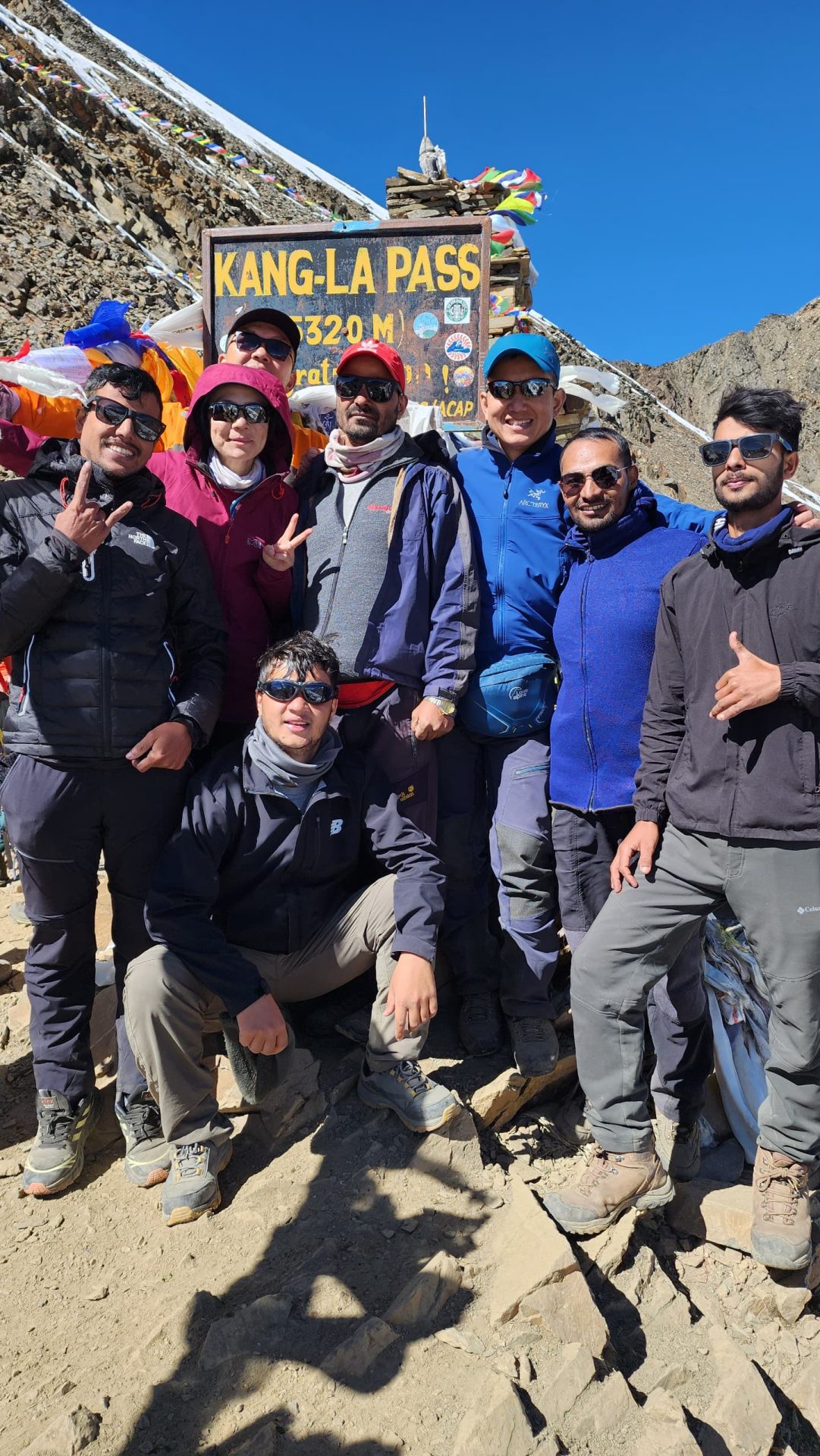
The trek from Nar to Nawal via the challenging Kang-La Pass is a thrilling 7-9 hour adventure that rewards you with some of the most spectacular views in the Himalayas. Starting from Nar, you’ll ascend steep trails to reach the Kang-La Pass at 5,306 meters, a high point that offers jaw-dropping panoramas of Annapurna II, Gangapurna, and other towering peaks. The crossing is both demanding and exhilarating, as the thin air and rugged terrain test your endurance. After savoring the views, you’ll descend into the lush valleys below, eventually reaching Nawal at 3,675 meters, a charming village where you can relax and reflect on the day’s unforgettable journey.
Day 10: Trek from Nawal to Manang
There are two routes that go from Nawal to Manang (3480m), but you can take either one as they both offer the best views. We will be leaving the lower route and traveling the upper route, which will lead us to Hume and Braga village, where we will see Tibetan-styled homes and a 600-year-old monastery. After a four to five hour walk from Pisang, we will arrive at the picturesque village of Manang, where we will spend the night at a tea house.
Day 11: Acclimatization day at Manang
We will be exploring the village of Manang and mingling with the locals for one more day. We’ll be able to acclimate our bodies to the altitude by staying an extra day. You will be thrilled by the fantastic views of Gangapurna Lake and the Annapurna Mountains that you can see from here. In Manang, we’ll spend the night at a tea house.
Day 12: Trek from Manang to Khangsar
The trek from Manang to Khangsar takes place amid the magnificent Annapurna range and through charming scenery that is peppered with historic villages. The trail offers breathtaking views of the tall Gangapurna and Tilicho peaks as it winds through terraced fields and crosses suspension bridges over thundering rivers. Known as the entryway to Tilicho Lake, Khangsar is a quaint community where you can observe traditional Tibetan-inspired architecture and culture. This comparatively short hike offers a combination of natural beauty and cultural immersion, making it ideal for acclimatization.
Day 13: Trek from Khangsar to Tilicho Base Camp
Trekking through breathtaking high-altitude scenery is part of the exciting journey from Khangsar to Tilicho Base Camp. With breathtaking views of the Annapurna range, the trail meanders through rocky terrain, past landslide-prone areas, and along winding paths. Ascending, the bleak yet impressive landscape gives way to the expansive Tilicho Base Camp, which is tucked away at the base of the majestic Tilicho Peak. While admiring the untamed splendor of the Himalayas, this is the ideal place to relax and get ready for the hike to Tilicho Lake. The journey of the day promises to be rewarding and challenging, resulting in memories that will last a lifetime.
Day 14: Trek back from Tilicho Base Camp to Shree Kharka
Trekking back to Shree Kharka from Tilicho Base Camp provides a revitalizing descent through the untamed splendor of the Annapurna region. As you retrace your steps along the winding trails, you’ll pass landslide-prone areas and dramatic cliffs, all while being accompanied by expansive views of the mountains. After the adventure, Shree Kharka, a tranquil community encircled by lush greenery, offers a much-needed break. Take some time to enjoy the tranquil surroundings and consider the magnificence of Tilicho’s magnificent scenery as you travel. This hike is a voyage of self-discovery and retreat.
Day 15: Trek from Shree Kharka to Yak Kharka
As you ascend to Yak Kharka, the picturesque trek from Shree Kharka to Yak Kharka shifts from verdant surroundings to alpine meadows. Along with breathtaking views of snow-capped peaks like Annapurna III and Gangapurna, the trail provides a chance to see yaks grazing in their natural environment. The fresh mountain air will energize you as you travel past charming villages and over tiny streams. Surrounded by the serene beauty of the Annapurna region, Yak Kharka is a delightful high-altitude stop that is a great place to rest and acclimate. This easy hike offers a delightful mix of cultural experiences and scenic beauty.
Day 16: Trek from Yak Kharka to Thorong Phedi/Thorong High Pass
The trek begins with a few gentle ups and downs after breakfast at the teahouse and ends at 4310 meters when it crosses a stream on a wooden bridge. The route heads to Thorong Phedi (the foot of the hill) via a narrow path across a high, unstable slope following a brief climb on a good trail to a teashop. It will be simpler tomorrow if you complete the journey to Thorang High Camp today if you are feeling well. Stay at the tea house for the night.
Day 17: Trek from Thorong la Phedi to Muktinath via Throng-La Pass
Another highlight of this trek is crossing the challenging Thorong La Pass, which is located at an astounding elevation of 5,416 meters/17,764 feet. To navigate the icy high-altitude trail, it is imperative to set out early. However, the breathtaking views of the mountains more than make up for the taxing hike along the difficult trail. By dusk, we arrive at Muktinath, a significant Buddhist and Hindu pilgrimage site. There is a Vishnu temple and a monastery close by, so we can take a stroll around the area.
Day 18: Trek from Muktinath to Jomsom
The walk to the Jomsom routes is not too difficult, but it can get tiresome in a strong wind. The trail quickly descends to the Eklai Bhatti before continuing to Jomsom via the Kali Gandaki. The Mustang district’s administrative center is located in Jomsom. You will have the opportunity to visit the Mustang Eco Museum in the afternoon. Stay at the tea house for the night.
Day 19: Fly from Jomsom to Pokhara (Drive to Pokhara/Kathmandu)
Your guide will pick you up for breakfast this morning and drive you to the airport for a quick but picturesque flight to Pokhara, a lakeside city that is Nepal’s second-most popular tourist destination after Kathmandu. Following refreshments, you’ll go on guided valley sightseeing tours. Spend the night at the hotel.
If the above Nar Phu Valley with Annapurna Circuit Trek itinerary does not meet your needs, we can design individualized travel plans based on your preferences and specifications.
Plan My TripNar Phu Valley with Annapurna Circuit Trek Cost Includes
- From Kathmandu to Besishare by Tourist bus and besishare to Koto by local jeep.
- From jomsom to pokhara by flight and Drive to kathmandu by local bus.
- Three times three meals a day—breakfast, Lunch, Dinner and 3 cups of tea/Coffee a day during the trek.
- Accommodation in tea house during the trek Private room.
- Fresh fruits after dinner every night as dessert during the trek.
- National park trekking permits & local government permits and TIMS cards.
- An experienced, helpful, knowledgeable, friendly, English-speaking, well-trained, government license holder Trekking Guide with all his salary, food, drinks, accommodation, equipment, transport, and insurance.
- You will be under observation with a pulse oximeter to have your oxygen levels and heart rate measured twice a day during the trek. This is to catch the signs of Altitude Mountain Sickness (AMS) early, thus making trekking safer.
- Arrangement of emergency helicopter service (paid by your travel insurance company).
- Normal first aid kit box.
- All taxes and company service charges.
Nar Phu Valley with Annapurna Circuit Trek Cost Excludes
- International airfare and visa fees.
- International airport pickup and drop service.
- any accommodation in Kathmandu and pokhara.
- Lunch and dinner in Kathmandu.
- Extra days in Kathmandu and the mountains, such as weather conditions, flight delays, strikes, and health issues.
- Expenses for beverages, drinking water, desserts, extra porters, showers, laundry or any
other services that are not mentioned by the company. - Tips for your guide and porters, which is compulsory.
- Extra expenses due to any event such as strikes, weather conditions, flight delays, etc.
- Your travel insurance, which should include the emergency rescue.
Nar Phu Valley with Annapurna Circuit Trek Additional Info
Accommodation and Meals on the Nar Phu Valley Trek with Annapurna Circuit
Accommodation on this trek is simple teahouse style lodging, cozy rooms with basic beds, shared bathrooms in most places and the kind of warm hospitality that makes even the coldest nights feel welcoming. As you go higher, facilities naturally get more basic but that is a part of the charm of trekking somewhere this remote.
Meals are hearty and simple, think dal bhat, noodle soups, momos, porridge and hot tea, exactly what your body needs after a long day of walking. Food options become fewer the higher you climb but there is always something warm waiting for you at the end of the trail. We also provide fresh fruit in the evening after dinner as a light dessert.
Since weather in the mountains can change without warning, especially at higher altitudes, a good sleeping bag is essential tostay warm through the night. Do not worry about arranging one yourself, we provide a quality sleeping bag as part of your trek, so you can rest easy no matter how cold it gets outside.
Weather on the Trek
The weather on this trail is unpredictable and can change fast and change a lot. In Koto and the lower valley, autumn and spring are comfortable with temperatures ranging between 150Cand 200C, while nights are cool, dropping to 50C to 100C. However as you climb higher toward Nar, Phu and the high passes, the temperature shifts dramatically. Daytime temperatures range from about 00C to 100C and nights turn bitterly cold dropping to -100C or lower – particularly in the shadow of Kang-La and Thorong La.
Winter makes things much tougher with sub-zero daytime temperatures and nighttime lows dropping to -150C or – 200C around the passes, along with a real risk of getting snowed in. Summer brings the monsoon – hot weather, continuous rain, muddy trails and clouds that often hide the very views you came for.
No matter the time of year, bring layers and be prepared for temperature swings of 100C to 150C between the midday sun and the midnight cold. Mountain weather does not check the forecast.
Permits Required for the Nar Phu Valley Trek with Annapurna Circuit
Some part of this route runs through a restricted border area so you will need a bit more paperwork here than on a standard Annapurna trek. Here is what to sort out before you go:
Restricted Area Permit for Nar Phu: typically USD 75 to 100 per person for the first week, with an extra daily charge if your trek runs longer. It can only be arranged through a licensed Nepali trekking agency and solo trekking isn’t allowed in this zone, so you will need a licensed guide and at least one other trekking companion.
Annapurna Conservation Area Permit (ACAP): covers your time in the wider conservation area, including the Annapurna Circuit portion of the route and generally costs around USD 30 per person.
TIMS Card: requirements vary depending on current regulations but many agencies still arrange it as a precaution, since it helps with emergency coordination on the trail.
Permit costs and rules do shift from season to season, so it’s worth confirming the latest figures with your trekking agency shortly before you travel.
Travel Insurance for the Nar Phu Valley Trek with Annapurna Circuit
This isn’t a trek to skimp on insurance for. You are heading into genuinely remote terrain, well beyond road access and often out of mobile signal range and crossing two passes above 5,000 meters along the way. Here is what your policy should cover:
- High altitude trekking coverage up to at least 5,500 meters
- Emergency evacuation and helicopter rescue
- Trip cancellation and delay
- Lost baggage
- Medical treatment costs
Keep a copy of your policy details with you at all times and make sure your guide knows how to reach your provider in an emergency.
Altitude and Acclimatization
Altitude is the one factor on this trek that deserves real respect. The route climbs steadily and repeatedly, reaching Nar village at 4,250 meters, crossing Kang-La Pass at 5,306 meters and later tackling Thorong La at 5,416 meters, one of the highest trekking passes anywhere in the world. Here is how the trek and your own habits can help you handle it safely:
- Built-in acclimatization days: the itinerary includes a dedicated rest day in Nar and another in Manang, giving your body time to adjust before the harder climbs ahead
- Go slowly: a steady, unhurried pace is one of the best defenses against altitude sickness
- Stay hydrated: drink more water than feels necessary, since dehydration makes symptoms worse
- Watch for warning signs: headaches, nausea, dizziness, or unusual fatigue are all early red flags worth taking seriously
Altitude Sickness Signs are:
- Headache
- Nausea or loss of appetite
- Dizziness or lightheadedness
- Fatigue or unusual weakness
- Shortness of breath, even at rest
- Difficulty sleeping
- Rapid heartbeat
Don’t sleep higher if symptoms appear: wait until they pass, and descend if they get worse
Lean on your guide but trust yourself too: a good guide will help set a sensible pace, but nobody knows your body better than you do.
Why Choose Us for your Nar Phu Valley Trek with Annapurna Circuit?
This trek covers a lot of ground, literally a restricted valley, two high passes, nearly three weeks on trail, and honestly, it is not something you want to piece together yourself. This is where we come in.
We have been running this exact route for years, both the Nar Phu side and the Annapurna Circuit side, so we know the trails, the villages and the little details that make a big difference, like when to push on and when to slow down before a pass. Our guides are not just walking ahead of you, they are watching out for you, reading the weather, checking in on how you are doing, making sure the trip actually feels good, not just survivable.
We handle everything on our end too, permits, restricted area paperwork, logistics, all of it sorted before you even land in Kathmandu. You show up, we take care of the rest. A good sleeping bag is included and our pricing stays upfront from day one, no random extra charges once you are already deep in the mountains.
We have walked this route more times than we can count and it still gets us every time. Trek with us and you are not just another name on a list, we actually want you to walk away from this one glad you did it.
Upcoming Departures
Nar Phu Valley with Annapurna Circuit Trek Gallery
Customer Reviews
Write a ReviewNar Phu Valley with Annapurna Circuit Trek Equipment Lists
- Four-season (-20 Degree) Sleeping Bag (Rental available for an additional USD 30)
- Down jacket & warm layers (Rental available for an additional USD 30)
- Thermal base layers
- Waterproof jacket & pants
- Hiking pants & quick-dry clothes
- Trekking boots & socks
- Gloves, beanie & neck buff
- Daypack (10–25L) with rain cover
- Trekking poles & gaiters
- Water bottle/bladder & purifier
- Headlamp & power bank
- Sunscreen, lip balm & personal medicines
- Towel & basic toiletries
- Snacks (energy bars/nuts)
- Sunglasses & sun hat
- Passport & waterproof document bag
- Phone Charger or Power Bank or Charging Cable
- Camera or mobile phone
- Card / Book
- Sleeping cloths at Night
- High- Protein Snacks (energy bar/ Nuts)
- Water Purification tablets or water Filter
- Crampons (For mountain Passes)
Personal & Medical Kits
- Sunscreen SPF 50+
- Lip balm or Vaseline
- Ointment cream
- Cough syrup and Strepsils (recommended for Khumbu Cough)
- Creams and medicines for any allergies or personal medical conditions
- Small towel
- Toilet paper, small soap, and shampoo
- Anti-diarrhoea medicine, painkillers, blister plasters, and anti-inflammatory medication
Note: Our guides carry medications, oxygen cylinders, and first aid kits during the trip. However, carrying your own personal medical kit and medications is strongly recommended.
Similar Tours
Everest Three High Pass Trek with Lobuche Peak
Overview If you want to experience the best Everest adventure in Nepal, this is it. The Everest Three High Pass...
Everest Base Camp Luxury Trek
The Everest Base Camp Luxury Trek is a magnificent Himalayan experience without giving up on luxury. A well-planned journey...
Short Manaslu Tsum Valley Trek
An 17 days trek, the Short Manaslu and Tsum Valley Trek engages trekkers to an adventure close to Mt....
Gokyo Valley Trek Via Renjo-La Pass
Your getaway from the typical trekking route to Everest Base Camp is the Gokyo Valley Trekking. This trekking adventure...
Jomsom Muktinath Trek
Nepal is a stunning country in the Himalayas with magnificent mountains. These mountains’ foothills make for ideal walking terrain....