

Island Peak Climbing Overview
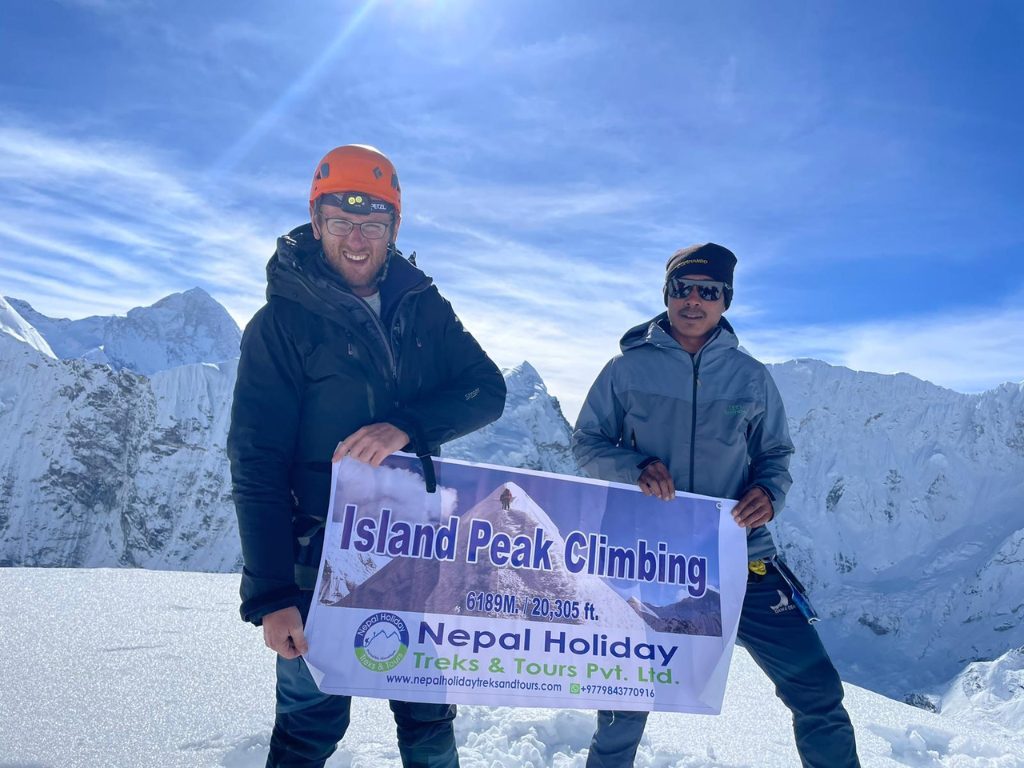
Island Peak which is also known as Imja Tse stands at 6,189 meters in the heart of Khumbu Himalaya, just a few kilometers from Everest. It was named in 1951 by British explorer Eric Shipton, who described it as rising like an island from a sea of surrounding glaciers. Even Sir Edmund Hillary used it as a training climb before his historic Everest Summit. That legacy alone tells you this is a special mountain.
What makes Island Peak so popular is the balance it strikes. It is a genuine Himalayan Peak – glaciers, crampons, fixed ropes, real altitude but it does not demand years of technical climbing experience. With the right fitness and preparation, it is achievable for motivated trekkers who are ready to push themselves.
The journey follows the classic Everest trail through Namche Bazaar, Tengboche and Dingboche, some of the most stunning and culturally rich landscapes in the world before reaching the peak itself. From the summit ridge, you will stand face to face with Everest, Lhotse, Makalu and Ama Dablam. It is the kind of view that stays with you for the rest of your life. The full expeditions takes 12 days.
Best Time to Climb Island Peak
Timing is everything in the Himalayas. At Nepal Holiday Treks and Tours, we recommend two seasons for Island Peak Climbing:
Spring (March to May): Spring is widely considered as the best time to climb Island Peak. The days are warm and sunny, the skies are brilliantly clear and the trails come alive with blooming rhododendrons and wildflowers. Day time temperatures at high altitude typically range between 100C to 170C, while nights above 4,000m can drop to around -100C. Visibility is excellent and the mountain conditions are generally stable.
Autumn (September to November): Post monsoon autumn delivers crisp, dry air and crystal clear mountain views. The landscapes is lush and green from the summer rains and the skies are typically clear of cloud cover. It is slightly cooler than spring with daytime highs between 00C to 150C and temperatures dropping to around -150C by late November.
Seasons to Avoid:
Monsoon (June to August): Monsoon brings heavy rain slippery trails, poor visibility and a real risk of landslides and avalanches – conditions that make a safe, enjoyable climb very difficult.
Winter (December to February): Winter is the off season with extreme cold and heavy snow. That said, December can work for experienced, well-equipped climbers who prefer solitude on the trail. If you are drawn to the idea of having the mountain nearly to yourself, it is worth a conversation with our team.
Why Choose Island Peak Climbing?
Island Peak strikes the perfect balance between accessibility and adventure. Unlike the technically demanding 7,000m and 8,000m peaks nearby, Island peak does not require elite mountaineering skills but it absolutely demands physical fitness, mental determination and proper preparation. That is exactly what makes it so popular is that it is genuinely achievable for fit, motivated trekkers, yet serious enough to feel like a true mountaineering accomplishment.
From the summit ridge, you will stand face to face with Mount Everest, Lhotse, Makalu and Ama Dablam, a panorama that very few people om Earth ever get to witness. It is raw, it is humbling and it is unforgettable.
For those with ambitions to climb higher peaks in the future, Island Peak also serves as the ideal stepping stone, a place to learn glacier travel, fixed rope technique, crampon use and ice axe handling in a real high altitude environment.
How Difficult Is Island Peak Climbing?
Island Peak is one of the Nepal’s most popular trekking peaks but don’t let that word Popular fool you, this is a genuine Himalayan climb that demands real preparation. The week long trek to base camp through high altitude villages is challenging on its own and by the time you reach Chhukung the thin air is already making every step feel harder than it should. Summit day is where things get truly serious, you are leaving at 2 to 3 AM crossing a glacier and tackling a steep 50 to 55 degree headwall on fixed ropes with crampons and an ice axe in the dark and cold. It is not the most technical climb in the Himalayas but it is far beyond a casual trek. The good news is that with proper acclimatization, a qualified guide and a solid level of fitness, it is absolutely achievable. Respect the mountain, take it at the right pace and the summit is well within reach.
Outline Itinerary
Day 1: Flight from Kathmandu to Lukla (2,860m / 9,383ft) & Trek to Phakding (2,610m / 8,563ft) | 3-4 hours
Day 2: Trek from Phakding to Namche Bazaar (3,440m / 11,286ft) | 6-7 hours
Day 3: Stay on Namche Bazzar
Day 4: Trek from Namche Bazaar to Tengboche (3,860m / 12,664ft) | 5-6 hours
Day 5: Trek from Tengboche to Dingboche (4,410m / 14,468ft) | 5-6 hours
Day 6: Dingboche to Chhukung (4,730m / 15,518ft) | 3-4 hours
Day 7: Rest & Acclimatization Day in Chhukung
Day 8: Night Summit Attempt on Island Peak (6,189m / 20,305ft) & Return to Chhukung | 10-12 hours
Day 9: Chhukung to Tengboche (3,860m / 12,664ft) | 5-6 hours
Day 10: Tengboche to Namche Bazaar (3,440m / 11,286ft) | 4-5 hours
Day 11: Trek from Namche Bazaar to Lukla (2,860m / 9,383ft) | 6-7 hours
Day 12: Flight from Lukla to Kathmandu & Departure
Island Peak Climbing Highlights
- Island peak standing at an altitude of 6189 m
- Stunning panoramic views of snow- capped mountains and spectacular landscapes
- Crossing glaciers, ascending steep snow slopes, and navigating through challenging terrain
- Passing through picturesque Sherpa villages, ancient monasteries, and stunning alpine landscapes
- We will provide you with a (20 degree sleeping bag) and a duffel bag for the trekking excursion, but you must return them after completing the trek.
- Experience the unique Sherpa culture and hospitality
- Interact with friendly local Sherpa people, visiting traditional Buddhist monasteries, and gaininsights into their way of life.
Island Peak Climbing Itinerary
Expand allDay 1: Flight from Kathmandu to Lukla (2,860m / 9,383ft) & Trek to Phakding (2,610m / 8,563ft) | 3-4 hours
You begin with an early morning flight from Kathmandu to Lukla, the most thrilling mountain airport in the world. Upon arrival, you are welcomed by your porter and guide, and the trekking starts. The trek descends through Sherpa villages and pine forests, along the Dudh Koshi River to Phakding.
Day 2: Trek from Phakding to Namche Bazaar (3,440m / 11,286ft) | 6-7 hours
The trek follows the Dudh Koshi River, and you walk across a number of suspension bridges, including the popular Hillary Suspension Bridge. Entering Sagarmatha National Park at Monjo, you ascend sharply through pine trees to reach Namche Bazaar, the bustling Sherpa capital of the Khumbu region.
Day 3: Stay on Namche Bazzar
Throughout your Namche Bazaar stay, start out in the morning strolling around the bustling local bazaar and paying close attention to a visit to the Sherpa Culture Museum for some understanding of the region’s history. Ascend to the Everest View Hotel for stunning panoramic views of Everest, Lhotse, and Ama Dablam. Visit the Sagarmatha National Park Museum to see the flora, fauna, and climbing history of the Khumbu region. Drink a cup of coffee at a cozy café and relish the breathtaking mountain scenery. At night, relax at a standard teahouse, socialize with local Sherpas, and prepare yourself for the second part of your trek.
Day 4: Trek from Namche Bazaar to Tengboche (3,860m / 12,664ft) | 5-6 hours
we will going to see the features great views of Everest, Lhotse, and Ama Dablam with a gradual ascent through rhododendron forest. A descent to Phunki Tenga brings the ascent steeply to Tengboche, site of the famous Tengboche Monastery, the largest in the region.
Day 5: Trek from Tengboche to Dingboche (4,410m / 14,468ft) | 5-6 hours
You trek along forest downhill to cross Imja Khola River and go up above the village of Pangboche. Tree line disappears as you climb higher, and you trek over alpine country to reach Dingboche, a beautiful valley situated between white mountains.
Day 6: Dingboche to Chhukung (4,730m / 15,518ft) | 3-4 hours
Short but important day for acclimatization. Trek follows gentle, gradual ascent through wide glacial valleys with terrific views of Island Peak and nearby mountains. Chhukung is the last village on way to Island Peak Base Camp.
Day 7: Rest & Acclimatization Day in Chhukung
On 7 Day it is crucial in terms of acclimatization to the high altitude. You can undertake short hikes to Chhukung Ri (5,546m / 18,196ft) to witness mind-blowing views of Makalu, Lhotse, and Ama Dablam. Your guide will also take time to conduct a final check of your climbing gear.
Day 8: Night Summit Attempt on Island Peak (6,189m / 20,305ft) & Return to Chhukung | 10-12 hours
In day 8 we are getting a challenging but rewarding climb. You start late at night, walking on glaciers and climbing fixed ropes under the direction of crampons and ice axes. Having ascended Island Peak after sunrise, you return to Chhukung, celebrating your victory.
Day 9: Chhukung to Tengboche (3,860m / 12,664ft) | 5-6 hours
Descend through familiar routes, passing through Dingboche and Pangboche before reaching Tengboche. You can visit the monastery again or rest amidst stunning views of the mountains.
Day 10: Tengboche to Namche Bazaar (3,440m / 11,286ft) | 4-5 hours
You retrace your steps, descending to Phunki Tenga, then follow the trail by the Dudh Koshi River, finally reaching the lively town of Namche Bazaar.
Day 11: Trek from Namche Bazaar to Lukla (2,860m / 9,383ft) | 6-7 hours
Your final day of trekking is spent in going down long distances, crossing suspension bridges, and trekking through villages before you reach Lukla. You and your guide and staff celebrate the completion of your successful trek.
Day 12: Flight from Lukla to Kathmandu & Departure
An early morning flight brings you back to Kathmandu, and you are free to stroll around the city, shop for souvenirs, or relax before your onward journey. Based on your flight schedule, you may either have some time in cultural places or have a farewell dinner.
If the above Island Peak Climbing itinerary does not meet your needs, we can design individualized travel plans based on your preferences and specifications.
Plan My TripIsland Peak Climbing Cost Includes
- Private vehicle by transfers in the hotel .
- Three times Three meals a day- Breakfast, Lunch, Dinner and 3 cup’s of tea/Coffee a day during the trek.
- Accommodation in tea house during the trek.
- In a day time tea break with cookies every day.
- Seasonally fruits and desserts on the trek after dinner every day.
- Nepal Holiday Treks and Tours, (-20 degree sleeping bag) and a duffel bag for the trekking, but you need to refund to the office after the trip.
- National park Trekking permits & local government permit and TIMS Card
- Domestic flight ticket to Lukla from Kathmandu or Ramechhap including airport transportation.
- An experienced, helpful, knowledgeable, friendly, English speaking well trained, government license holder Climbing Guide with all his salary, food, Drinks, accommodation, equipment, transport, and insurance.
- 3 nights accommodation in Kathmandu (3 star hotel) on the BB plan, 1 night before starting the trek and 1 night the day after returning from the trek.
- Climbing Gear: Crampons, Ice axe, Helmet, harness, Climbing boot, and Carabineers are included.
- Normal First aids kit box.
- You will be under observation with a pulse oximeter to have your oxygen levels and heart rate measured twice a day during the trek. This is to catch the signs of Altitude Mountain Sickness (AMS) early, thus making trekking safer.
- Nepal Holiday Treks And Tours trip completion certificate from the company side.
- Arrangement of Emergency helicopter service (paid by your travel insurance company)
- All the government taxes and company operating charges
Island Peak Climbing Cost Excludes
- International airfare and visa fees
- Extra days in Kathmandu and the mountains such as weather condition, flight delays, or strikes and health issues.
- Lunch and dinner in Kathmandu
- Equipment (sleeping bag, down jacket, and trekking pole)
- Personal expenses of bar and beverage (bills, WiFi, hot shower, extra porters, laundry, extra porters etc) or any other things which are not mentioned by the company.
- A strong, helpful, porters with proper safety equipment and walking equipment his salary, food, drinks, accommodation, insurance, (one porter for two people he will carry bag pack max 20-25kg).
- Travel insurance along with high-altitude emergency evacuation coverage
- Your trekking gears and extra nights in a certain destination
- Tips for your guide and porters which is compulsory.
- Entrance fees during the sightseeing
- Extra expenses due to any event
Island Peak Climbing Additional Info
Meals, Accommodation and Drinking Water
Meals
Throughout the trek you will be served three full meals a day – breakfast, lunch and dinner plus morning and afternoon tea with snacks and fresh seasonal fruit in the evenings. Teahouse kitchen in the Khumbu region are surprisingly good. Dal bhat, noodles, pasta, soups, eggs, porridge, pancakes are the mainly food available in the menus. They are warm, filling and genuinely nourishing at altitude.
Accommodation
Talking about accommodation, you will stay in teahouses throughout trek. Family run lodges that are simple, clean and full of character. Rooms are typically twin sharing with basic beds and warm blankets. Do not expect five-star comfort, nut do expect warmth, hot tea and a dining room full of fellow trekkers swapping stories from the trail. In Kathmandu, we put you up in a comfortable 3 star hotel on a bed and breakfast basis, a proper rest before and after the mountain.
Drinking water
It is one area where you simply cannot cut corners. Tap water and unfiltered stream water in the Himalayas carry a real risk of waterborne illness – giardia, stomach infections and worse which can end your trek before it begins.
Always drink boiled, filtered or purified water on the trail. Most teahouses sell boiled water or allow you to refill from their boiled supply for a small fee, far cheaper and far more sustainable than buying plastic bottles at every stop. Carry water purification tablets or a personal filter as a backup for situations where boiled water isn’t immediately available.
Aim for 3 to 4 liters of water per day at altitude. Hydration directly affects how well your body acclimatize, how your energy levels hold and how your head feels at the end of a long day. It is the simplest thing you can do yourself on this climb and one of the most powerful.
Permits Required for Island Peak Climbing
To legally climb Island Peak, three permits are required and all are included in our package price:
- Nepal Mountaineering Association (NMA) Climbing Permit: It is the primary permit required for all trekking peaks in Nepal, issued by the NMA.
- Sagarmatha National Park Entry Permit: Since the route passes through Sagarmatha National Park, home to Everest and some of the world’s most protected Himalayan wilderness, all trekkers must pay an entry fee.
- Foreigners: NPR 3,000 per person
- SAARC nationals: NPR 1,500 per person
- Nepalese citizens: NPR 100 per person
- Khumbu Rural Municipality Permit: This has replaced the traditional TIMS card for trekkers in the Khumbu region.
First 4 weeks: NPR 2,000 per person (foreigners and SAARC nationals)
Beyond 4 weeks: NPR 2,500 per person
This permit is issued at Lukla or Monjo only, it cannot be obtained in Kathmandu. Our team handles all permit logistics on your behalf.
Is Island Peak Climbing Suitable for You?
Island Peak is one of those climbs that sits in a sweet spot, serious enough to feel like a real mountaineering achievement, accessible enough that you do not need to be professional climber to get there. If you are reasonably fit, mentally determined and willing to put in the preparation, this mountain is well within your reach.
You do not need prior climbing experience. You do no need to be in your 20s. What you need is a body that can handle 6 to 8 hours of hiking a day at high altitude, the commitment to train consistently in the months before you go and the honest respect for what a 6,189 meter summit actually demands. Our guide handle the technical side like crampons, fixed ropes, ice axe technique and will train you before the summit push. Your job is to show up fit, healthy and ready.
If you have trekked before, especially above 4,000 meters, you are ahead. If you have not, that’s okay too. What matters most is your current fitness level and how seriously you take the preparation between now and your departure date. A pre-trip medical check is strongly recommended for everyone, particularly if you are over 50 or have aby cardiovascular history.
The honest truth is that Island Peak rewards people who prepare well and approach it with the right mindset not just the naturally gifted or highly experienced. If that sounds like you, it probably is.
Transportation and Flight for Island Peak Climbing
Your Island Peak adventure starts with a short but breathtaking 25 to 30 minute flight from Kathmandu to Lukla (2,860m) in a small mountain aircraft. In busy season, the flight to Lukla take off from Ramechhap. Once you land in Lukla, all travel is on foot, there are no roads in the Khumbu region, just well-worn trails passing through iconic villages like Namche Bazzar, Tengboche, Dingboche and Chhuikung with yaks and porter teams being the only transport you will share the trail with. After summiting Island Peak on Day 8, you retrace the same scenic route back to Lukla for your return flight to Kathmandu on Day 12. A few thing worth keeping in mind – Lukla flights are highly weather dependent, so building a buffer day into your schedule is helpful for you.
Our Guide and Porter Support for Island Peak Climbing
When you are at 5,500 meters in the dark, crampons on, heart pounding, the person in front of you matters more than any piece of gear you are carrying. That is your guide and choosing the right team is everything on a climb like this.
Every Island Peak expedition with us is led by a government licensed, English speaking climbing guide who knows this mountain intimately. Not someone who has read about it. Someone who has stood on that summit ridge dozens of times and knows exactly what you need, when to push, when to rest and when to turn around. Their jobs is to get you to the top safety and they take that seriously.
Your guides monitors your health throughout the entire trek by checking your oxygen saturation and heart rate twice daily with a pulse oximeter, watching for early signs of altitude sickness and adjusting the pace when your body needs it. They are not just leading the way. They are looking after you.
Porters carry the heavy load up to 25 kg (shared between max 2 people) so you can walk lighter, move more comfortably and actually enjoy the incredible landscapes around you rather than grinding through them under a crushing pack. They are experienced mountain people who know this terrain better than anyone and they deserve every bit of the respect we show them.
We take care of our team fully, their meals, accommodation, insurance and fair wages are all covered. Because a guide who feels supported shows up better for you on the mountain. That is not just ethics, it is how great expeditions work.
You bring the determination. We bring the team that gets you there.
Travel Insurance for Island Peak Climbing
Island Peak sits at 6,189 meters (20,305 feet) in one of the most remote mountain environments on the earth, the nearest major hospital is in Kathmandu. If something goes wrong at altitude, the fastest way out is a helicopter and those helicopters are not cheap.
A single helicopter evacuation from the Khumbu region can cost anywhere between USD 5,000 to 10,000 or more depending on weather conditions , the location of pick up and how quickly the aircrafts needs to be dispatched. That cost falls entirely on you if you don’t have travel insurance.
What your Travel Insurance must Cover?
- High altitude Mountaineering above 6,000 meters
- Emergency helicopter rescue and medical evacuation
- Medical expenses and Hospitalization
- Trip cancellation and curtailment
- Personal accident
- Baggage and equipment loss
- Altitude sickness cover
Always check your travel Insurance, if the above policy is listed in it or not.
Acclimatization and Altitude Sickness
Climbing to 6,189 meters means your body will be working in conditions of significantly reduced oxygen. Acclimatization is not optional, it is the foundation of a safe and successful summit. Our 12 day itinerary is designed with this in mind, including a dedicated rest day in Namche Bazaar and another in Chhukung before the summit push.
Common symptoms of Acute Mountain Sickness (AMS) are:
- Persistent headache
- Fatigue
- Nausea
- Dizziness
- Loss of appetite
If you experience any of these, the most important thing to do is rest and not ascend further. Our guides are trained in AMS recognition and response and every trekker is monitored twice with daily with a pulse oximeter to track oxygen saturation and heart rate.
Here is how to give yourself the best chance at a healthy, successful climb:
- Ascend gradually
- Stay well hydrated
- Eat regularly
- Sleep low when possible
- Listen to your guide
- Consider Diamox
Why Choose Us for Your Island Peak Climbing?
There are plenty of agencies offering Island Peak expeditions. So why does it matter who you go with?
Because at 5,500 meters in the dark on a steep snowfield with crampons on and your lungs working harder than they ever have, the agency you choose months ago back home becomes very real, very fast. The quality of your guide, the reliability of your gear, the care that went into your itinerary – all of it shows up on summit day.
We are a team of experienced of Nepali mountaineers and trekking professionals who have been guiding climbers up Island Peak for years. This is not a trip we put together from a template. Every detail – the acclimatization schedule, the gear we provide, the teahouse we use, the guides we trust has been shaped by real experience on this mountain in all condition across all season.
Our guides are government licensed, English speaking and genuinely experienced at high altitude. The have stood on that summit ridge more times than they can count and they bring that knowledge to every single climber they take up. They monitor your health daily, adjust the pace when your body needs it and always put your safety above the summit.
We keep our group sizes small because a smaller group means more attention, a more personal experience and a guide who actually knows how you are doing on any given day. You are not a number on a booking sheet. You are someone we are personally responsible for getting up and back down safely.
Everything is included and transparent, climbing gear, permits, domestic flights, meals, accommodation and emergency evacuation arrangements with no hidden costs waiting for you in Kathmandu. What you see in the package is what you pay.
But honestly, what sets us apart most is something harder to put on a checklist. It is the fact that we genuinely care whether you reach that summit. We have built this company on the belief that every climber deserves honest guidance, proper support and a team that treats the mountain and the people climbing it with real respect.
Come climb with us. We will take care of the rest.
Upcoming Departures
Customer Reviews
Write a ReviewIsland Peak Climbing Equipment Lists
Pack light, but make sure you bring the essential clothing and climbing equipment needed for changing weather and high-altitude conditions. The following checklist covers the recommended gear for a comfortable and safe Island Peak climbing experience.
Climbing Equipment
Climbing equipment can be expensive to purchase, so you may choose to rent the required equipment in Nepal at an additional cost of USD 250 per person. The following equipment is essential for Island Peak climbing:
- 1 pair of plastic shell mountaineering boots with high-altitude liners
- 1 pair of steel crampons (aluminum crampons are not recommended)
- 1 alpine climbing harness
- 1 mountaineering axe with leash, properly sized for your height
- 1 ascender, right- or left-handed as appropriate
- 1 belay device, such as Black Diamond ATC or ATC Guide
- 2 D-shaped locking carabiners
- 2 non-locking carabiners
- 1 pair of expedition-style gaiters that fit properly over your boots
- Scarf, neck gaiter, or Buff
- Ski goggles (optional)
- Climbing helmet (mandatory)
Sleeping Gear & Bags
- Four-season (0°C) sleeping bag
- Puffy down jacket
- Daypack (35–45 liters recommended) with rain cover
- Sleeping bag liner
Rental option: Sleeping bags and down jackets may be available for an additional USD 35 per item.
Note: If a rented sleeping bag or down jacket is lost or damaged, a compensation fee of USD 150 per item will be charged.
Head & Upper Body
- Sun hat or cap
- UV-protection sunglasses
- Warm knitted hat or beanie
- Headlamp with spare batteries
- Scarf, neck gaiter, or Buff
Torso
- Technical-fabric base layers suitable for the season
- Quick-drying shirts or T-shirts: 2 short-sleeve and 2 long-sleeve
- Fleece jacket or pullover
- Waterproof and windproof outer-shell jacket
Lower Body
- Technical-fabric thermal base layer
- Hiking pants: 2 pairs
- Comfortable pants for wearing inside teahouses
- Waterproof and windproof shell pants
- Hiking shorts
Hands
- Wool or technical-fabric liner gloves
- Insulated hard-shell outer gloves for colder conditions
Feet
- Warm wool or technical-fabric socks
- Hiking socks
- Liner socks, such as silk, if preferred
- Waterproof trekking or hiking boots
- Comfortable casual shoes
- Gaiters for dust, rain, or snow
- Microspikes or ice cleats, especially from November to March
Undergarments & Sleepwear
The quantity of clothing can be adjusted according to your personal preferences and available laundry opportunities during the trek.
- Quick-drying technical-fabric underwear
- Sports bras for women
- Pajamas or comfortable sleeping clothes
First Aid & Personal Medications
Our guides carry a basic first-aid kit and essential medications during the trip. However, bringing your own personal medications and basic medical supplies is strongly recommended.
- Sunscreen
- Lip balm
- Personal ointment or basic skincare products
- Suitable medication for a dry mountain cough
- Mosquito repellent for Kathmandu and lower-altitude areas
- Personal prescription medications
Other Essentials
- Passport
- Extra passport-sized photographs
- Reusable water bottle
- Toiletry kit
- Toilet paper (2 rolls)
- Water purification tablets or a UV water purifier
- Hydration bladder
- High-protein snacks, such as protein bars or nuts
- Quick-drying towel
- Trekking poles
- Earplugs
- Pillowcase
- Waterproof or dry bags for important documents, electronics, and money
- Airline tickets and copies of travel documents
Optional Items
You can purchase or rent additional trekking gear in Nepal if needed. Thamel, Kathmandu’s main tourist hub, has a wide selection of trekking equipment, making it convenient to arrange any last-minute supplies.
- Power bank or spare batteries
- Camera and mobile phone
- Thermos flask for hot water
- Books or playing cards
- Comb
- Binoculars
- Pee bottle or pee funnel for women
- Whistle
Packing Tips
Avoid overpacking. Choose lightweight, quick-drying, and versatile clothing that can be layered according to the temperature and altitude. Make sure your climbing boots, crampons, harness, helmet, and other technical equipment fit properly before starting the climb.
Similar Tours
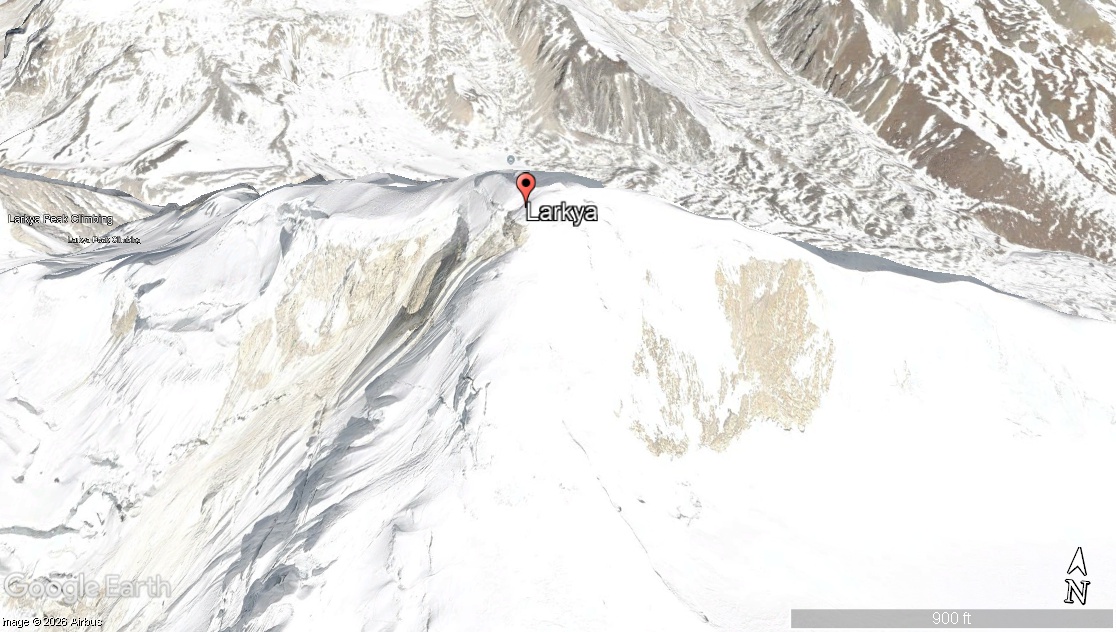
Larke Peak Climbing – 16 Days
Larke Peak (20,502ft/6249m) is one of the most rewarding trekking peaks in Nepal, it is situated in a perfect position...
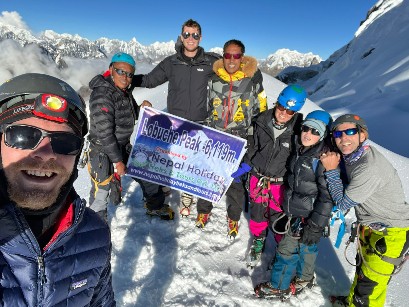
Everest Three High Pass Trek with Lobuche Peak
Overview If you want to experience the best Everest adventure in Nepal, this is it. The Everest Three High Pass...
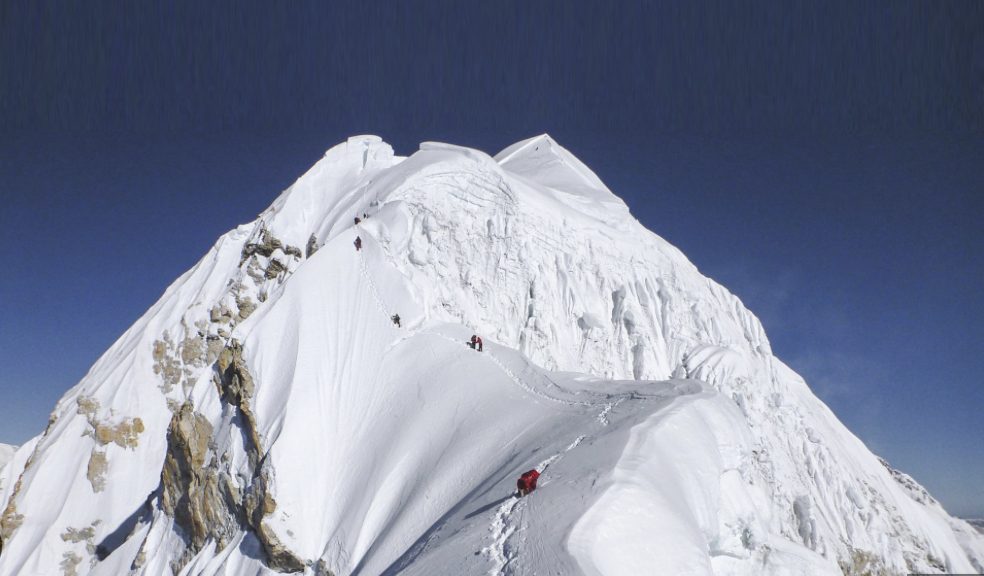
Baruntse Expedition
The formidable mountain of Mount Baruntse lies within the less touristy Makalu Barun National Park of eastern Nepal, bordered...
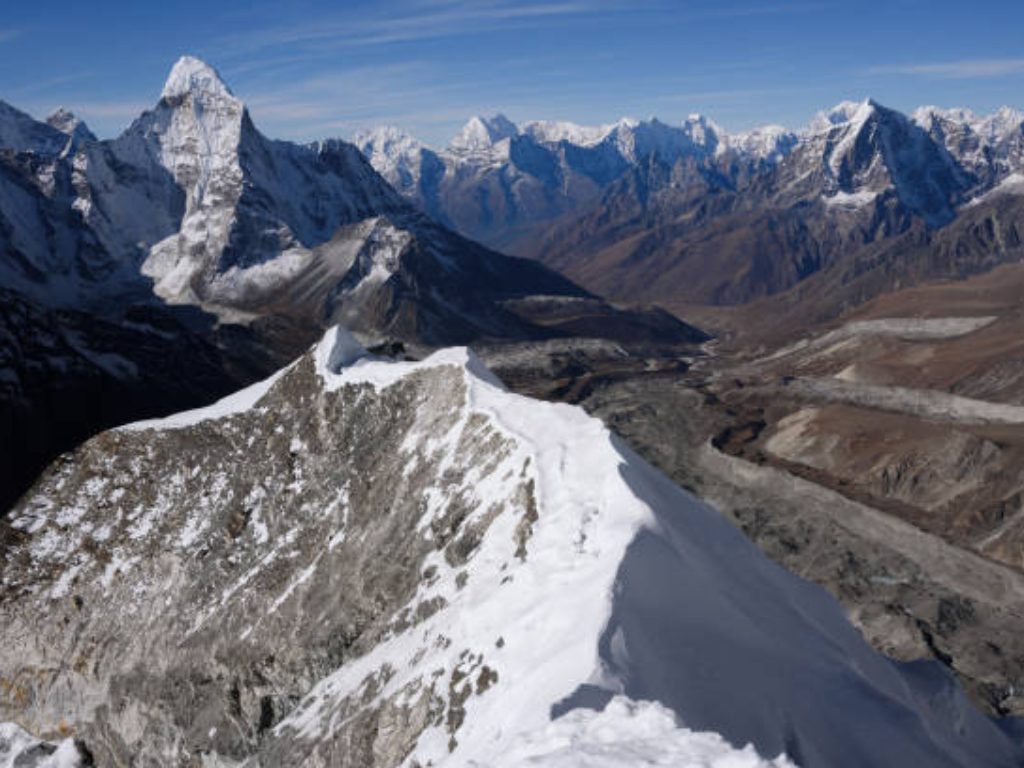
Everest Base Camp Trek with Island Peak Climbing
Island Peak Climbing and Everest Base Camp Trek is a thrilling experience that combines two of Nepal’s most in-demand...
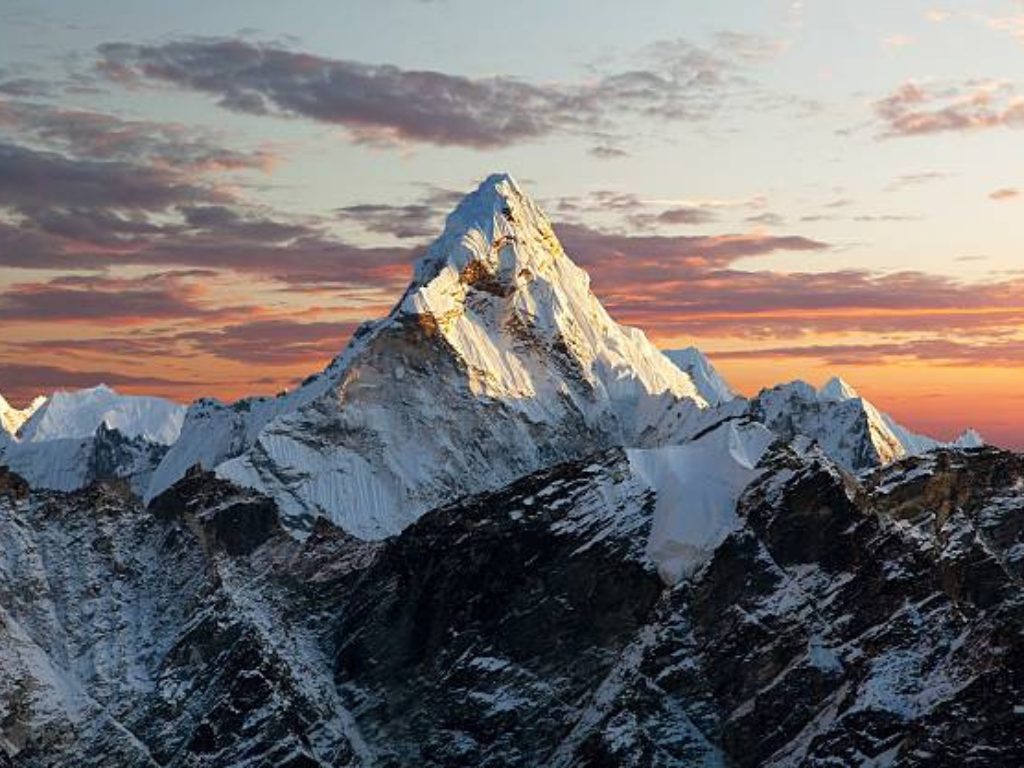
Ama Dablam Expedition
There are mountains you hike up and there are mountains you really climb. Ama Dablam is definitely that second one and...