
The 2PM Rule on Everest: The Life or Death Deadline Every Climber Must Respect
Posted by: Nepal Holiday Treks and Tours on April 27, 2026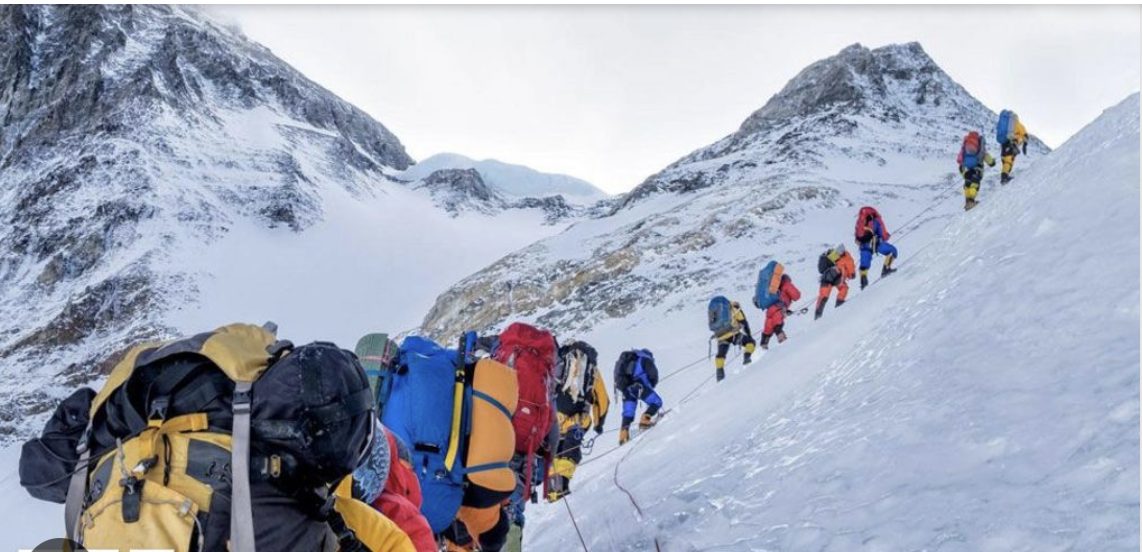
Imagine spending years training your body, saving tens of thousands of dollars, flying halfway around the world and trekking through glaciers and altitude for weeks and then being told to turn around when the summit is just 50 meters from your grasp.
That is not a hypothetical. That’s the harsh, non-negotiable reality of the 2 PM Rule on Mount Everest.
It sounds brutal but it has saved lives. And ignoring it? That has ended them.
Whether you are an experienced climber, a trekker dreaming of Everest Base Camp or just someone who is fascinated by the world’s tallest mountain, the 2 PM Rule will give you a window into the razor-thin line between triumph and tragedy on Everest. Let’s break it down fully.
What Is the 2PM Rule on Everest?
The 2PM rule (also called the Mandatory Turnaround time) is one of the most critical safety guidelines in high-altitude mountaineering.
In simple terms:
If a climber has not reached the summit of Mount Everest (8848.86 meters) by 2:00 pm Nepali time, they must immediately stop their ascent and begin descending – no matter how close they are to the top.
No debate, no just five or more minutes. No emotional bargaining. The clock strikes 2 PM and the mountain has won that day.
As of the 2026 climbing season, the Government of Nepal has made this professional best practice as a mandatory safety regulation, for the violation of which fines of $750 to $1,500 can be imposed and permits may be banned for those who ignore it.
This is not a suggestion. It is a survival protocol.
Why 2PM? The Science Behind the Deadline
To understand why 2 PM is the deadline, you need to know what occurs on Everest after midday and why it gets so much more dangerous so quickly.
The Weather turns Deadly in the Afternoon
Everest is known for its unpredictable weather, especially in the late afternoon. What looks like a reasonable climb in the morning can change into a life threatening whiteout by 3 PM. Winds that are mild at 8:00 AM can turn dangerously violent by mid-afternoon. Storms can roll in and swallow the summit ridge within minutes, making fixed ropes invisible and impossible to follow. Trapped above 8,000 meters in such conditions with no visibility is one of the most deadly situations a climber can be in.
During the spring climbing season (March to May), the sun sets at around 6:00 PM. Reaching the Summit at 2PM or later means a long, dark, tired descent is ahead.
The Descent is more Dangerous than the Ascent
Here is what most people outside mountaineering do not understand: most deaths on Everest occur during the descent, not the ascent.
Going down requires equally intense focus, balance and physical strength but a climber who summits late is running on empty. Tired legs slip. A tired mind makes poor decisions. Exhausted hands may also lose their grip on fixed ropes. It can take 6 to 8 hours just to descend from the summit to Camp IV under good conditions. When that takes place in the night, in a storm with oxygen nearly running out, the chance of making a fatal mistake goes through the roof.
Oxygen Runs Out
Above 8,000 meters, climbers enter what is chillingly known as the Death Zone – where the oxygen level is so thin that the human body literally begins to die. Without supplemental oxygen, simply sitting on the summit of Everest feels like running a full sprint at maximum speed without stopping.
Oxygen bottles that a climber carries are calculated to the hour. A late summit results in burning through reserves on the way up, which means you have a scary little reserve coming down- the most physically demanding and mentally critical part of the climb. Running out of oxygen above 8,000 meters does not lead to a peaceful rest. It leads to rapid collapse.
Physical and Mental Breakdown
Even with supplemental oxygen, the Death Zone is still breaking down your body and mind at an alarming rate. Decision making is impaired. Hallucinations can occur. Strength fades faster than you think. The longer you spend above 8,000 meters, the more difficult it becomes for a climber to think clearly and safely. The irony is that you need the clearest judgement on the way down and that is exactly when your brain is least capable of delivering it.
What a Summit Day on Everest Actually looks like
To fully appreciate why the 2 PM cutoff makes sense, here is how a typical summit push unfolds from Camp IV (South Col, approximately 7,900–8,000 meters):
Time | What Happens |
10 PM to 1 AM | Climbers depart Camp IV in the dark and cold |
Pre- dawn hours | Ascending through the balcony and south summits |
Morning (6AM – Noon) | Ideal Summit window – aim to reach the top |
Before 2 PM | Begin descent immediately after submitting |
Evening | Return to camp IV or lower camps with daylight |
The aim is straightforward: summit early, descend early. These risks are multiplied for every additional hour you spend above 8,000 meters. Many veteran expedition leaders indeed have personal turnaround times as early as 11 AM or noon – 2 PM is the utmost back-up plan.
The History Behind the Rule: Born from Tragedy
The 2 PM Rule was not suddenly made up in some mountaineering manual. It was written in blood -gradually and agonizingly over a span of decades through lessons learned on the world’s highest peak.
1. The 1996 Everest Disaster: A Turning Point
The event that cemented the importance of turnaround times in the public mind was the disastrous 1996 Everest tragedy, which was immortalized in Jon Krakauer’s bestselling book Into Thin Air.
May 10 – 11, 1996, a number of guided expeditions led by two highly experienced guides, Rob Hall and Scott Fischer, tried to reach the summit on the same day. The mountain was packed to dangerous levels, with a backlog at the route’s key choke points. Many climbers summited long after the suggested 2 PM turnaround time – some as late as 4:00 PM. Then a terrible storm hit the upper mountain with winds of more than 100 miles per hour. Eight climbers died. A few of their bodies rest on the mountain to this day.
Ironically, Rob Hall and Scott Fischer both promoted tight turnaround times in the early 1990s. The disaster showed with terrible clarity that even if you are very experienced, very knowledgeable, very well-meaning, you can still die when summit fever takes over and you break the rules.
2. Commercial Climbing and the Rise of Enforcement
Commercial expeditions had multiplied exponentially by the 1990s and 2000s, resulting in unprecedented traffic on Everest. With the peak getting busier, the risks associated with late summits were escalating. The Nepal Mountaineering Association (NMA) started officially briefing expedition leaders on the 2 PM Rule. Reputable guiding companies made it non-negotiable. Today, Nepal’s Department of Tourism requires all climbers to hire a licensed guide and those guides are trained to enforce turnaround times, even if that means physically stopping clients.
3. The Psychology of Summit Fever: Why Climbers Still Break the Rule
Knowing about the 2PM rule is one thing. Following it, when the peak is 50 meters above your head after years of dreaming and weeks of suffering is another thing entirely.
Summit fever is perhaps the most dangerous invisible force on Everest. It is the overwhelming psychological drive to push forward no matter what. It creates tunnel vision. It makes climbers believe they are closer, stronger and safer than they actually are. It turns rational, experienced mountaineers into people willing to gamble for one photograph.
The 2 PM Rule is in place specifically to prevent summit fever. It takes the decision away from the emotionally compromised brain at 8,000 meters and puts it in the hands of pre-agreed upon logic. You do not decide in the moment. You made your decision at base camp, weeks ago, when you were clear-headed.
As the old mountaineering proverb goes: “The Summit is optional but the descent is mandatory.”
What Happens if you Ignore the 2PM Rule?
The result of ignoring the turnaround time is dire and often irreversible.
Immediate risk include:
- Getting trapped in afternoon storms with zero visibility
- Going down in complete darkness without adequate light and energy
- Using up the oxygen supply prior to getting to a safe altitude
- Getting HACE (High Altitude Cerebral Edema) or HAPE (High Altitude Pulmonary Edema)
- Severe frostbite leading to amputation.
Long term consequences (for survivors):
- Permanent neurological damage
- Loss of fingers, toes or limbs to frostbite
- Bans on future Everest permits
- Fines of $750 – $1500 under 2025/26 Nepal Regulations.
The risks to others: Climbers who break the rule do not just put themselves at risk. Rescue attempts at extreme altitude put Sherpas and guides at serious risk. Every rescue is a gamble with multiple lives.
How the Rule Is Enforced Today? (2026 Season)
The 2 PM Rule has been enforced more rigorously in recent years and rightly so. More climbers, more crowd and more tragedies have pushed Nepal and expedition companies to stop treating this rule as a polite suggestion and start treating it as the law as it is now.
So how exactly does it play out on the mountain?
You must have a licensed guide
The government of Nepal mandates a certified, licensed guide for every summit climber. It is not just a formality. These are guides who have been specifically trained to enforce turnaround times and they have real on mountain authority. When your guide says it is time to come down, you come down. Expedition leaders who make dangerous choices can now be held legally responsible for what happens to their team.
Your turnaround time is agreed before you even leave camp
The smartest teams do not wait until turnaround time to decide. Prior to the start of summit day, every climber receives their own personal cutoff time determined by how fast they travel, their physical condition on that day and the weather conditions. And for slower climbers, that personal cutoff time might be 11AM or noon – long before the absolute cutoff of 2PM. So no one is trying to make emotional decisions at 28,000 feet with frozen hands and a cloudy brain.
Base Camp is watching you in real time
Modern Everest expeditions use GPS trackers and continual radio check-ins to monitor every climber on the mountain. Your base camp team can tell you exactly where you are at any moment in time. If you are going too slow or are behind schedule or the weather is on the move, they will call you on the radio and tell you to head back – even if you are feeling fine and want to continue. That call is not up for discussion.
Weather forecasts are now incredibly precise
Gone are the days of guessing what the afternoon sky might bring. Today’s expedition groups rely on sophisticated mountain specific weather forecasting services that provide updates several times each day. If a storm window is closing faster than anticipated, they get the warning hours in advance and can pull climbers back before the situation becomes unsafe. Real time weather intelligence has become one of the most potent life-saving tools on Everest.
The Sherpa has the final word
And arguably the most critical enforcer on the mountain is not a rule, a GPS tracker or a government penalty. It is the Sherpa guide right there at your side on the ridge. Sherpa bring generations of lived experience about how Everest works – knowledge that no forecasting app can really match. When a Sherpa says it’s time to go down, that decision is informed by the weight of experience, razor sharp instincts and a heartfelt desire to see you survive. They are the ultimate authority on Everest. Any seasoned climber will tell you this and the intelligent ones listen without argument.
Does the 2PM Rule Apply To Trekkers?
If you are trekking to Everest Base Camp (EBC) and not going for the summit, that specific 2 PM cutoff does not apply to you. EBC trekkers are not in the Death Zone and are not subject to the oxygen, weather and exhaustion limitations.
However the spirit of the rule absolutely applies. Good trekking agencies in Nepal like us routinely set daily turnaround times on the trail – ensuring trekkers do not get caught walking in darkness, pushing through fatigue or going up too fast for proper acclimatization. The rule is universal: respect the mountain timeline, not your ego.
The Broader Lesson: Time is Your Most Precious Resource on Everest
The 2PM rule is not just a climbing guideline. It is philosophy.
It teaches that success is not measured by reaching the summit. Success is measured by coming home safely. The mountain will always be there. You need to be alive to try again.
Since 1922 more than 300 have died trying to reach the summit of Everest. There are still some 200 bodies on the mountain – a stark reminder that the Death Zone has no mercy. Most of these deaths occurred near the summit and involved climbers who were so close to their goal that they felt they could not turn back. The 2 PM Rule is in place to make sure the word “impossible” never gets to make that last call.
The best climbers in the world are not the ones that go the furthest beyond their limits. Rather, they are the ones who know exactly where those limits are and retreat before exceeding them.
Final Thoughts: Respect the Clock
Mount Everest can humble even the best prepared, most talented and experienced people on earth. The 2PM Rule is not an arbitrary number – It is the distilled wisdom of decades of expeditions, disasters, rescues and hard learned survival.
If you are ever standing on that last ridge, cold and exhausted, with the summit just barely within reach, remember this: retreating is not failing. Retreating is the mountain asking if you have the wisdom and discipline it requires. When you pass that test, you live to climb another day.
The Summit will wait but the 2PM Rule won’t.
Everest Base Camp vs Everest Summit: What Is the Difference?
When people hear “Everest”, they picture climbers struggling to survive at the very top of the world.
But here is the truth, most people who visit the Everest region never climb the mountain at all. They trek to Everest Base Camp and that is a completely different experience.
So what exactly separates the two? Let’s keep it simple.
What is Everest Base Camp?
Everest Base Camp sits at elevation of 5,364 meters (17,598 feet). It is launching area for summit teams to come together, rest and prepare for their climb attempt. Base Camp is both the prize for trekkers and the starting point for climbers and it is an accomplishment genuinely worth celebrating.
To reach the Everest Base Camp no climbing experience is required. No ropes, no crampons, no technical equipment. Strong legs, good fitness and the will to walk for 12 to 15 days in some of the most spectacular scenery of the earth.
What is the Everest Summit?
The Everest Summit is the peak of the world situated at 8,848.86 meters above sea level. You can reach to the peak only after years of experience in climbing mountains, months of focused training, advanced technical skills and a willingness to spend 60 to 65 days on the mountain. At more than 8,000 meters you enter the Death Zone, where oxygen levels are so low that the human body begins to break down. Every step is a battle.
Why Choose Us for Your Everest Adventure – Base Camp or Summit?
There are hundreds of trekking and tour operators in Nepal, literally hundreds. So why us?
Because we do not just take you to the mountain. We take care of you on the mountain. Every step, every altitude gain, decision – we are right there with you, making sure your Everest dream becomes a safe, unforgettable reality. Whether you are trekking to Everest Base Camp for the first time or preparing for a full summit expedition, here is what sets us apart:
- Expert local guides who know Everest personally
- Safety is never negotiable with us
- Everything is taken care of – you just show up
- High quality gear and oxygen
- Real time weather monitoring and smart decision making
- Experienced Sherpa team you can trust with your life
- Transparent pricing – no hidden costs
- Support before, during and after your trek
- 99% percent repeated customers
Frequently Asked Questions
Is the 2PM rule a law just a guideline?
As of 2026, the Nepalese government has formalized it as an enforceable regulation with financial penalties. Reputable, expedition companies treat it as absolute law regardless.
What if I am just 10 meters away from the summit at 2PM?
You turn around. Ten meters in the Death Zone can take 30 to 45 exhausted minutes to cover. The descent then happens in worsening conditions. The Rule holds.
Can experienced climbers get an exception to the 2PM Rule?
No, experience does not protect you from oxygen depletion, storms or the physical breakdown that happens in death zone. In fact, the 1996 disaster involved some of the most experienced Himalayan Climbers dead at the time.
Why not make the cutoff noon, or even earlier?
Two PM represents a carefully calculated balance between giving climbers enough time to reach the summit while ensuring a safe descent before nightfall and weather deterioration. Many teams internally set earlier cutoffs – 2 PM is the final absolute deadline.
Who created the 2PM Rule?
There is no single person who came up with the 2 PM Rule. It evolved gradually over years of Everest climbs, as mountaineers and guides figured out often through disaster that late-day summits greatly increase the risk of death on the way down. Legendary guides such as Rob Hall and Scott Fischer were the early proponents of strict turnaround times in the 1990s. Ironically, the1996 Everest disaster in which both men lost their lives became the most powerful lessons in why the rule must never be broken.
What qualification do I need to climb Mount Everest?
The Nepal government mandates that all climbers heading for the summit must have previously climbed a Nepali peak over 6,000m and hold a certificate of physical fitness. Other than the legal requirements, you should be very experienced in fixed rope climbing, crampon/ice axe technique, glacier travel, crevasse rescue and high altitude extreme weather camping.
What happens if I need to be rescued on Everest?
In a genuine emergency, rescue by helicopter can be carried out to about 7,000 meters, depending on the weather. Rescue at higher altitude, is extremely difficult and heavily dependent on the weather window and the location of the climber on the mountain. Our team carries satellite communication equipment and is in constant contact with Base Camp and Kathmandu throughout each expedition. We have emergency procedures for every scenario and we hope never to use them.
How far in advance should I book my EBC trek or Everest Expedition?
For the EBC trek, we advise travelers to book 2 to 3 months at the earliest – especially busy spring and autumn seasons when availability fills quickly. For summit treks, it is essential to book 6 to 12 months in advance. Permits, logistics, Sherpa teams and oxygen supplies – all must be arranged far in advance of climbing season.
Do you offer solo trekking or only group packages?
We have both. Single trekking arrangements with private guide and porter are also available for EBC and other Himalayan treks. We also operate small group departures for trekkers who enjoy communal experiences and the companionship of the trail. For summit trips, we operate small, carefully screened team expedition to ensure every member is at the right level for the climb.
Related Blogs
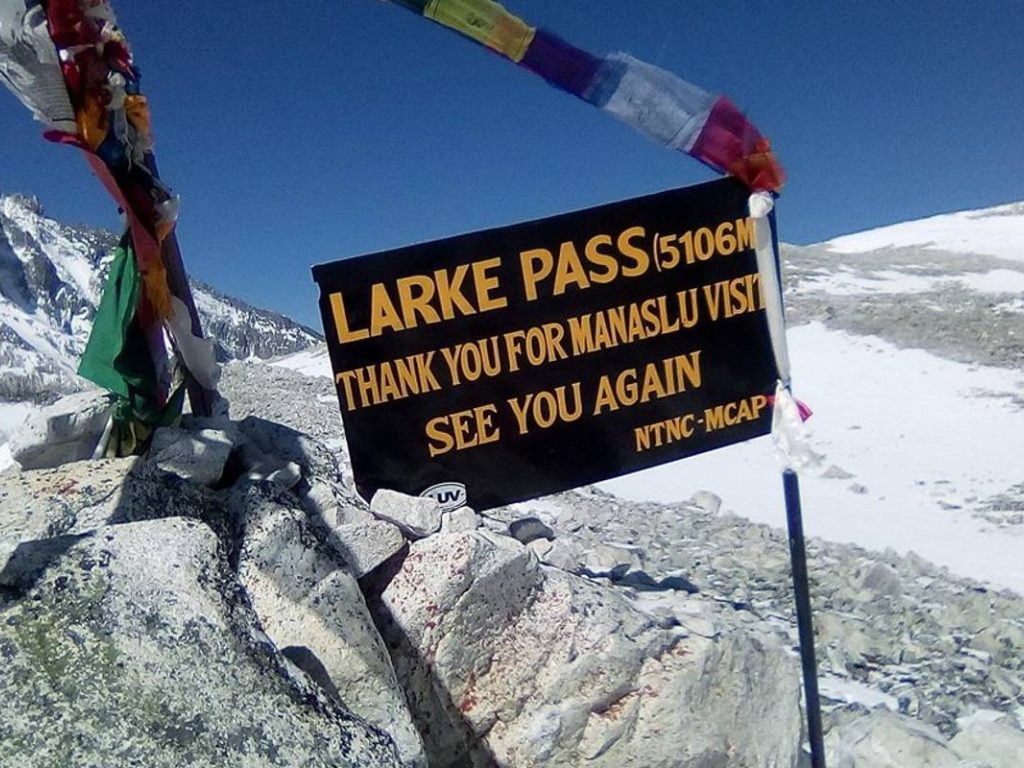
Manaslu Trek via Larke Pass Trek FAQs
Introduction The Manaslu Trek via Larke Pass is a remote Himalayan adventure around Mount Manaslu, the world’s eighth-highest mountain. The route passes through traditional villages, Buddhist monasteries, dramatic valleys, and high mountain landscapes before crossing the challenging Larke Pass. These FAQs cover the route, permits, difficulty, altitude, best time, accommodation, cost, preparation, and other practical […]
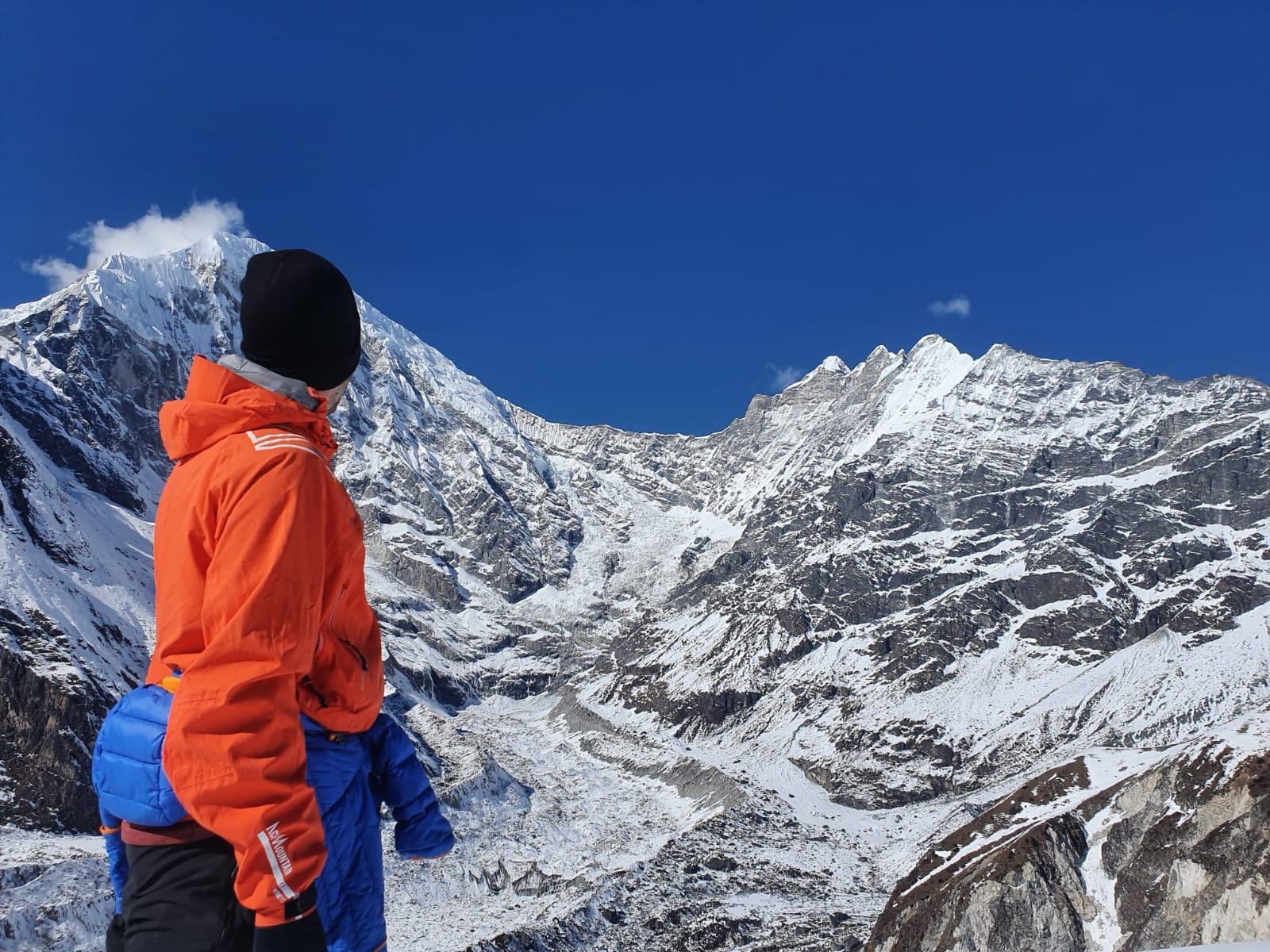
Langtang Valley Trek – Frequently Asked Questions
Introduction Planning a Langtang Valley Trek often comes with questions about the route, difficulty, altitude, permits, best season, accommodation, food, transportation, and preparation. This FAQ guide answers the most common questions trekkers ask before visiting the Langtang region. The Langtang Valley Trek takes you from the lower hills toward Kyanjin Gompa through forests, Tamang villages, […]

Namche Bazaar: The Heartbeat of the Everest Region
Ask any trekker who has walked to Everest Base Camp and most of them will tell you the same thing. It’s just not a random village in the Khumbu region. Namche Bazaar is the town that stays in your heart forever. It is the heart of Khumbu, where you can get luxury services with backdrop […]