
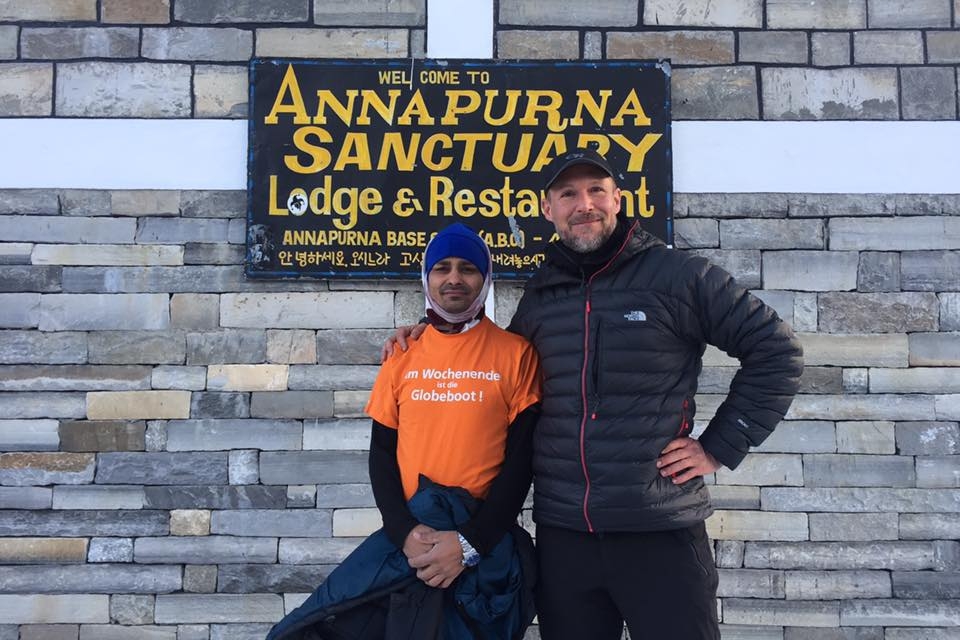


Annapurna Base Camp Trek – 14 Days Overview
The Annapurna Base Camp Trek (commonly known as the ABC Trek) is one of the most popular trekking trails in Nepal and well known in the world-high range trekking-comprised in the mighty Himalayas. In 15 days, travelers trek from the subtropical hills of Pokhara into the grandeur of a glacial amphitheater known as the Annapurna Sanctuary, surrounded by peaks such as Annapurna I (8,091m), Machhapuchhre (6,997m), Hiunchuli, and Gangapurna.
In contrast to more isolated treks, the ABC trail has a lot of amenities but really delivers. Tea houses exist every 1-2 hours walk, the trail goes through ethnically diverse Gurung and Magar villages, and the surrounding landscape changes profoundly from terraced rice fields and oak woodlands to high snow walls. It’s a great journey for motivated first-timers and veteran trekkers.
A special feature of the route is the early morning trek to Poon Hill (3,210m), one of the best mountain viewing points in Nepal, which has a splendid sunrise view over the whole Annapurna and Dhaulagiri range fluorescent bright golden and rosy.
Best Time to do Annapurna Base Camp Trek
Choosing the best and perfect time for the Annapurna Base Camp Trek is very essential for the trekkers. As it makes your journey enjoyable, safe and memorable. Here are the best season ,you can do the Annapurna Base Camp Trek:
Spring ( March to May )
In spring, you can see flowering rhododendron forests, green hills and fresh mountain air, the trail becomes really beautiful. The warm weather at the low altitude and the cool weather at the high altitude are just right for long days of trekking. This season is for trekkers who want to enjoy both mountain view and nature. In this season, you should book your trek in advance as it is a peak season for the trekkers.
Autumn ( September to November)
Autumn is the best time after the monsoon for Annapurna Base Camp trek because it’s dry and you have crystal clear visibility. While at thorong la pass for this day you are treated to maximum beautiful views of Annapurna, machhapuchhre and Hiunchuli without clouds obscuring the mountains. The temperature is also pleasant, which makes the hike more comfortable and relaxing. This is the also the peak season for the trekkers so, always book in advance during this season.
Winter ( December to February )
Winter is possible for trekking the Annapurna Base Camp but usually not recommended by the guides due to heavy snowfall and extreme cold. If you are experienced trekkers then you can go for it otherwise for the beginners trekkers it is not suitable and may dangerous. Talking about the Monsoon Season ( June to August), it is totally not recommended by the guide and experienced trekkers because of heavy rain, slippery trails and limited mountain views.
Overall, for the best experience with clear skies, beautiful scenery, and safe trekking conditions Spring and Autumn are the best for the Annapurna Base Camp Trek.
Annapurna Base Camp (ABC) Trek – Difficulty and Fitness Level Required
Annapurna Base Camp (ABC) Trek is one of the most classic trekking trails in Nepal – and in the world. Every year thousands of thrill seekers boot up their trousers and make for the center of the Himalayas to look up at the giant Annapurna massif at 4,130 meters (13,550 feet). But before you buy your plane tickets and you start packing, there’s one question you need to really ask yourself: Am I ready for this?
Let’s slot it all in – let’s not sugarcoat it, let’s not overstate it. All you will get is accurate, blunt information about what this trek will demand from your body and soul.
How Difficult is the Annapurna Base Camp Trek ?
The Annapurna Base Camp Trek is moderate in difficulty, and is both achievable for beginners and rewarding for experienced trekkers as long as they are physically fit. You trek about 5–7 hours a day on mountain trails that are constantly going up and down. Annapurna Base Camp (4,130 m), the highest point, can bring altitude-related difficulties, and unpredictable weather can also create the difficulty but route does not entail any technical climbing. With good acclimatization, decent level of fitness and common sense most people will be able to do the Annapurna Base Camp Trek comfortably.
Fitness Level Required on the Annapurna Base Camp trek
The fitness you need for the Annapurna base camp trekking is moderate trekking & walking of 5 to 7 hour a day. Telling your lunges, smiles, and humming tunes is enough for enjoying your trip but good endurance and physical fitness is necessary. Walking nonstop for few days You will need endurance and physical fitness to get the most out of this trip and come home with a smile on your face. A little bit of preparation going for walks, light hiking, or some basic cardio a week ago before the trip will allow you to enjoy the Annapurna Base Camp Trek comfortably and safely.
Why Choose the Annapurna Base Camp Trek?
There are hundreds of treks in Nepal. So, what makes 80,000+ trekkers annually trekking to Annapurna Base Camp? Because this isn’t just a trail — it’s a journey that alters the way you see mountains, people and yourself. Annapurna Base Camp Trek is one of the best frequented trekking trails in Nepal that gives spellbinding views of the Himalayas, diverse terrains and cultural rich experiences all bundled in few days. You will meander through stunning forests, traditional Gurung villages, along rivers, and on the world’s highest mountain trails to the base camp of Mt. Annapurna is a magnificent mountain ridge and you will be surrounded by white-capped peaks from all sides.
This trek is also suitable for beginners trekkers as well as experienced ones since the trail is properly maintained, the tea house, lodges and accommodation is cozy and comfortable and you don’t require to know any complex climbing skills. Among the many trekking routes I would recommend this as one of the best for a true Himalayan experience.
Bring breathtaking vistas, warm friendly locals and wholesome base camp destination into one equation and you have the Base Camp Trek, which is an absolute must for those wanting a complete trekking experience in Nepal.
Outline Itinerary
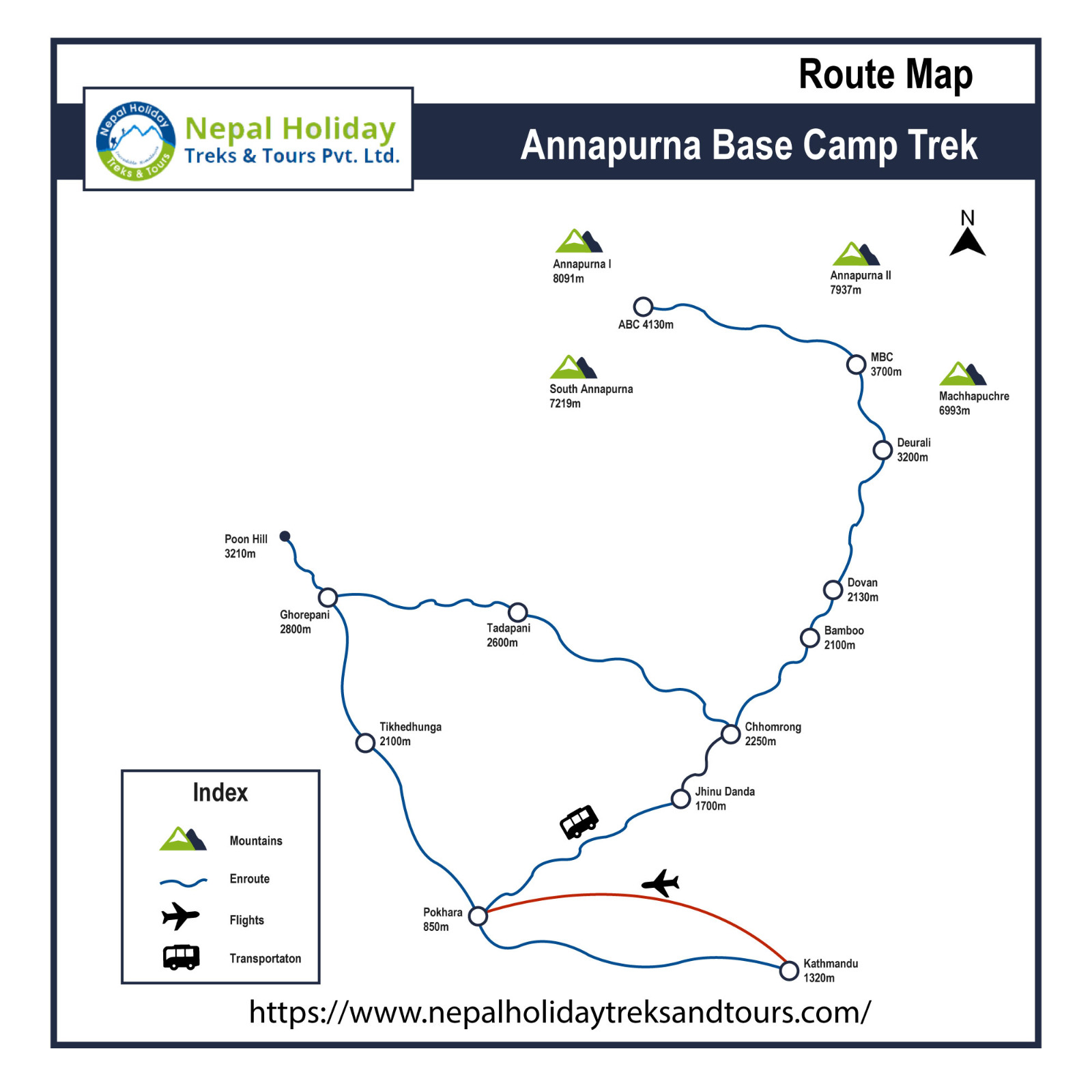
Day 01: Arrive in Kathmandu & transfer to hotel from Tribhuwan International Airport.
Day 02: Drive to Pokhara from Kathmandu.
Day 03: Drive to Nayapul then Trek to Tikhedhunga . 5-6 hrs walk.
Day 04: Trek to Ghorepani. 5-7 hrs walk.
Day 05: Trek to Tadapani via Poon Hill. 5-7 hrs walk.
Day 06: Trek to Chhomrong. 5-6 hrs walk.
Day 07: Trek to Dobhan. 5-7 hrs walk.
Day 08: Trek to Deurali. 5-7 hrs walk.
Day 09: Trek to Annapurna Base Camp 4130m( ABC). 6-7 hrs walk.
Day 10: Trek to Bamboo. 5-7 hrs walk.
Day 11: Trek to Ghandruk. 6-7 hrs walk.
Day 12: Trek to Nayapul and drive to Pokhara. 5 hrs walk.
Day 13: Drive to Kathmandu.
Day 14: Departure to airport
Annapurna Base Camp Trek – 14 Days Highlights
- Highest point annapurna base camp (4130m)
- A beautiful spot machhapuchhre base camp (3700m)
- Renowned and charming village ghandruk and chhomrong
- Jhing natural hot spring
- Life style and culture of gurung and other people
- Number of suspension bridge
- Eye catching view of annapurna south, hiunchuli, barahi shikhar, annapurna 1, glacier dom, gangapurna, annapurna 3, and machhpuchhre etc
- Trek is mostly peaceful hike on the jungle and terrace
- The trek will be on the annapurna conservation area project (acap)
- You will pass small villages or tea house every 2 hours walk
Annapurna Base Camp Trek – 14 Days Itinerary
Expand allDay 01: Arrive in Kathmandu & transfer to hotel from Tribhuwan International Airport.
Your Annapurna Base Camp trek adventure starts right from your arrival at Tribhuvan international Airport Kathmandu as well. Today is just about hanging your hat, breathing in the buzz of Nepal’s capital, and getting ready for the amazing trip up.
Day Activities:
- Arrival at Tribhuvan International Airport, TIA at Kathmandu – the door to Himalayas
- Meet your trekking guide or agency representative in the arrival hall holding a welcome nameplate
- Proceed to your issued hotel in Thamel, the heart of Kathmandu’s trekker district.
- Check in, freshen up, relax after a long flight, your body will definitely thank you
- Walk at leisure around the colorful streets of Thamel – shops that sell trekking gear and cafes, temples, bakeries on every corner.
- Trek briefing with your guide: permits, packing list, daily schedule, safety tips
- Welcome dinner in a local Nepali restaurant — the perfect way to be introduced to Dal Bhat, momos and other Himalayan dishes.
- Off to bed early — tomorrow’s long trek drive to Pokhara begins bright and early!
Day 02: Drive to Pokhara from Kathmandu.
Today, you leave the busy streets of Kathmandu behind for the tranquility of lakeside living in Pokhara – Nepal’s adventure capital. The picturesque Prithvi highway runs parallel to the rivers Trishuli and Marsyangdi, providing breathtaking views of the valley all the way.
Day Activities:
- Early breakfast at the hotel, then load the vehicle for the west
- Drive the Prithvi Highway to Pokhara - see terraced hillsides and river valleys on this route
- Rest stop optional at Mugling or Abu Khaireni - some excellent local teas, and sugarcane juice
- We join your hotel on the shores of the lake in Pokhara.
- Afternoon at leisure to wander: walk along the lovely Phewa Lake riverside.
- Optional stop at the International Mountain Museum — interesting displays on the history of Himalayan climbing
- Catch views of the celebrated Machhapuchhre (Fishtail Mountain) at lakeside at sunset
- Final gear and pack check for tomorrow – your trek starts now!
Day 03: Drive to Nayapul then Trek to Tikhedhunga . 5-6 hrs walk.
The real adventure starts today! A brief drive from Pokhara to Nayapul — the official trailhead — will have you strapping on your boots and setting foot on the Annapurna Base Camp trail. The trail meanders through riverside villages, suspension bridges, and green terraced farmland.
Day Activities:
- Morning drive from Pokhara to Nayapul (1 hour) — watch as the city turns into farmland
- Carry out the obligatory TIMS Card and ACAP Permit verification at Birethanti Check Point
- Take your initial steps on the ABC trail away from Nayapul following the Modi Khola river
- Trek to Birethanti village — a pretty little village with teahouses and a waterfall in the wild nearby
- Track following the river through the native Magar villages and ricked terraces
- Pass over a series of wooden suspension bridges that sway over the turquoise waters of the Modi Khola
- Climb steadily to reach Tikhedhunga — a tiny yet bustling teahouse hamlet
- End your first day hike over a hearty dinner at the lodge – you deserve it!
Day 04: Trek to Ghorepani. 5-7 hrs walk.
Today is among the most fulfilling yet challenging days of the beginning hike. The path ascends at a sharp angle through one of the most stunning rhododendron forests in Nepal, each step up is answered by a view of the mountain that you can take with you. When you get to Ghorepani, the Annapurna range will be within your reach.
Day Activities:
- Early departure from Tikhedhunga — the trek right away starts with the long stone stairs
- Steep climb beyond Ulleri village — a traditional Magar village with authentic stone-paved lanes
- Step into the enchanting rhododendron and oak forest —a crescendo of red and pink blooms in spring (March–April)
- Rest stop at Bantanti and Nangethanti — best places to catch your breath and drink
- Hike into ever-more breathtaking mountain landscapes with wild views toward Annapurna South
- Views of Hiunchuli, Nilgiri and the high ridges of the Annapurna Massif
- Reach Ghorepani (2,874m) - a very common mountain town located on a ridge
- Early check, have hot soup and sleep well – tomorrow’s early morning hike to Poon Hill
Day 05: Trek to Tadapani via Poon Hill. 5-7 hrs walk.
Rise early — today arguably has the most iconic highlight of the entire trek, if not all trekking, sunrise over the Himalayas from Poon Hill. The seemingly endless array of snowcapped giants glowing gold and pink in the morning light is one of those moments that will change you forever.
Day Activities:
- Rise at 4:30–5:00 AM and start the 45-minute trek to Poon Hill (3,210m) with the help of a flashlight
- Make it to the hilltop lookout for one of the most stunning sunrises in Nepal
- See the golden light on Annapurna I (8,091m), Dhaulagiri (8,167m), Machhapuchhre, Nilgiri and more than 20 other peaks
- This is the most photographed vista on the Annapurna Circuit
- Go down to Ghorepani for a hot breakfast that you’ve long been owing yourself
- Continue on trekking through the thick rhododendron and bamboo woodland towards Tadapani
- So many birds to see, - this forest is the rightful home of Danphe (Himalayan Monal), national bird of Nepal.
- Come to Tadapani with Annapurna South and Machhapuchhre towering over the skyline.
Day 06: Trek to Chhomrong. 5-6 hrs walk.
Your today’s trek takes you further into the land of Gurung, you descend through misty forests, crisscross the wild Modi Khola through gorge, then climb to the dramatic ridge village of Chhomrong widely accepted as the “real door” to Annapurna Sanctuary.
Day Activities:
- Early morning views of Annapurna South, Machhapuchhre at Tadapani — last big panorama before the gorge.
- Descend in beautiful oak, rhododendron & bamboo woodland.
- Travel through traditional Gurung villages - observe distinct culture, stone houses & warm hospitality.
- Descend sharply to the Modi Khola river valley and cross a long suspension bridge.
- Hike up the Kimche village – terraced potato and mustard fields decorate the trail.
- Reach Chhomrong: a large and bustling Gurung village situated on a sunny ridgeline.
- Go to the Chhomrong monastery and meet some of the villagers.
- From the lodge rooftop, take in outstanding views of Annapurna South (7,219m) and Hiunchuli towering straight ahead.
Day 07: Trek to Dobhan. 5-7 hrs walk.
From the exposed ridges of Chhomrong, today leads you down to the heart of the Annapurna Sanctuary, a secret land enclosed by towering peaks that is home to the world’s highest mountains in a broad sense. The trail drops steeply, crosses the Chhomrong Khola and then ascends again through dense jungle to Dobhan.
Day Activities:
- Descend the legendary stone staircase from Chhomrong — nearly 2,000 steps carved into the mountainside
- Cross the Chhomrong Khola bridge at the bottom of the valley.
- Ascend again through Sinuwa with its exquisite bamboo and rhododendron cover.
- Step into the wilderness of the Annapurna Conservation Area – green, untouched, and animal rich.
- Watch Himalayan Tahr (wild goats) on the rocky ledges, and red pandas if you are lucky.
- Trek down into mossy forest clammy with fog.
- Hear the thunder of the Modi Khola river below you as you zigzag along the gorge,
- Reach Dobhan — a tea house cluster squeezed between steep valley walls.
Day 08: Trek to Deurali. 5-7 hrs walk.
Today as you rise higher and higher the landscapes you pass over is changed greatly in appearance. The thick jungle dies out, replaced with alpine terrain, the air gets cooler and thinner, and sheer walls of the Modi Khola gorge surround you on all sides. When you arrive at Deurali, you will get the feeling that you have gone to a different world completely.
Day Activities:
- Morning trek from Dobhan in mossy rhododendron forests and bamboo thickets.
- Through Himalaya (village) (Hinku Cave) —Historic rest stop of early Annapurna expeditions
- Cross the river Modi Khola multiple times on robust wooden bridges
- The valley walls start to rise overhead – epic gorge backdrop
- Go into the zone where it can snow at any time of the year – wear warm layers
- Let us go through the (Himalaya – Deurali) section which is avalanche-prone efficiently and keep your senses alert
- Reach Deurali a claustrophobic settlement nestled between glacier-sculpted cliffs
- Sleep well tonight — tomorrow is the biggest day of the entire trek!
Day 09: Trek to Annapurna Base Camp 4130m( ABC). 6-7 hrs walk.
This is the day you have been waiting for, dreaming about, and hiking toward all week. Today you arrive at Annapurna Base Camp — a high-altitude amphitheater ringed by some of the most spectacular mountains on earth. And at 4,130 meters surrounded by giants, it’s an experience that words can barely describe.
Day Activities:
- Early morning departure from Deurali — the trail flattens out on a wide open alpine plateau
- Cross snowfields and glacial moraine covered with stones as the Sanctuary takes shape
- Arrive at Machhapuchhre Base Camp (MBC, 3,700m) — see the full Annapurna range for the first time
- Enjoy the breathtaking sight of Machhapuchhre (Fishtail Mountain, 6,993m) right overhead
- Final 2 hours on ice and boulders to Annapurna Base Camp
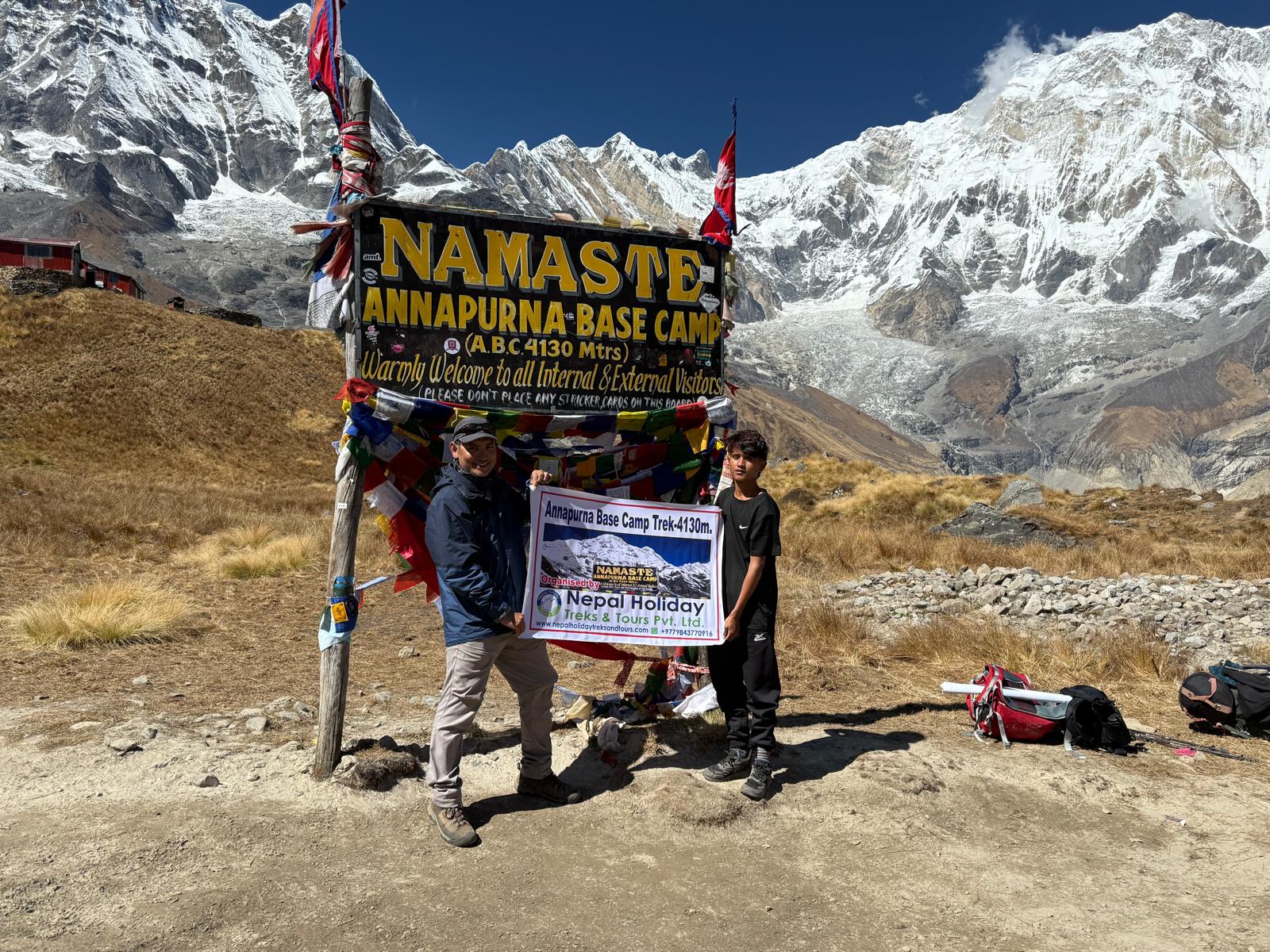
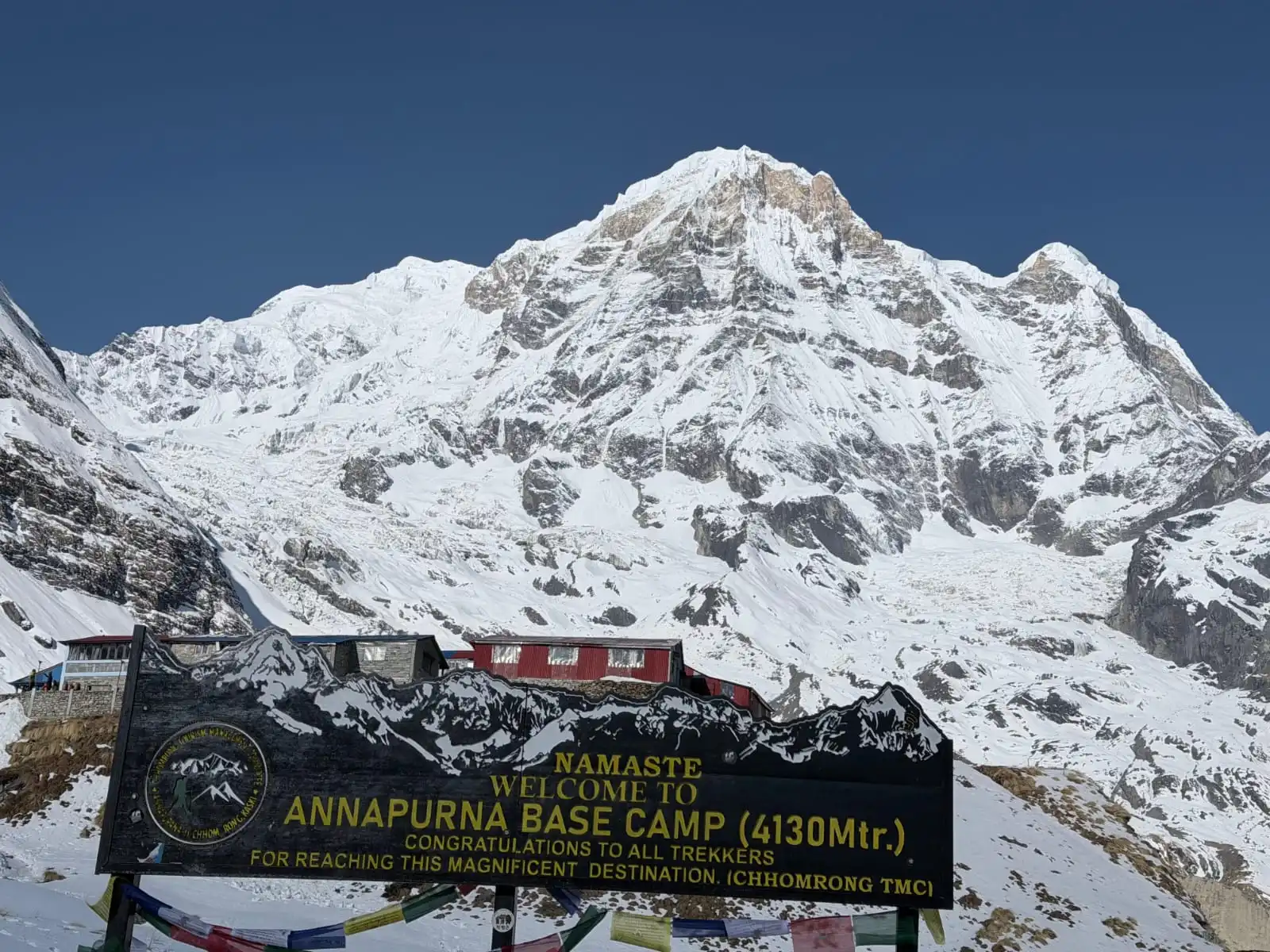
- Arrive at ABC (4,130m) inside the triumphant natural amphitheater – 360° panoramic view: Annapurna I (8,091m), Annapurna South, Hiunchuli, Gangapurna, Tharpu Chuli and Machhapuchhre
- Celebrate with your guide and the rest of your group - you have arrived at one of the most iconic locations in Nepal
- Observe a golden sunset on the Annapurna glacier and snowfields from base camp
Day 10: Trek to Bamboo. 5-7 hrs walk.
After the triumphant high of reaching base camp, the long trek back down to the valley starts today. You will head back the way you came through the breathtaking gorge, as the mountains recede behind you and the air grows warmer, the forest thickens, and teems with green once again.
Day Activities:
- Wake up early for one last sunrise at Annapurna Base Camp – it’s even better on a clear day.
- Take one last stroll around the base camp and say goodbye to those amazing peaks.
- Start dropping down from Machhapuchhre Base Camp — the trail seems to fly by when you are going downhill.
- Through Deurali and then Himalaya teahouses — the once strange landmarks now feel like old friends.
- Down through the towering walls of the Modi Khola gorge.
- Re-enter beautiful bamboo and rhododendron forest – a much welcome change of scenery.
- Reach Bamboo – a tranquil, forest-shaded teahouse stop off the river.
- Relax your aching legs, enjoy a hot meal, and sleep soundly in the warm lodge.
Day 11: Trek to Ghandruk. 6-7 hrs walk.
Today, leaving the main ABC route behind, you will be venturing into one of Nepal’s finest Gurung villages — Ghandruk. This large and beautiful hilltop village presents a fascinating cultural experience with traditional stone houses, a museum and the finest views of Annapurna South and Machhapuchhre that you can find on the trail.
Day Activities:
- Trek from Bamboo, retrace your steps through the lower forest via Sinuwa
- Go back up the stone stairs to Chhomrong for a rest in the late morning
- Rather than back to Tadapani from Chhomrong, head along the trail to Ghandruk
- Trek across terraced farmland, holding on to slowly widening views of the Annapurna South face
- Reach Ghandruk — the second largest Gurung village in Nepal, at an elevation 1,940m
- Drop in on the Ghandruk Gurung Museum – discover about the history, culture, jewellery and the Gurkha soldier tradition of the Gurung people
- Visit the cobbled streets and old stone house of the village
- Best line-of-sight to Annapurna South (7,219m) you have had on the whole trip
Day 12: Trek to Nayapul and drive to Pokhara. 5 hrs walk.
The trek ends today as you descend from Ghandruk through terraced farmland to Nayapul – the same gateway where your journey started just over a week ago. From there, a beautiful drive takes you back to the stunning lakeside city of Pokhara.
Day Activities:
- One final morning in the mountains – rise early to watch Annapurna South turn rose at Ghandruk
- Have a relaxed breakfast before you start your final descent
- Walk down through thick rhododendron forest and terraced fields
- Go through Kimche and lower Gurung settlements as the trail descends to the valley floor
- At the bottom, cross the Modi Khola river and hike through the valley to Nayapul
- Reach Nayapul – the end point (trail head) of your Annapurna Base Camp trek
- Board your vehicle for the drive back to Pokhara (1 hour)
- Head to your hotel and finally have that long, hot shower you have been hoping for.
- Toast the end of your trek with a farewell dinner at Phewa Lake
Day 13: Drive to Kathmandu.
Your final full day in Nepal starts with the scenic drive to Kathmandu. The mountains might be disappearing in the back window, but the memories you have collected on the trail will last a lifetime. Use this day to unwind, think back over your experience, and maybe get in some last-minute sightseeing.
Day Activities:
- Spend the morning checking out your hotel in Pokhara after a leisurely breakfast
- Drive back towards Kathmandu along the Prithvi Highway — back the way you came, now well acquainted
- Stop for tea, fresh fruit, and a rest at an optional stop at the riverside in Mugling
- Reach Kathmandu by mid afternoon and proceed to the hotel
- Option to visit Patan Durbar Square, one of the best UNESCO Heritage Sites in Kathmandu Valley
- Final souvenir shopping in Thamel — pashminas, thangka paintings, singing bowls, prayer flags, Nepali spices
- Feel free to take a trekking certificate from us as a memento of your accomplishment
- Farewell dinner with your guide and trek team
Day 14: Departure to airport.
All good adventures come to an end, but the essence of the Himalayas never leaves you. Now you leave Nepal with an empty heart, weary legs, and a collection of memories that you will carry for the rest of your life. Have a good journey and Namaste!
Day Activities:
- Wake up and savor a final Nepali breakfast - one last Dal Bhat or butter tea.
- Pack up and check one last time that you have all your things.
- Proceed to TIA (Tribhuvan International Airport) – at least 3 hours for International flight.
- Check-in and formalities for departure at the airport.
- Thinking about the amazing 14 days – the mountains, the people, the culture, and the personal achievements.
- Fly home with the spirit of the Himalayas in your heart.
If the above Annapurna Base Camp Trek – 14 Days itinerary does not meet your needs, we can design individualized travel plans based on your preferences and specifications.
Plan My TripAnnapurna Base Camp Trek – 14 Days Cost Includes
- Airport pick-up and drop service transfers by private vehicle.
- Fresh fruits after dinner every night as dessert during the trek.
- 2 Night Hotel in Kathmandu B/B Plan.
- 2 Night Hotel in Pokhara B/B Plan.
- Three times three meals a day—breakfast, lunch, dinner, and 3 cups of tea/coffee a day during the trek.
- An experienced, helpful, knowledgeable, friendly, English-speaking, well-trained, government license holder guide with all his salary, food, drinks, accommodation, equipment, transport, and insurance.
- You will be under observation with a pulse oximeter to have your oxygen levels and heart rate measured twice a day during the trek. This is to catch the signs of Altitude Mountain Sickness (AMS) early, thus making trekking safer.
- National park Trekking permits, local government permits, and TIMS Card.
- Arrangement of Emergency helicopter service (paid by your travel insurance company).
- Kathmandu to Pokhara to Kathmandu by Tourists Bus.
- Pokhara to Nayapul to Pokhara by a private vehicle.
- All taxes and company service charge.
- Normal First aids kit box.
- Nepal Holiday T-shirt & Trekking Map
Annapurna Base Camp Trek – 14 Days Cost Excludes
- International airfare and visa fees
- Lunch and dinner in Kathmandu and Pokhara.
- Personal expenses of bar and beverage bills, Wi-Fi, hot shower, bottle of water, extra porters, laundry, or any other things that are not mentioned by the company.
- Your trekking gear and extra nights in a certain destination.
- Tips for your guide and porters, which is compulsory.
- Travel insurance along with high-altitude emergency evacuation coverage.
- A strong, helpful, porters with proper safety equipment and walking equipment his salary, food, drinks, accommodation, insurance, (one porter for two people he will carry bag pack max 20-25kg).
- Extra expenses due to any event such as strikes, weather conditions, flight delays, etc.
Annapurna Base Camp Trek – 14 Days Additional Info
Accommodation in Annapurna Base Camp Trek
During the Annapurna Base Camp Trek you experience comfortable accommodation in teahouses and lodges. Every one of the teahouses are locally owned and managed, so that you can expect the warm typical Nepali mountain hospitality. Rooms are simple twin or double sharing with basic clean facility including warm blankets and pillows. At Deurali and Annapurna Base Camp, altitude is such that teahouses are more primitive, but they do offer good night’s rest after day of walking.
In Kathmandu you have 3 nights accommodation in a good standard hotel in the heart of Thamel, with breakfast. Similarly in Pokhara: 2 nights at a good hotel at Lakeside; also including breakfast. They both include hot showers, Wi-Fi and comfortable beds, so you will be rested and ready to go for your trek, and happy to come back to a warm bed at the end of the day.
Meals in the Annapurna Base Camp Trek
One of the most delightful things in Annapurna Base Camp Trek is the food. All three meals are provided during the trek (breakfast, lunch and dinner), as well as 3 cups of tea or coffee per day. There is a good selection of both Nepali and continental food on teahouse menus to happy all appetites. The most sought-after and strongly advised meal is the classic Dal Bhat — a filling platter of steam rice, lentil broth, and fresh vegetable curry — which is not just tastes good, but also fuels you up for those long days on the trail. There are also options for pasta, nasi goreng, soup, momos, fried rice, porridge, pancakes and omelette.
Ripe fruits are served after dinner every night as a dessert, the taste for your mouth and boost your energy during the whole trip. Breakfast is included at the hotel in Kathmandu and Pokhara, but lunch and dinner are on your own, allowing you to sample the fine selection of both local and international eateries in the two cities.
Permits Required for the Annapurna Base Camp Trek
Before starting the trail you will require two permits. They are simple to obtain, cheap, and we can manage both permits on your behalf — so there really isn’t anything to worry about.
- TIMS Card (Trekkers’ Information Management System)
It is a normal standard permit that all trekkers need in Nepal. It just takes a note on who is on the trail – treat it as a safety net so that at least one person knows where you are. If you are trekking with us we will take care of it for you hassle free.
- ACAP Permit (Annapurna Conservation Area Project)
This permit allows you to enter the Annapurna Conservation Area— the protected area that the full ABC trail traverses. The fee directly helps to preserve the forests, wildlife and trails that make this trek so beautiful. Think of it as your tiny Himalayan conservation-as-a-service contribution, keeping the mountains as breathtaking as the day you first saw them in a snapshot.
Where to Get Them ?
Both the permits can be obtained from the office of the Nepal Tourism board in Kathmandu or the Tourism Office in Pokhara. If you are trekking with us, we will take care of this — just have two passport photos and a copy of your passport on hand.
Essential Information:
There are two permits, both checked at Birethanti (where your trek begins) and more than once along the trail. Keep them in your daypack, not buried at the bottom of your bag.
A Typical Day on the Annapurna Base Camp Trek
Curious about what your days will really be like on the trail? here is an honest, eye-level view of what a typical day on the Annapurna Base Camp ( ABC) Trek actually feels like – from when you open your eyes in the morning to when you sleep under your sleeping bag at night.
Morning — Rise, Eat, and Walk. Your day usually begins at 6:00 or 7:00 a.m., with a cup of tea or coffee and a modest but satisfying breakfast at your teahouse – porridge, eggs, toast, or a warm bowl of Tibetan bread doused with honey. At 7:30 your boots are on and you have started on the trail. The best hours for walking are in the morning, as the cooler air, the golden light, and the full mountain views (before clouds obscure them) combine for perfect hiking conditions.
On the Trail – Most days involve for 5-7 hours of walking that time divided up naturally with rest stops, teahouse chai breaks, and many other occasions when you just stop and look. The view is always changing - one moment you are weaving your way through a bamboo forest, the next you are crossing a swaying suspension bridge over a thundering river. Your guide will maintain a comfortable walking pace and there is no feeling of urgency.
Afternoon — Arrive, Rest, Recover. Your next stop is usually reached in the early to mid afternoon. This is your moment — clean yourself, stretch your legs, jot a few lines in your journal, or just sit on the teahouse veranda as the mountains turn pink in the fading light. Your body is working hard, so rest is not laziness — it is the part of trek.
Evening — Eat, Connect, Sleep. Dinner is the best part of the day. Dal Bhat a hot plate of Nepal’s iconic lentil soup with rice is what keeps walkers going and most teahouses will give you as many refills on your plate as you want. By 9 p.m., almost everyone on the trail is asleep. And honestly after a day like that, you will not need any convincing.
Is the Annapurna Base Camp Trek Right for You ?
Have you been scrolling through amazing Himalayan photos and thinking — is that something I could do? The answer, more often than not, is yes. It’s one of those unique experiences designed for the average adventurer and not the experienced mountain climber. Situated at 4,130 meters in a natural Amphitheatre of jagged peaks — Annapurna I, Dhaulagiri, Machhapuchhre — it’s the kind of moment that makes you remember why you journey in the first place.
You don’t have to be a super fit or have the prior experience of trekking. If you are able to walk 5 to 6 hours per day and have a true wish to challenge yourself a little, this trek is well within your reach. The trail is clearly marked, teahouses provide hot food and soft beds each night, and your guide will regulate the pace of the hike so that you acclimate to the altitude naturally.
What makes ABC truly special is not just the destination. Rhododendron forests aflame red and pink in spring. Traditional Gurung villages where time slows down to a lovely pace. A pre-dawn trek to Poon Hill to witness golden light gradually spilling over some of the highest peaks on earth. These are not just highlights — they are experiences you will carry for the rest of your life.
The ideal time to visit is in the spring (March to May) and autumn (September to November) when the skies are the clearest, the paths are the liveliest, and the mountains are their most photogenic. Whether you are a first time trekker or simply someone ready for a new challenge, the Annapurna Base Camp Trek has a way of meeting you exactly where you are and taking you somewhere extraordinary. If your gut is telling you this is the one — listen to them. The mountains are waiting.
Phone, Wi-Fi and Charging During the Annapurna Base Camp Trek
During the Annapurna Base Camp Trek phone network, Wi-Fi, and charging are available but may not work in all area because of the remoteness of mountain. In the villages like Ghandruk, Chhomrong and Jhinu your mobile signal is quite strong and NTC and Ncell may service there. But at higher elevations as you travel to Deurali, Machhapuchhre Base Camp, and Annapurna Base Camp, the signal is weak or dead sometimes.
Talking about charging your equipment, many brew houses also offer wi-fi, but it is generally slow, with additional fees at higher altitude. The cost of Wi-Fi generally goes up with altitude, and the service can be unreliable due to the weather and location.
There are charging facilities too in most lodges, but you might have to pay few charges to use them to charge your phone, camera or power bank. If possible – bring a power bank or extra batteries, especially for the high part of the trek – there can be quite some limit in electricity on the route.
In General, phone network (i.e. mobile network), Wi-fi, charging can be found on Annapurna Base Camp Trek but ready with intermittent connectivity in highland area.
Drinking Water along the Annapurna Base Camp Trek
Water is widely available in the Annapurna Base Camp Trek route but you need to make sure if it is drinkable water or not. In tea houses you can purchase boiled or bottled water, for trekkers these is the most common options. Bottled water can be found in the lower villages, but the cost increases with altitude.
Rather than buying bottled water, a lot of trekkers use water purification tablets, filters, or refillable bottles—these options are better for the environment and your wallet. You can get water from taps, streams and lodges on the route but you must always purify it before drinking otherwise you will get stomach problems on the trek.
Tea houses can provide boiled water for drinking which is one of the safest option in the mountains. Carrying a collapsible water bottle or thermos for the Annapurna Base Camp Trek is beneficial.
In general, the water availability is good in the Complete Annapurna Base Camp Trek but it is always better to purify water either by boiling or using a filter before consuming.
Guide and Porters for the safety on Annapurna Base Camp
All the trekkers are required to obtain services of a licensed trekking guide and to obtain a TIMS card through authorized trekking agencies registered with the Government of Nepal. Porter will carry up to 10 kg or 15 kg per client. If you wish , you may keep your clothing and items in a storage on room where you are stay on Kathmandu hotel. Importantly, Nepal Holiday Treks and Tours Pvt. Ltd. is a reliable and reputable company that can provide you with a safe and technically competent guide and porter. They always carry essential safety equipment, gear, and first aid kids.
Natural Experience During Trekking
The pathway is equally incredible for natural experiences. On the third day of our trekking, we leave our luggage in hotel at GhorePani Poon Hill pleasure trip before sunrise to catch the dazzling sunrise. Poon Hill is one of the best views points in this trek for sunrise view and mountain vista. Similarly from the top of the POON HILL, we can explore mount Dhaulagiri, the Annapurna range and Machhapuchhre (Fish Tail) lies in the north part, butterfly peaks in the far western part. However Annapurna trekking is an unforgettable lifetime mountain holiday experience in Nepal, finding yourself in the base giant Annapurna (8091m) with 360 degree mountain views is terrifically beautiful that is beyond your imagination.
Hot Springs
Here you can enjoy natural hot spring near Jhinu Danda, you can cleanse yourself spiritually in nature hot springs with bathing areas in the lap of the mountains. It is believed that taking bath in hot springs water heals our pains and aches.
Culture and Religion on Annapurna Region
Nepal is a multi cultural country where people with different culture and traditions lived mutually. So in this region mostly Magar and Gurung people live, famous for Gurkha regiment. Additionally you can also observe Chhetris in the lower elevations and mongoloid Himalayan people in Himalayan. If you want to experience more cultural diversity heritages in Himalayan then Nepal Holiday Treks and Tours Pvt. Ltd. recommends you to Lantang, Manaslu, and Everest region. But no doubt that Annapurna is the best scenery as numerous people trek there every year
Travel Insurance for a Safe Annapurna Base Camp
Any trek in Nepal, including the Annapurna Base Camp trekking, demands travel insurance. When buying travel insurance, ensure that it covers high- altitude trekking and other unexpected emergency. Additionally, you may also obtain the coverage of other activities like hiking, mountaineering, and adventure sports. It can offer you with peace of mind and financial protection in the event of an unforeseen accident.
Altitude Sickness
Normally altitude sickness occurs when you travel to a high altitude too quickly. Headache, nausea, tiredness etc are the symptoms occur when your body tries to adjust to the lower air pressure and lower oxygen levels at high altitudes. Here are some things you can do to prevent yourself from getting altitude sickness.
- Stop and rest where you are
- Do not go any higher for at least 24 to 48 hours
- Make sure you are drinking enough water
- Do not smoke, drink alcohol, or exercise
Preventing Altitude Sickness (AMS):
- Rest Well: Ensure that you rest well before starting your trek.
- Stay Hydrated: Continue drinking plenty of water during the journey.
- Balanced Nutrition: Maintain the balance of salt and sugar through proper eating habits and not skipping meals.
- Keep Warm: Layer up to remain warm without profuse sweating.
- Controlled Breathing: Breathe deeply and steadily from your diaphragm to maximize lung capacity. Maintain a comfortable walking speed that will allow for controlled breathing. Nasal breathing avoids drying your throat—wearing a muff or scarf in high altitudes might be of use.
- Pace Yourself: It’s not a competition. Pace yourself with a maintainable and Server consistent pace instead of exhausting yourself too early and taking many rest stops. Stop and admire the stunning views.
Difference Between Annapurna Base Camp and Annapurna Circuit
Trekking to Annapurna Base Camp is half of walking to Annapurna Circuit but both are equally beautiful and challenging trekking destinations in Nepal.
Annapurna Base Camp is shorter and easier. Follow the simple trail that leads to Annapurna Base Camp (4,130 m), through forests, villages and across mountains – great for beginners with normal fitness.
While Annapurna Circuit Trek is longer and more strenuous. The trek circles the Annapurna range and also crosses Thorong La Pass (5,416 m), thus it involves a greater variety in terrain and takes you higher.
In conclusion, ABC trek is ideal you for a short duration moderate trek, and Annapurna Circuit Trek is more suited to the adventurous explorers who want a long, more challenging journey in Himalayas.
Why Choose Nepal Holiday Treks and Tours for your Annapurna Base Camp Trek ?
Choosing the right trekking company is very important for a safe and enjoyable journey. Nepal Holiday Treks and Tours is a trusted and experienced trekking company in Nepal, offering well-organized trips, professional guides and personalized service for the Annapurna Base Camp Trek. With years of experience in the field, the company focuses on safety, comfort and authentic Himalayan experience.
There are many reasons to choose us as your Trekking partner. Some of them are:
- We provide experienced, licensed and friendly guides.
- We provide flexible itineraries, comfortable tea house and accommodation
- Honest pricing with no hidden cost
- Airport pickup and drop service
- We accept Last minute booking
- Our first priority is customer safety
- We focuses on Customer’s satisfaction
Best Alternatives to the Annapurna Base Camp Trek
- Mardi Himal Trek – A short and peaceful trek with breathtaking ridge views and fewer tourists.
- Khopra Danda Trek – A hidden gem offering quiet trails and stunning panoramic scenery.
- Annapurna Circuit Trek – A classic long trek with diverse landscapes and high mountain passes.
Quick Tip: Choose Mardi for short & quiet, Poon Hill for easy & scenic, Khopra for offbeat, and Circuit for a full adventure.
Trip Map
Upcoming Departures
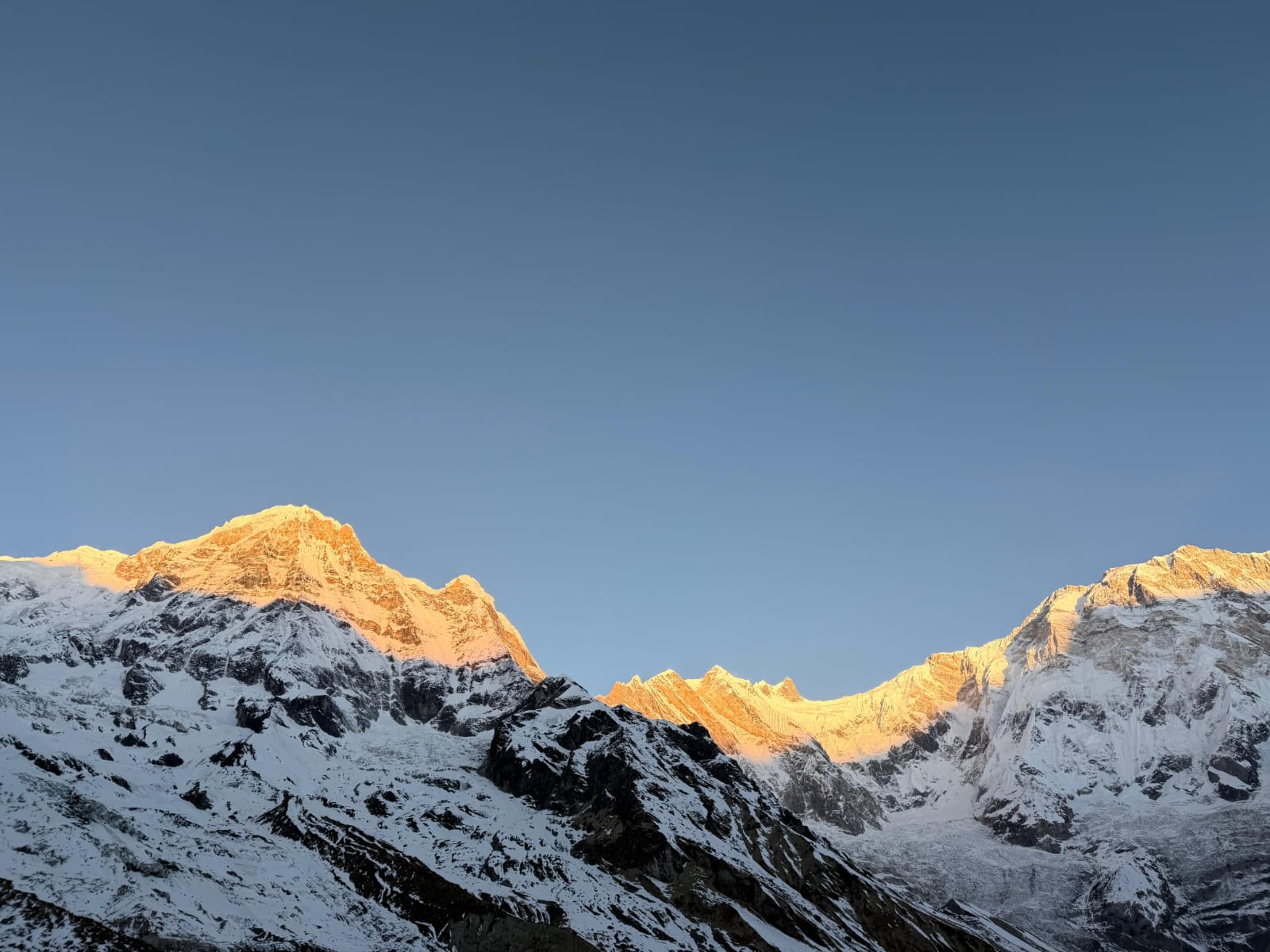
Annapurna Base Camp Trek – 14 Days Gallery
Customer Reviews
Write a ReviewAnnapurna Base Camp Trek – 14 Days FAQs
How long is the Annapurna Base Camp Trek?
The Annapurna Base Camp Trek usually takes about 7 to 12 trekking days, depending on the route and itinerary. Including arrival , sightseeing and travel from Kathmandu to Pokhara, we had the made the full trip of 15 days. We will customize the itinerary as per your time and needs.
What is the height of Annapurna Base Camp Trek ?
The height of the Annapurna Base Camp trek is 4,130 meters ( 13,550 feet) above sea level.
Is Annapurna Base Camp Trek safe?
Yes, the Annapurna Base Camp trek is safe for the majority of trekkers, with a sensible itinerary planned, pace yourself and trek with an experienced guide. The trail is well-established, tea houses can be found along the way, and countless trekkers do this trek annually without incident.
Is there any age limit for the Annapurna Base Camp Trek?
No, there are no age limit for the Annapurna Base Camp Trek, but trekkers must be fit and capable of walking 6-7 hours per day. Various age groups including teenagers and elderly have accomplished this trek with adequate training.
What are the mode of transportation in Annapurna Base Camp Trek?
The trek commences with a drive from Kathmandu to Pokhara by tourist bus, private vehicle, or flight (based on your itinerary) and then a short drive to Nayapul or Jhinu which is your trek starting point. From here the trek proceeds on foot along the mountain trails all the way to Annapurna Base Camp.
Therefore, the transportation for the ABC trek is a combination of road travel, optional air travel, and walking on foot.
What is the luggage limit for the porter?
Annapurna Base Camp Trek is best suited distance for porter load or shared load among trekkers. So each trekker need to carry light about 10-12kg on a porter.
While they are very tough and experienced, you definitely want to keep the weight reasonable for safety and comfort in the trek. You should pack only what you really need and bring a small daypack that you can carry water, your camera, and personal essentials.
Carrying the appropriate porter weight on the ABC trek will guarantee a secure, dignified and pleasant experience for not only the trekkers but the porters too.
I am a Vegetarian. Did I get the vegetarian meals?
Yes, there are plenty of vegetarian options on the Annapurna Base Camp Trek. Most tea houses sell many vegetarian options like dal bhat, rice and noodle plates, pasta dishes, potatoes, vegetables, soups, breads and eggs.
You just need to let your guide or lodge know in advance and they will cook fresh vegetarian food for you at any point during the ABC trek.
Tip for Guide and Porter is necessary?
A tip is not mandatory but it is advisable that you leave some money for your guide and porter in the Annapurna Base Camp Trek to thank them for their efforts and support. Guides and porters ensure that your trek is safe, comfortable, and successful, so tipping at the end of your trek is a well-integrated hiking culture in Nepal.
Are there any ATMs available along the trail?
You can find ATMs in Kathmandu and Pokhara but there is no reliable ATM on the Annapurna Base Camp Trek. After starting the trek, it’s impossible to draw money in the mountain villages.
It is advisable to bring sufficient amount of cash from Pokhara for food, Wi-Fi, Charging and any other personal expense for ABC trek.
How far is Annapurna from Kathmandu ?
Annapurna is approximately 200km to 210 km far from Kathmandu depending on the route.
Are their religious sites along the trail?
Yes, there are a few religious and cultural sites in Annapurna Base Camp Trek. At the beautiful villages of Ghandruk, Chhomrong and even on the way to Annapurna Sanctuary trek you get to see the wonderful world of Buddhist prayer flags, monasteries, mani walls and small temples.
The spiritual sites are rooted in the local Gurung and Buddhist culture so the ABC trek is not just a trekking in the mountains but more of a cultural adventure.
Annapurna Base Camp Trek – 14 Days Equipment Lists
Pack light, but make sure you bring the essential clothing and equipment needed for changing weather and high-altitude conditions. The following checklist covers the recommended gear for a comfortable and safe trek.
Note: If the sleeping bag or down jacket is lost or damaged, a compensation fee of USD 150 per item will be charged.
Sleeping Gear & Bags
- Four-season (0°C) sleeping bag and puffy down jacket (recommended)
- Daypack (35–45 liters recommended) with rain cover
- Sleeping bag liner
Head & Upper Body
- Sun hat or cap
- UV-protection sunglasses
- Warm knitted hat or beanie
- Headlamp with spare batteries
- Scarf, neck gaiter, or Buff
Torso
- Technical-fabric base layers suitable for the season
- Quick-drying T-shirts or shirts: 2 short-sleeve and 2 long-sleeve
- Fleece jacket or pullover
- Waterproof and windproof outer-shell jacket
Lower Body
- Technical-fabric thermal base layer
- Hiking pants: 2 pairs
- Comfortable pants for wearing inside teahouses
- Waterproof and windproof shell pants
- Hiking shorts
Hands
- Wool or technical-fabric liner gloves
- Insulated hard-shell outer gloves for colder conditions
Feet
- Warm wool or technical-fabric socks
- Hiking socks
- Liner socks, such as silk, if preferred
- Waterproof trekking or hiking boots
- Gaiters for dust, rain, or snow
- Microspikes or ice cleats, especially from November to March
- Comfortable casual shoes
Undergarments & Sleepwear
The quantity of clothing can be adjusted according to your personal preferences and laundry opportunities during the trek.
- Quick-drying technical-fabric underwear
- Sports bras for women
- Pajamas or comfortable sleeping clothes
First Aid & Personal Medications
Our guides carry a basic first-aid kit and essential medications, but bringing your own personal medical supplies is strongly recommended.
- Sunscreen
- Lip balm
- Personal ointment or basic skincare products
- Medication for a dry mountain cough, if suitable for you
- Mosquito repellent for Kathmandu and lower-altitude areas
- Personal prescription medications
Other Essentials
- Passport
- Extra passport-sized photographs
- Reusable water bottle
- Toiletry kit
- Toilet paper (2 rolls)
- Water purification tablets or a UV water purifier
- Hydration bladder
- High-protein snacks, such as protein bars or nuts
- Quick-drying towel
- Trekking poles
- Earplugs
- Pillowcase
- Waterproof or dry bags for important documents, electronics, and money
- Airline tickets and copies of important travel documents
Optional Items
You can purchase or rent additional trekking gear in Nepal if needed. Thamel, Kathmandu’s main tourist hub, has a wide selection of trekking equipment at reasonable prices. Your guide can also assist you with purchasing any last-minute supplies.
- Power bank or spare batteries
- Camera and mobile phone
- Thermos flask for hot water
- Books or playing cards
- Comb
- Binoculars
- Pee bottle or pee funnel for women
- Whistle
Packing Tip
Avoid overpacking. Choose lightweight, quick-drying, and versatile clothing that can be layered according to the temperature and altitude. Prioritize warm layers, waterproof clothing, comfortable trekking boots, and essential personal items for a safe and enjoyable Annapurna Base Camp Trek.
Similar Tours
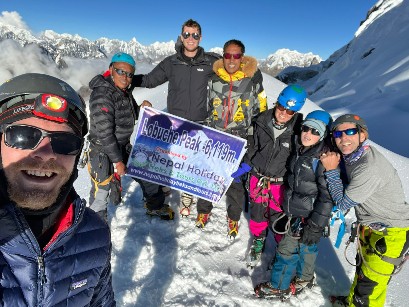
Everest Three High Pass Trek with Lobuche Peak
Overview If you want to experience the best Everest adventure in Nepal, this is it. The Everest Three High Pass...
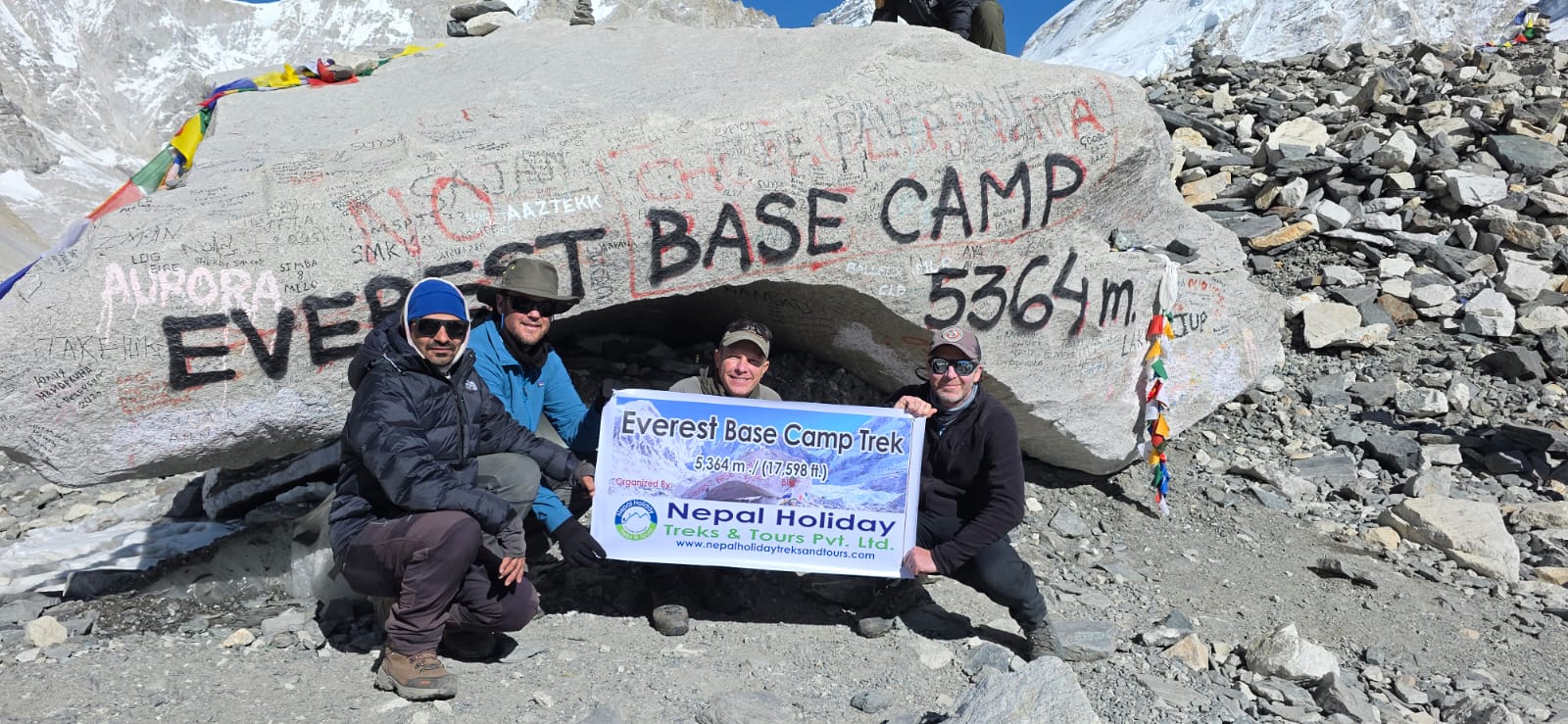
Everest Base Camp Luxury Trek
The Everest Base Camp Luxury Trek is a magnificent Himalayan experience without giving up on luxury. A well-planned journey...
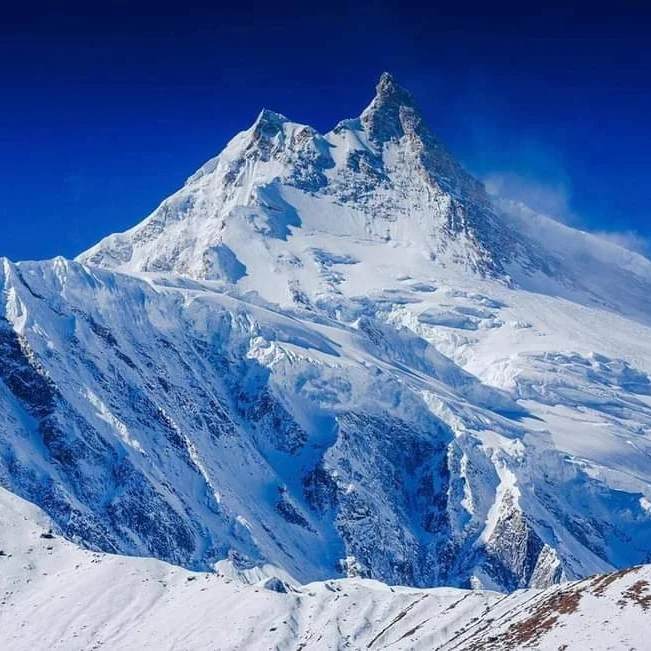
Short Manaslu Tsum Valley Trek
An 17 days trek, the Short Manaslu and Tsum Valley Trek engages trekkers to an adventure close to Mt....
Gokyo Valley Trek Via Renjo-La Pass
Your getaway from the typical trekking route to Everest Base Camp is the Gokyo Valley Trekking. This trekking adventure...
Jomsom Muktinath Trek
Nepal is a stunning country in the Himalayas with magnificent mountains. These mountains’ foothills make for ideal walking terrain....