
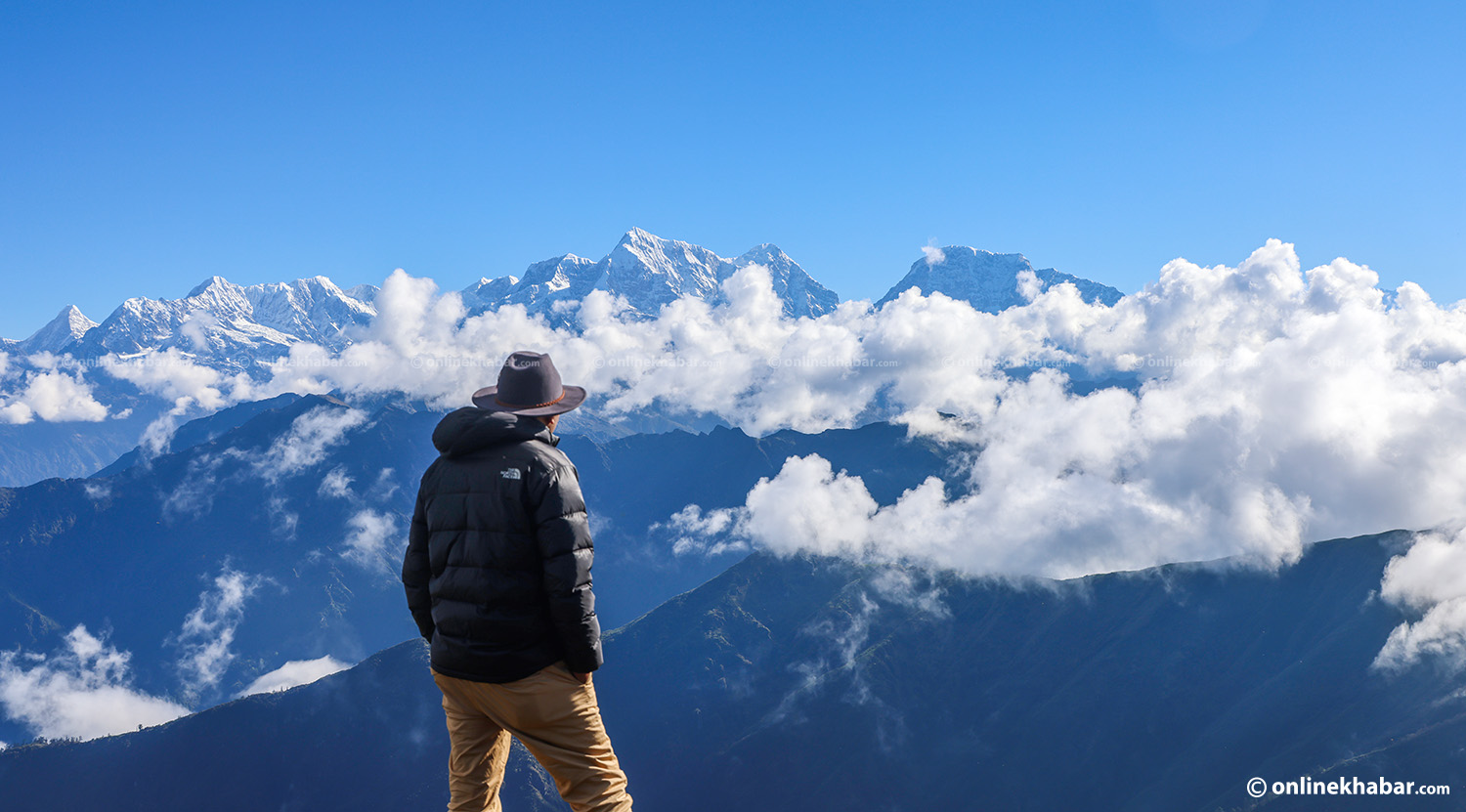


Pikey Peak Trek Overview
If you are planning for a short trek near the Everest region, Pikey Peak is less traveled trek route than the other areas which would be best for you. In spite of less traveled trek, nowadays it has gained a lot of popularity. This trek takes you to beautiful area of the world highest peak, Mount Everest and the rugged landscapes of the Everest region. This trek is also known as the Dal Bhat Trek and is one of the best hill top destination that give you stunning views of other neighboring peaks of the region such as Mount Dhaulagiri, Kanchanjunga, Lhotse, Makalu, and many more.
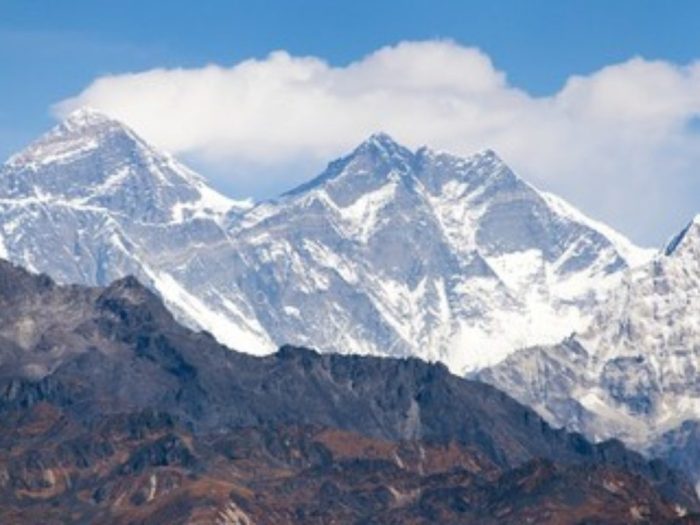
The newly discovered Pikey Peak trekking route to the Everest region lies at an altitude of 4,065 m which is in the mesmerizing lower khumbu region of Nepal, in Solukhumbu District. Pikey Peak trek provides you eye-catching viewpoint of the Himalayan range. From the apex you can explore Mount Everest, Mount Numbur, and Mount Lhotse. The late Sir Edmund Hillary once said “Pikey Peak is the most impressive place for observance of Mt.” Another key fact to remember, that this trek not only offers you with breathtaking mountain views and eye catching beauty but also the cultural exploration of the Sherpas living in the Everest region. Pikey Peak trek is basically a moderate level short trekking destination in the Everest region. So, if you have a limited time only and still want to explore the Everest region, you can join us at Nepal Holiday Treks and Tours Pvt. Ltd. thamel, Nepal. Once visit us if you want to experience your incredible trip to Pikey Peak Trek. Best Season for Pikey Peak Trek
Trekking to the Pikey Peak is favorable in every season but the best time provides you best experience till the end. And the different seasons will offer you with different landscapes, environment, and experience.
So Autumn (September, October November) and Spring (March, April, May) both are considered as the best time of the year for Pikey Peak Trek. The weather and temperature during Autumn are mid and favorable for trekking. The day time temperature ranges between 9-15 degrees in the Everest Region. You will see a slight decrease in temperature as you trek to a higher altitude. It is also known as post-monsoon period so you have to be a bit careful in the month of September as you might have to go with some light rainfall. As always nights are colder but you’ll do goods with some warm gears. Spring is the pre-monsoon period as it is the time when nature regenerates flowers bloom during this time. The daytime temperature ranges between 10-20 degrees during this season, so the weather is favorable and surrounded by wildflowers especially rhododendron with colorful hills. You might experience occasional rain in early May.
Location the trek
Pikey Peak is situated in the Solukhumbu district of Nepal, in the eastern part of the country. It lies within the Sagarmatha National Park buffer zone, which is home to the world-famous Everest Base Camp trek. The peak itself stands at an elevation of 4,065 meters (13,333 feet) above sea level.
Best view point: The twin peaky peaks
The twin Pikey Peaks offer some of the most breathtaking panoramic views in the Himalayas, making them an incredible viewpoint for trekkers seeking stunning vistas without the crowds. Standing at an elevation of 4,065 meters (13,333 feet), the twin Pikey Peaks provide a 360-degree vista of the surrounding Himalayan range. From this vantage point, trekkers can behold the majestic peaks of Mount Everest, Kanchenjunga, Makalu, Lhotse, and numerous other snow-capped giants, creating an awe-inspiring panorama that stretches as far as the eye can see. The twin Pikey Peaks are renowned for their stunning sunrise and sunset views. As the first light of dawn bathes the Himalayas in golden hues, and the last rays of sunlight paint the sky in a kaleidoscope of colors, the peaks come alive with a mesmerizing beauty that captivates the soul and leaves an indelible impression on all who witness it. Unlike more popular viewpoints such as Kala Patthar or Gokyo Ri, the twin Pikey Peaks offer a quieter and more intimate experience, with fewer trekkers making the journey to this remote location.
This allows for a deeper connection with nature and a sense of serenity that is unparalleled in the bustling trails of the Everest region. In addition to their natural beauty, the twin Pikey Peaks hold cultural significance for the local Sherpa community. They are considered sacred by the Sherpa’s, who believe that the peaks are the abode of the powerful deity of the sky. As such, trekkers often encounter ancient Buddhist stupas and prayer flags adorning the summit, adding to the mystical ambiance of the place. Despite their remote location, the twin Pikey Peaks are relatively accessible for trekkers of all levels of experience. The trek to reach the peaks typically takes around 4-5 days from the starting point in Shivalaya or Phaplu, with moderate elevation gain and well-defined trails leading to the summit. Overall, the twin Pikey Peaks offer a truly unforgettable viewpoint that combines stunning natural beauty, cultural significance, and a sense of tranquility that is rare to find in the Himalayas. For trekkers seeking a unique and memorable experience, they are undoubtedly one of the best viewpoints in the region.
Local culture and tradition in Pikey Peaks region
Throughout your trek in the Pikey Peaks region, you’ll have the opportunity to interact with local Sherpa villagers who call these rugged mountains home. Sherpa’s are renowned for their warm hospitality and welcoming nature, and you’ll likely be invited into their homes for tea or a meal, giving you a firsthand glimpse into their way of life. The Pikey Peaks region is dotted with ancient Buddhist monasteries and stupas, many of which date back centuries. These sacred sites serve as spiritual sanctuaries for the local Sherpa community, and you may have the chance to visit them and witness traditional Buddhist rituals and ceremonies. Depending on the timing of your trek, you may be fortunate enough to witness traditional Sherpa festivals
and celebrations.
Festivals such as Mani Rimdu, Dumje, and Losar are celebrated with great fervor in the Himalayan region, featuring colorful dances, elaborate costumes, and religious rituals that offer a window into Sherpa culture and tradition.The Pikey Peaks themselves hold deep spiritual significance for the Sherpa people, who believe that the mountains are the dwelling place of protective deities. Along the trek, you m ay encounter sacred sites adorned with prayer flags, mani stones (engraved with Buddhist mantras), and shortens (Buddhist stupas), where locals come to offer prayers and pay homage to the mountains. Overall, immersing yourself in the local and cultural traditions of the Pikey Peaks region offers a rich and rewarding experience that deepens your connection to the land and its people. Whether it’s sharing a meal with Sherpa villagers, witnessing ancient rituals at a monastery, or gazing upon sacred mountains shrouded in prayer flags, every moment is an opportunity to learn, grow, and appreciate the beauty of Himalayan culture.
Guide and Porter Pikey Peaks Trekking
A guide and porter are the helping hands during your trip. They help to make your journey comfortable, easier and more exciting without compromising your safety and comfort. Porter will carry up to 10 kg or 15 kg per client. If you wish , you may keep your clothing and items in a storage on room where you are stay on Kathmandu hotel.our guides and porters are fully experienced and well educated as well as they have government authorized guide license. Moreover, to make your trip safe and secure, we provide insurance facility to our guides. Similarly, they are friendly, helpful, and familiar with all the secret gems that are not listed in guidebooks and can make your journey truly unique. Notably, the Nepal Tourism Board has declared that, all trekkers are required to obtain services of licensed trekking guide and to obtain TIMS card through authorized trekking agencies registered with the Government of Nepal.
Accommodation and Healthy Food in Pikey Peaks Trekking
In lower altitude, the tea houses provide you with single rooms with attached bathroom. But as you trek higher the facilities get limited. Mostly, you will find a twin- sharing room and common rest room. Similarly, all the foods will be cooked by the local cook by using local vegetables, so the taste would be very local. It is worth to try cheese, things ( fermented millet beer), honey and local potatoes while you are on trek at Pikey Peak. At the same time you can also have pizza, burgers, bakery products and other items in Lukla and Namche Bazzar. However, Dal bhat are the most common foods.
Altitude Sickness During the trek
Throughout this trek, you will be trekking in the isolated mountain region for more than a week beginning from the 2000 meters and ascending at the maximum at 4065 meters. As a result, altitude sickness is a real possibility at such a high altitude. When it comes to this illness one should be proactive and notify the guide as soon as the symptoms like headache, nausea, tiredness, etc appear. Travel insurance helps to cover your minor inconveniences such as missed airline connection and delayed luggage all the way to more serious issues including injuries or major illness. So we strongly recommend you to take a travel insurance during your trip.
Preventing Altitude Sickness (AMS):
- Rest Well: Ensure that you rest well before starting your trek.
- Stay Hydrated: Continue drinking plenty of water during the journey.
- Balanced Nutrition: Maintain the balance of salt and sugar through proper eating habits and not skipping meals.
- Keep Warm: Layer up to remain warm without profuse sweating.
- Controlled Breathing: Breathe deeply and steadily from your diaphragm to maximize lung capacity. Maintain a comfortable walking speed that will allow for controlled breathing. Nasal breathing avoids drying your throat—wearing a muff or scarf in high altitudes might be of use.
- Pace Yourself: It’s not a competition. Pace yourself with a maintainable and Server consistent pace instead of exhausting yourself too early and taking many rest stops. Stop and admire the stunning views.
Outline Itinerary
Day 1: Arrival in Kathmandu Then Transfer To Hotel (1,400m)
Day 2: Drive from Kathmandu to Shivalaya (1,790m) | 220 km | ( 7 – 8 hrs )
Day 3: Trek from Shivalaya to Bhandar (2,190m) | 12 km | 5-6 hours
Day 4: Trek from Bhandar to Namkheli (2,300m) | 13 km | 6 hours)
Day 5: Trek from Namkheli to Ngamor Gumpa (2,800m) | 14 km | 6-7 hours
Day 6: Trek from Ngamor Gumpa to Pikey Danda (3,640m) | 10 km | 4-5 hours)
Day 7: Trek to Pikey Peak (4,065 m) and Junbesi (2,700 m) | 15 km | 7 hours)
Day 8: Trek to Thupten Chholing Monastery and Chiyaukhok (2,750m) | 12 km | 5-6 hours
Day 9: Trek from Chiyaukhok to Ghumne Mera via Ratnagi-La Pass (3,200m) | 14 km | 6-7 hours)
Day 10: Trek from Ghumne Mera to Basa (2,300m) | 10 km | 4-5 hours)
Day 11: Trek from Basa to Salleri (2,413m) | 12 km | 5 hours)
Day 12: Drive back from Salleri to Kathmandu | 270 km | 8-9 hours
Day 13: Departure from Kathmandu
Pikey Peak Trek Highlights
- Pikey Peak (4,065m) is one of the best viewpoints in Nepal, offering breathtaking sunrise and sunset views of Mt. Everest (8,849m), Makalu (8,485m), Kanchenjunga (8,586m), Lhotse (8,516m), Dhaulagiri (8,167m), Annapurna (8,091m), Gaurishankar (7,134m), and many more Himalayan peaks.
- Trek provides a rich cultural experience with the Sherpa, Tamang, and Magar communities. The Sherpas are famous for mountaineering and Tibetan Buddhist culture, the Tamangs for their traditional wood carvings and dances, and the Magars for their warrior heritage and vibrant music.
- Analysis famous monastery and Lamastery from the region.
- The route passes through historic monasteries such as Thupten Chholing Monastery (2,920m), home to hundreds of monks and nuns, Chiwong Monastery (2,750m), known for the Mani Rimdu festival, and Taksindu Monastery (2,960m), an important Buddhist site.
- Exploring the Lower Khumbu region, you’ll walk through beautiful Sherpa villages, lush rhododendron forests, and traditional farmlands, experiencing the authentic Himalayan lifestyle.
- The view of Mt. Everest, Makalu, Kanchenjunga, and so many other mountains.
Pikey Peak Trek Itinerary
Expand allDay 1: Arrival in Kathmandu Then Transfer To Hotel (1,400m)
Upon your arrival at Tribhuvan International Airport, you will be welcomed by our representative carrying your nameplate. You will then be transferred to your hotel in Kathmandu. Later, you can stroll around the lively streets of Thamel-one of the most famous tourist spots. Overnight in a hotel.
Day 2: Drive from Kathmandu to Shivalaya (1,790m) | 220 km | ( 7 - 8 hrs )
On this day you will drive today from Kathmandu to Shivalaya via scenic hills, terraced farms, and rivers. About 7 to 8 hours of drive from Kathmandu, en-route you will get to see rural Nepal and some beautiful landscapes. Overnight at a lodge in Shivalaya.
Day 3: Trek from Shivalaya to Bhandar (2,190m) | 12 km | 5-6 hours
We will trek begins with steep climbs over dense forests and small villages. Through a suspension bridge over a stream and a further ascend, we finally reach Bhandar, another beautiful Sherpa village. Overnight at a lodge.
Day 4: Trek from Bhandar to Namkheli (2,300m) | 13 km | 6 hours)
We will trek through rhododendron forests, cross small streams, and terraced fields. The trail moves through monasteries and traditional Sherpa and Magar settlements before reaching Namkheli. Overnight stay at a lodge.
Day 5: Trek from Namkheli to Ngamor Gumpa (2,800m) | 14 km | 6-7 hours
We will trek today follows a rather remote trail and provides great views of hills and mountains. We reach Ngamor Gumpa, a spiritual site with a small monastery. Overnights at a lodge.
Day 6: Trek from Ngamor Gumpa to Pikey Danda (3,640m) | 10 km | 4-5 hours)
Trek to Pikey Danda a ridge covered with alpine vegetation and pine forests. It’s rich in biodiversity many different flora and fauna will accompany the trail. Overnight stay at a lodge
Day 7: Trek to Pikey Peak (4,065 m) and Junbesi (2,700 m) | 15 km | 7 hours)
Early start to Pikey Peak for sunrise, from where we get a panoramic view of Mt. Everest, Makalu, Lhotse, Cho Oyu, Thamserku, Ama Dablam, and many more peaks. We descend through lush forests and traditional villages down to Junbesi. Overnight stay at a lodge.
Day 8: Trek to Thupten Chholing Monastery and Chiyaukhok (2,750m) | 12 km | 5-6 hours
Today is a visit to the famous Thupten Chholing Monastery, home to hundreds of monks and nuns practicing Tibetan Buddhism. Later, we trek to Chiyaukhok. Overnight stay at a lodge.
Day 9: Trek from Chiyaukhok to Ghumne Mera via Ratnagi-La Pass (3,200m) | 14 km | 6-7 hours)
We trek through lush forests and reach Ratnagi-La Pass, offering another fantastic view of the Himalayas. We then descend to Ghumne Mera, a small village with traditional houses. Overnight stay at a lodge.
Day 10: Trek from Ghumne Mera to Basa (2,300m) | 10 km | 4-5 hours)
The trail gradually descends through terraced fields and dense forests, passing through small settlements before reaching Basa. Overnight stay at a lodge.
Day 11: Trek from Basa to Salleri (2,413m) | 12 km | 5 hours)
We trek along the Solu River, passing through picturesque villages and monasteries. Salleri, the district headquarters of Solukhumbu, offers a mix of modern amenities and traditional Sherpa culture. Overnight stay at a lodge.
Day 12: Drive back from Salleri to Kathmandu | 270 km | 8-9 hours
We drive back to Kathmandu via a scenic route, with changing landscapes from mountains to hills and plains. A farewell dinner with traditional Nepali cuisine will be provided in the evening. Overnight stay at a hotel in Kathmandu.
Day 13: Departure from Kathmandu
After breakfast, you will be transferred to the airport for your onward journey. Safe travels!
If the above Pikey Peak Trek itinerary does not meet your needs, we can design individualized travel plans based on your preferences and specifications.
Plan My TripPikey Peak Trek Cost Includes
- Three times Three meals a day- Breakfast, Lunch, Dinner and 3 cup’s of tea/Coffee a day during the trek.
- 2-night twin sharing room in Kathmandu two star Category.
- Accommodation in the tea house during the trek.
- A highly experienced, helpful, friendly, knowledgeable, well- English speaking, Government license Holder Trekking guide with all his salary, food, drinks, accommodation, transport and Insurance.
- Seasonally fruits and desserts on the trek after dinner every day.
- You will be under observation with a pulse oximeter to have your oxygen levels and heart rate measured twice a day during the trek. This is to catch the signs of Altitude Mountain Sickness (AMS) early, thus making trekking safer.
- All applicable government and local taxes as per the itinerary.
- 3 nights accommodation in Kathmandu (3 star hotel) on the BB plan, 1 night before starting the trek and 1 night the day after returning from the trek.
- Gaurishanker National park Trekking permits & local government permit and TIMS Card
- Drive to Shivalaya from Kathmandu and back to Kathmandu from salary by local bus.
- One porter each two people.
- Arrangement of Emergency helicopter service (paid by your travel insurance company)
- Farewell dinner
- Nepal Holiday T-shirt & Trekking Map
Pikey Peak Trek Cost Excludes
- International airfare and visa fees from Kathmandu
- Dinner and lunch in Kathmandu Hotel
- Personal travel and health Insurance.
- Travel insurance along with high-altitude emergency evacuation coverage
- Tips to the porter’s, guide’s, crews and driver which is compulsory.
- Equipment ( sleeping bag, down jacket, trekking pole etc)
- Expenses for beverages, drinking water, desserts, shower, laundry or any other services which are not mentioned by the company.
- A strong, helpful, porters with proper safety equipment and walking equipment his salary, food, drinks, accommodation, insurance, (one porter for two people he will carry bag pack max 20-25kg).
- Extra days in Kathmandu and the mountains such as weather condition, flight delays, or strikes and health issues.
- Your trekking gears and extra nights in a certain destination
- Extra expenses due to any event
Upcoming Departures
Customer Reviews
Write a ReviewPikey Peak Trek FAQs
Why am I going to trek with Nepal Holiday treks and tours?
Nepal Holiday treks and tours offers experienced guides, excellent customer service, and local knowledge that can make your trek safe, enjoyable, and well-organized.
What are the other documents that I need to bring along for trekking? A:What are the other documents that I need to bring along for trekking?
You will be requiring a valid passport with six-month validity, a Nepal visa available on arrival or online, and permits such as the Annapurna Conservation Area Permit (ACAP) and TIMS card
When is the best season to trek the Pikey Peak Trekking?
The best seasons are Spring – March-May and Autumn – September-November when the weather is clear and the trails are dry.
What is the maximum altitude reached during the trek?
The highest altitude depends on the trek. In the Everest Three Passes Trek, the highest points are Kongma La Pass (5,535m), Cho La Pass (5,420m), and Renjo La Pass (5,360m). Everest Base Camp itself stands at 5,364m.
How difficult is the trek?
This trek has a high altitude, long duration, and steep trails. Thus, it demands good fitness and endurance. It is good for people who have prior experience with trekking; however, for beginners, proper acclimatization and steady pace will get them through it.
What kind of altitude sickness can occur, and how to prevent it?
Altitude sickness can kick in above 2,500m, manifesting in symptoms like headaches, dizziness, and nausea. To prevent this, trek gradually, take rest days, stay hydrated, and avoid alcohol consumption. If symptoms worsen, descend immediately.
What kind of weather should I expect during the trek?
Weather conditions in the region are seasonal. It is mild and clear during Spring- March to May, offers the best view and stable conditions during Autumn (Sept–Nov), very cold during Winter (Dec-Feb), and heavy rains mark Summer (June-Aug) resulting in slippery trails. The Spring and Autumn Seasons are considered best for trekking.
What is the temperature rating of the sleeping bag that you will provide for trekking?
The provided sleeping bags operate for -10°C to -15°C, which should suffice for high altitude conditions.
Do I need a visa to enter Nepal?
Yes, you can get a visa on arrival at the airport or apply online prior to your trip.
Who will pick me up at the airport upon my arrival in Nepal?
A representative from Nepal Holiday will meet you at the airport and transport you to your hotel.
Do I need any previous trekking experience for the trek?
Previous experience will be helpful but not compulsory. Your fitness and stamina should be pretty good.
How safe is Nepal to trek solo for women travelers?
Generally, Nepal is safe to trek for a solo female traveler, but always in the back of one’s mind should be taking standard precautions such as the choosing of a reputable company or guide.
Pikey Peak Trek Equipment Lists
Pack light, but make sure you bring the essential clothing and equipment needed for changing weather and high-altitude conditions. The following checklist covers the recommended gear for a comfortable and safe trek.
Note: If the sleeping bag, down jacket is lost or damaged, a compensation fee of USD 150 per item will be charged.
Sleeping Gear & Bags
- Four-season (0°C) sleeping bag and puffy down jacket (recommended)
- Daypack (35–45 liters recommended) with rain cover
- Sleeping bag liner
Head & Upper Body
- Sun hat or cap
- UV-protection sunglasses
- Warm knitted hat or beanie
- Headlamp with spare batteries
- Scarf, neck gaiter, or Buff
Torso
- Technical-fabric base layers suitable for the season
- Quick-drying T-shirts or shirts: 2 short-sleeve and 2 long-sleeve
- Fleece jacket or pullover
- Waterproof and windproof outer-shell jacket
Lower Body
- Technical-fabric thermal base layer
- Comfortable pants for wearing inside teahouses
- Waterproof and windproof shell pants
- Hiking pants: 2 pairs
- Hiking shorts
Hands
- Wool or technical-fabric liner gloves
- Insulated hard-shell outer gloves for colder conditions
Feet
- Warm wool or technical-fabric socks
- Liner socks, such as silk, if preferred
- Waterproof trekking or hiking boots
- Hiking socks
- Gaiters for dust, rain, or snow
- Microspikes or ice cleats, especially from November to March
- Comfortable casual shoes
Undergarments & Sleepwear
The quantity of clothing can be adjusted according to your personal preferences and laundry opportunities during the trek.
- Quick-drying technical-fabric underwear
- Sports bras for women
- Pajamas or comfortable sleeping clothes
First Aid & Personal Medications
Our guides carry a basic first-aid kit and essential medications, but bringing your own personal medical supplies is strongly recommended.
- Sunscreen
- Personal ointment or basic skincare products
- Lip balm
- Suitable medication for a dry mountain cough
- Mosquito repellent for Kathmandu and lower-altitude areas
- Personal prescription medications
Other Essentials
- Passport
- Extra passport-sized photographs
- Reusable water bottle
- Toiletry kit
- Toilet paper (2 rolls)
- Water purification tablets or a UV water purifier
- Hydration bladder
- High-protein snacks, such as protein bars or nuts
- Quick-drying towel
- Trekking poles
- Earplugs
- Pillowcase
- Waterproof or dry bags for important documents, electronics, and money
- Airline tickets and copies of travel documents
Optional Items
You can purchase or rent additional trekking gear in Nepal if needed. Thamel, Kathmandu’s main tourist hub, has a wide selection of trekking equipment at reasonable prices, and your guide can assist you with purchasing any last-minute supplies.
- Power bank or spare batteries
- Camera and mobile phone
- Thermos flask for hot water
- Books or playing cards
- Comb
- Binoculars
- Pee bottle or pee funnel for women
- Whistle
- Thermos flask for hot water
Tip: Avoid overpacking. Choose lightweight, quick-drying, and versatile clothing that can be layered according to the temperature and altitude.
Similar Tours
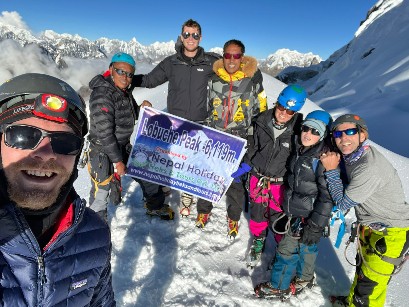
Everest Three High Pass Trek with Lobuche Peak
Overview If you want to experience the best Everest adventure in Nepal, this is it. The Everest Three High Pass...
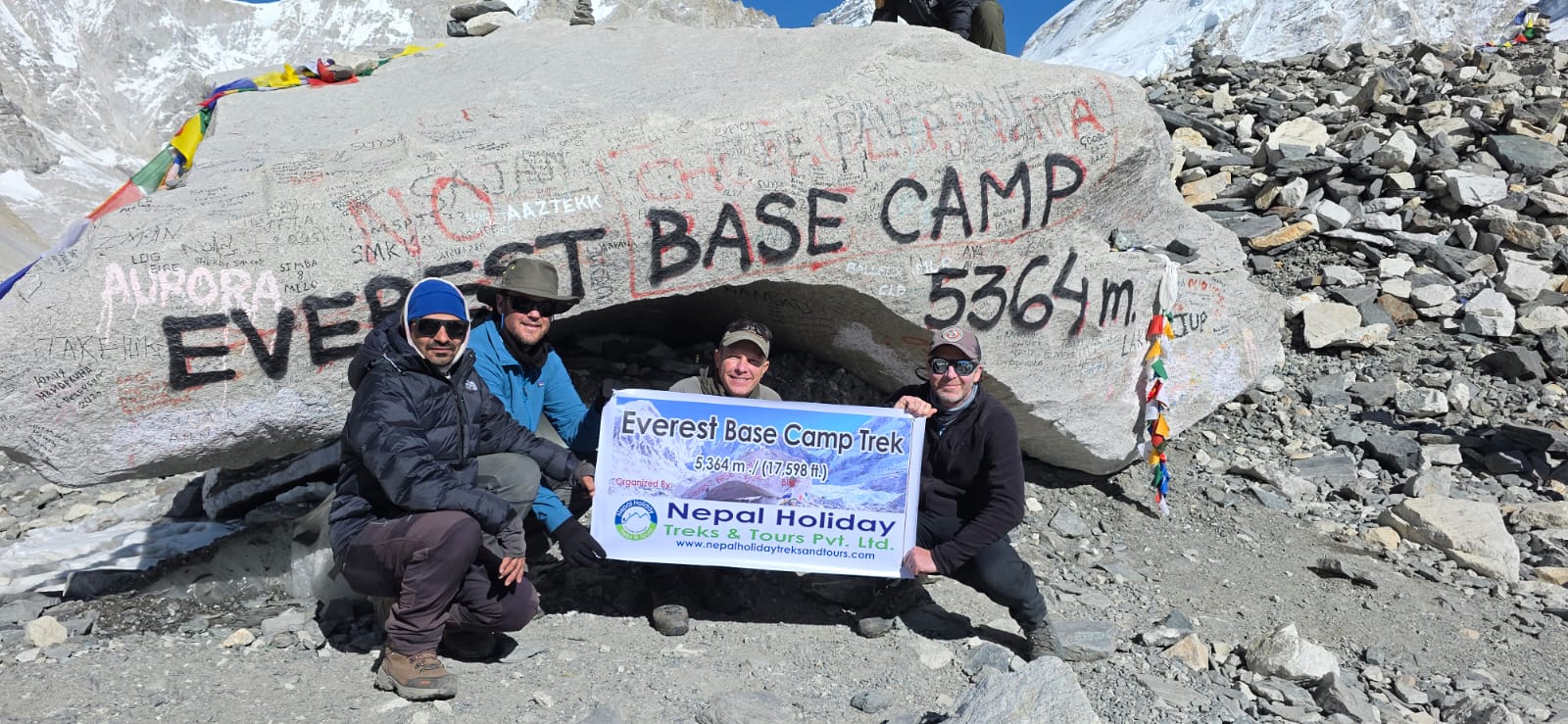
Everest Base Camp Luxury Trek
The Everest Base Camp Luxury Trek is a magnificent Himalayan experience without giving up on luxury. A well-planned journey...
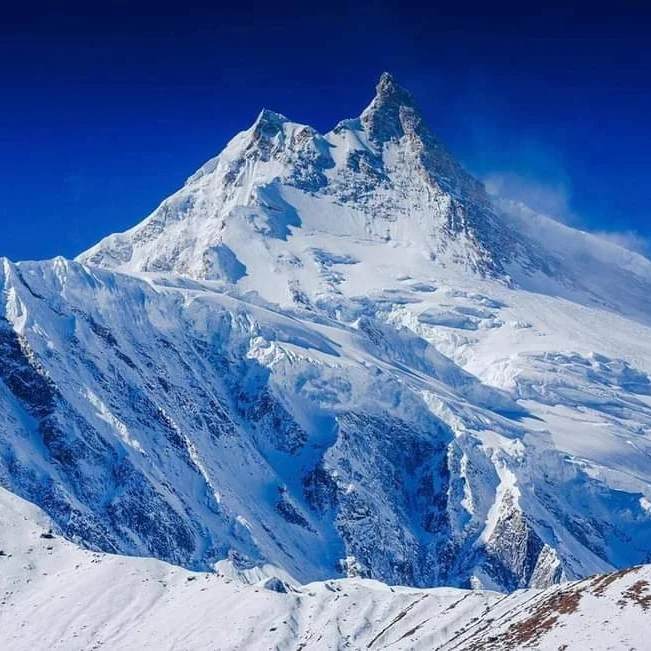
Short Manaslu Tsum Valley Trek
An 17 days trek, the Short Manaslu and Tsum Valley Trek engages trekkers to an adventure close to Mt....
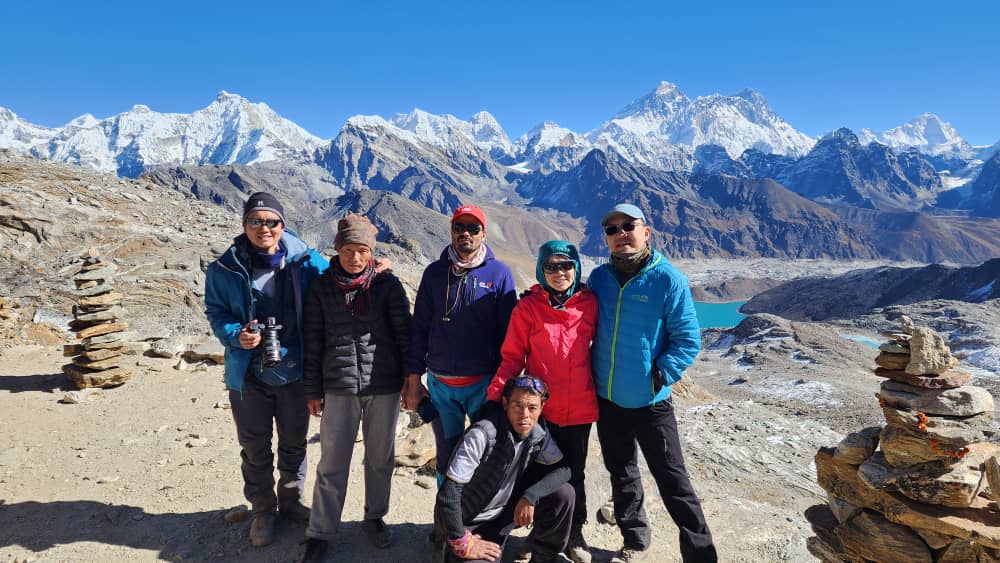
Gokyo Valley Trek Via Renjo-La Pass
Your getaway from the typical trekking route to Everest Base Camp is the Gokyo Valley Trekking. This trekking adventure...
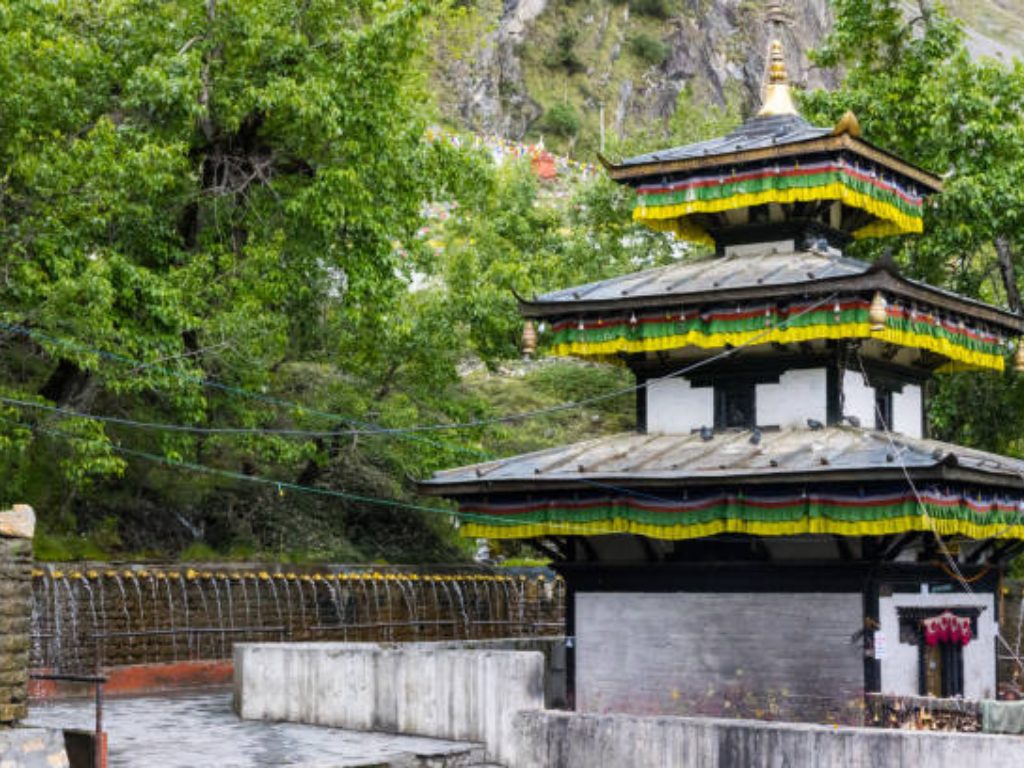
Jomsom Muktinath Trek
Nepal is a stunning country in the Himalayas with magnificent mountains. These mountains’ foothills make for ideal walking terrain....