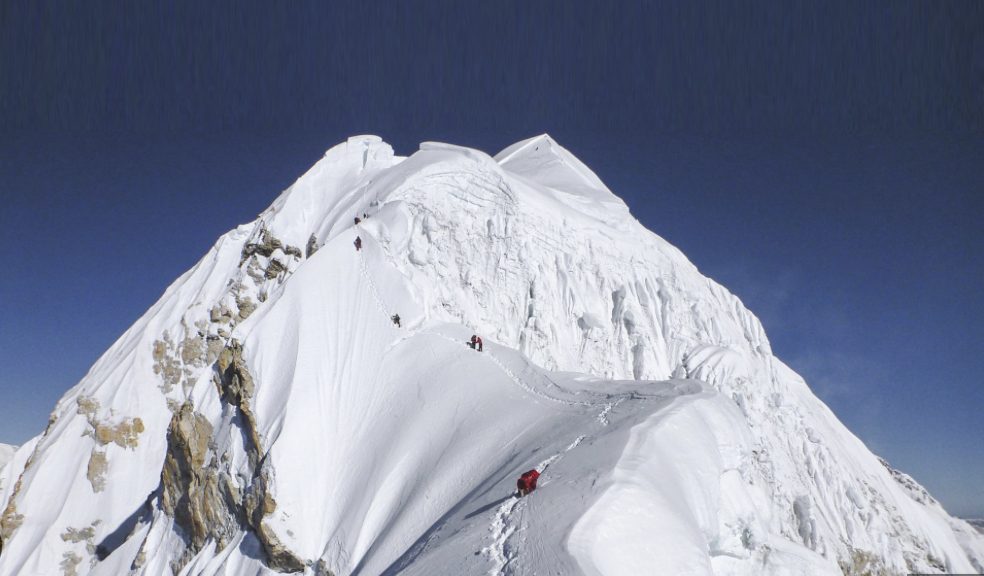
Baruntse Expedition –
Trip Highlights
- A scenic flight to Lukla.
- Exploring Beautiful Hinko Valley.
- Stunning view from the Mera Peak summit.
- Experience Sherpa culture and tradition.
- Great experience of the Himalayan wilderness adventure.
- Stunning view of mountains from the summit of Baruntse.
- Mesmerizing Lakes, rivers, and glaciers.
- Witness Khumbu Valley and Sherpa capital (Namche Bazaar).
Trip Information
Overview
Detailed Itinerary
Day 1: Fly Kathmandu ➜ Lukla (2,840 m) & trek to Chutanga (~3,050–3,200 m)
Trek: 3–4 hrs, ↑300–400 m
Arrive on the short Lukla airstrip and ease into the trek through pine and rhododendron forest to Chutanga. A gentle first walk to settle in, check gear, and review next day’s pass strategy.
Highlights: First views of Khumbu foothills, quiet forested trails, smooth start for acclimatization.
Day 2: Chutanga ➜ Thuli Kharka (~4,300–4,350 m) via Zatrwa La (~4,600 m)
Trek: 6–7 hrs, ↑1,200 m / ↓800 m
Steady ascent to the Zatrwa La (or Zatrwa Og/La passes) for your first high pass crossing, followed by a descent on the Hinku side to Thuli Kharka’s grazing meadows.
Highlights: Pass crossing with big ridgeline panoramas; transition into the Hinku Valley.
Day 3: Thuli Kharka ➜ Kothe (~3,550–3,600 m)
Trek: 4–5 hrs, ↓700–800 m
Descend through juniper and birch to the Hinku Khola. Kothe is a pleasant riverside stop, good for rest and warm meals.
Highlights: Lush river gorge, first teasing glimpses up-valley toward Mera.
Day 4: Kothe ➜ Thangnak (a.k.a. Tangnag, ~4,350 m)
Trek: 4–5 hrs, ↑800 m
Follow the widening valley floor past yak pastures and summer herders’ huts to Thangnak beneath the moraines of the Dig Glacier.
Highlights: Glacial scenery ramps up; comfortable lodges; perfect acclimatization step.
Day 5: Acclimatization day in Thangnak
Short acclimatization hikes to 4,700–4,900 m viewpoints; rest and hydration.
Highlights: Side-trip to Sabai Tsho/nearby ridges; AMS prevention focus.
Day 6: Thangnak ➜ Khare (~5,045–5,100 m)
Trek: 3–4 hrs, ↑700–800 m
Gradual climb along lateral moraines to Khare, the Mera Peak staging point. Review glacier approach line and practice knots in the afternoon.
Highlights: Striking views of Mera’s north-facing glaciers; solid teahouse hub for climbers.
Day 7: Khare—Acclimatization, training & instruction
Crevasse-rescue basics, jumaring and abseil practice on fixed lines, crampon and axe drills; gear check.
Highlights: Hands-on mountaineering refresher; finalize summit strategy.
Day 8: Khare ➜ Mera High Camp (~5,780 m) via Mera La (~5,410–5,415 m)
Ascent: 5–6 hrs, ↑700–800 m
Rope up on the glacier from Khare, crest the Mera La, and continue to the sheltered high camp on rock ledges. Early hot drinks, big dinner, and early lights-out.
Highlights: Sunset over Everest, Lhotse, Makalu—one of the best panoramas in Nepal.
Day 9: Mera Peak Summit (~6,461 m) ➜ descend to Mera La (~5,410 m)
Climb: 8–10 hrs round trip, ↑700 m / ↓1,050 m (to La)
Pre-dawn start on low-angled glacial slopes. The last 30–40 m steepens (often a short fixed rope). Enjoy a massive 360° Himalayan view before descending to Mera La for recovery.
Highlights: 5-eight-thousander skyline (Everest, Lhotse, Makalu, Cho Oyu, Kangchenjunga on the horizon), confidence boost for Baruntse.
Day 10: Mera La ➜ Kongme/Kongma Dingma (~4,700–4,900 m)
Trek: 5–6 hrs, ↓500–700 m
Drop into the upper Hinku basin toward Kongma Dingma’s broad meadows—now into quieter, wilder country. Shift from teahouses to camping as facilities thin out.
Highlights: Remote valley ambience; relaxed post-summit day.
Day 11: Kongma Dingma ➜ Seto Pokhari (~5,000–5,200 m)
Trek: 5–6 hrs, ↑300–500 m
Climb gently onto a high plateau of turquoise lakes—the “White Lake” zone. Camp by the water if conditions allow.
Highlights: High-alpine lakes, mirror reflections, big night skies.
Day 12: Seto Pokhari ➜ Baruntse Base Camp (~5,350–5,450 m)
Trek: 4–5 hrs, ↑200–300 m
Move onto the West Barun Glacier basin and establish a well-equipped base camp near Panch Pokhari. Team briefing on Baruntse route and rope strategy.
Highlights: Close-up of Baruntse’s elegant ridges; full expedition camp setup.
Day 13: Base Camp—Acclimatization
Active rest: short hikes above BC, fine-tune tents, radios, and kitchen. Health checks and weather review.
Highlights: Steady acclimatization; logistics optimization.
Day 14: Base Camp—Puja (worship) & final preparation
Morning blessing ceremony with the climbing team; organize loads, fix rope kits, and review climbing signals.
Highlights: Team unity and cultural immersion; risk briefing and contingency plans.
Day 15: Training day (glacier & fixed lines) from BC
Rehearse ascending devices, down-climbing on fixed rope, anchor transitions, and crevasse rescue systems on safe terrain.
Highlights: Muscle memory before committing to higher camps.
Day 16: Climb to Camp I (6,050–6,100 m)
Climb: 4–6 hrs, ↑600–700 m
Glacier approach to the lower West Col area. Establish C1 on safe platforms. Monitor winds and snow stability.
Highlights: First night above 6,000 m; commanding views back to the Hinku basin.
Day 17: Ascend to Camp II (~6,350–6,450 m)
Climb: 4–5 hrs, ↑300–400 m
Climb steeper snows/ice with fixed sections as needed to position for summit. Early dinner and strict rest protocol.
Highlights: High-camp atmosphere; clear starlit sky if weather cooperates.
Day 18: Camp II—Acclimatization/contingency
Buffer day for weather or rest. Short oxygen-efficient shuffles on fixed lines to keep the body primed.
Highlights: Summit-window flexibility; safety margin.
Day 19: Baruntse SUMMIT (7,162 m / 23,497 ft) ➜ descend to Camp II
Climb: 8–12+ hrs, ↑700–800 m / ↓700–800 m
Alpine start. Expect sustained 35–45° snow/ice with steeper steps on the summit ridge. Careful descent to C2 after photos and a brief summit stay.
Highlights: Major 7,000er achievement; far-reaching views toward Makalu, Everest, and the Hongu/Barun massifs.
Day 20: Descend C2 ➜ Base Camp
Climb/Descent: 5–7 hrs, ↓900–1,100 m
Clear C1 on the way down (if established) and return to the comforts of BC. Celebration meal and thorough rehydration.
Highlights: Hot food, proper sleep, and debrief.
Day 21: Base Camp ➜ Amphu Laptsa Base (~5,300 m)
Trek: 4–5 hrs, mixed glacier & moraine
Traverse toward the head of the Hongu/Imja watershed. Establish a pass-base for the next day’s technical crossing.
Highlights: Stark glacial landscapes; quiet camp beneath serrated ridges.
Day 22: Cross Amphu Laptsa Pass (~5,845 m) ➜ descend to Chhukung (4,730 m)
Traverse: 7–9 hrs, ↑500–600 m / ↓1,100 m+
A technical pass with fixed rope sections on the descent into the Imja Valley. After the crux, trail eases to Chhukung’s teahouses.
Highlights: One of Nepal’s most dramatic passes; shift back to cozy lodges and hot showers.
Day 23: Chhukung ➜ Namche Bazaar (3,440 m)
Trek: 6–7 hrs, mostly ↓
Follow the Imja Khola to Pangboche and the classic Everest trail through Tengboche’s monastery and forest to vibrant Namche.
Highlights: Monastery stop, forests and suspension bridges, cappuccino and bakeries in Namche!
Day 24: Namche ➜ Lukla (2,840 m)
Trek: 6–7 hrs, ↓ and rolling
Retrace via Monjo and Phakding, enjoying a final valley day and team dinner in Lukla.
Highlights: Last riverwalks and bridge crossings; expedition wrap-up vibes.
Day 25: Fly Lukla ➜ Kathmandu (1,400 m)
Morning flight to KTM. Transfer to hotel, gear sorting, and celebration dinner in Thamel.
Highlights: Hot showers, city comforts, farewell meal.