
Location of Mount Everest on World Map
Posted by: Nepal Holidays Treks and Tours on May 28, 2026
Do you know about the world highest peak Mount Everest? Where is Mount Everest Located on world map? Where is Everest Base Camp? This article clears about all these questions.
Mount Everest is located in a landlocked south Asian country, known as Nepal. It is bordered by China to the north and India to the South in the Himalayas in Asia. Nepal is also known as the land of the Himalayas. Mount Everest is situated in the Mahalangur Range on the Tibetan Plateau known as Qing Zang Gaoyuan. The summit is directly between Tibet and Nepal.
Mount Everest keeps some tall company. The Mahalangur Range is home to one of the earth’s six highest peaks. Mount Everest kind of looms in the background. First-timers in Nepal often aren’t really sure which mountain is Everest until someone clarifies for them.
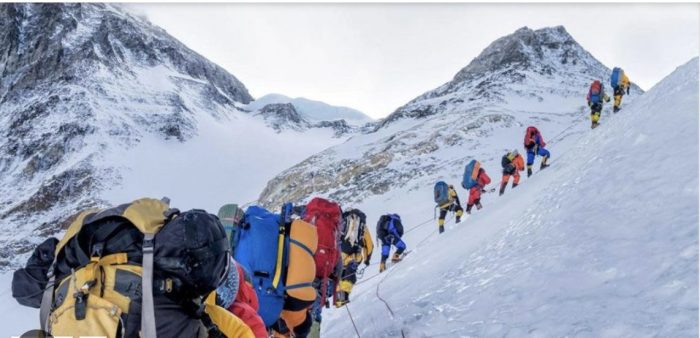
Exact Location of Mount Everest on the World Map
Mount Everest lies on the border of Nepal and the Tibet Autonomous Region of China, in the Asia’s Himalayan region. Its precise location is near 27.9881° N 86.9250° E. If you take a line from Kathmandu, the capital of Nepal and go straight northeast for approximately 140 kilometers, you will find yourself at the foot of the mountain.
Everest on the Nepalese side is in Sagarmatha National Park in the Solukhumbu district – a unesco world heritage site. Sagarmatha is Nepali name of Mount Everest which means “Forehead Touching the Sky.” In the Tibetan area, the mountain is situated in Tingri County in the Xigaze Prefecture, an area that China recognizes as a regional autonomy.
Here is something that surprises many first time visitors to Nepal: while trekking in the Khumbu region you don’t always immediately recognize which mountain is Everest. The Mahalangur Range is extraordinarily crowded with giants. Lhotse (8516 m), Makalu (8485 m), Cho Oyu (8188 m) and more are looming all around you and visually Everest is often playing second fiddle until a local points it out.
Because of political restrictions, geographic accessibility and the well-developed infrastructure of the Khumbu valley, the Nepali southern approach sees far more climbers, trekkers and media coverage than the Tibetan north side.
How High is Mount Everest?
The official height of Mount Everest, jointly accepted by Nepal and China after a comprehensive survey conducted in 2020 is 8,848.86 meters (29,031.7 feet) above sea level. This makes it’s the highest location on Earth – a metric that geographers around the world prefer.
The figure is slightly higher than the previously accepted 8,848 meters (29,029 feet), which had stood since a 1954 Survey of India measurement. The revision of 2020 was based on more advanced GPS technology, gravimetric data and ice-depth information. It seems the snow and ice on the summit was slightly underestimated.
You might have heard that Mauna Kea in Hawaii is technically taller than Everest when measured from its oceanic base. This is true, Mauna Kea is about 10,210 meters from the ocean floor to the peak. But measuring from sea level is the globally accepted standard and by that measure, Everest reigns supreme.
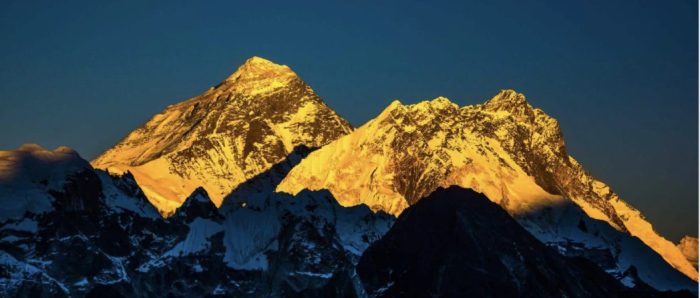
Geography of the Himalayas and the Mahalangur Range
The Himalayan Mountain Range is the largest and highest mountain system of earth that extends over 2400 miles across six countries of Nepal, India, Bhutan, China(Tibet), Pakistan and Afghanistan. The mountain range was created when the Indian plate collided with the Eurasian plate about 50 million years ago and this is still essentially happening, which is why the Himalayas are still rising (a few millimeters each year).
Mount Everest is part of the Mahalangur Himal sub-range of the Himalayas, situated on the Tibetan Plateau (Qing Zang Gaoyuan in Chinese). This sub-range also holds the record for highest number mountains on the planet, with four of the six highest peaks on earth.
The Tibetan Plateau itself is commonly said to be “the roof of the world,” and that is easy to understand when you consider it is located at an average height over 4,500 meters above sea level that means even the valleys surrounding Everest are higher than most mountains exist around the world.
How long does it take to climb Mount Everest Base Camp?
On a regular basis, to Everest it takes 2 months. The adventure begins at the base camp of the mountain, when climbers generally arrive there in the late March. Most of the climbers walk through these obstacles only a few times but the most skilled Sherpa can do it up to 30 times in the course of a season. From the advanced base camp, also called Camp 2, the climbers will continue their journey to Camp 3 and camp 4 respectively. After making it to every camp, the climber climbs back down to a lower or base camp, for acclimatization. In fact, as to why it takes about 2 months to climb the peak is because of the sufficient amount of time dedicated to activities concerning getting used to with climate and altitude.
The day of summit is usually in mid-May. As in this month, the temperature is much warmer and the winds are milder. Generally, climbers aim to be on the summit in the morning, with sufficient of daylight left to go down before nightfall.
Everest attracts both the experienced mountaineers as well as the armatures. The armatures climbers enlist guides, Sherpas. Climbing the Everest is very tough task. What makes it difficult is the height that needs to be accomplished. Altitude sickness, weather and the wind are some of the major obstacles of the journey for most of the climbers. There are two main climbing routes to Mount Everest:
- One is the southeast ridge from Nepal and
- The other one is the north ridge from Tibet.
- The southeast ridge route is technically easier and is more frequently used the route to Mount Everest.
How much does it take to climb Mount Everest?
The common figure people throw is about $45,000 USD for a guided south-side expedition but the actual range is pretty broad depending on your choices. Here is an honest breakdown of the major cost factors:
Government Permit
On the south side, Nepal charges a climbing permit fee of about $11,000 per person. The Tibetan/Chinese permit is usually less expensive, sometimes as low as $8,000 – $9,000, but regulations and prices change periodically.
Guide and Operator Fees
Here is the biggest divergence in cost. Western based guided expeditions with seasoned international guides and leaders will generally cost $50,000 to $100,000 range all inclusive. Nepali guided operators provide the same expertise (many have summited dozens of times) for $25,000-$50,000. To go it alone, or as minimally supported as possible – the “lightweight” approach can bring costs down to $15,000 to $25,000.
Bottled Oxygen
Almost all climbers use supplemental oxygen above Camp 3. One oxygen bottle is priced at about $465 to $550 and a normal expedition uses between six to eight bottles for each climber. This cost $3,000 to $4,400 just for the oxygen. Climbing without bottled oxygen is done by fewer than 200 people in the course of history.
Equipment and Gear
High-altitude mountaineering equipment such as down suits, boots rated to -40°C, crampons, ice axes, harnesses, headlamps is outrageously costly. Expect to shell out for your gear $5,000 to $10,000 if you are literally starting from nothing. Most stuff can be rented in Kathmandu.
Travel, Accommodation and Miscellaneous
International flights to Kathmandu, pre-trek acclimatization walks, Lukla flights, lodges in the Khumbu, communication devices, travel insurance (mandatory and critical) and medical evacuation coverage may increase the total by $5,000–$15,000.
Everest Base Camp – Your Gateway’s to the World’s Roof
The summit is not the goal for most people who feel the pull of Everest – Everest Base Camp (EBC) is located at approximately 5,364 meters on the Nepalese side. EBC is at the bottom of the Khumbu Icefall and allows stunning close-range views of Everest, Nuptse and the adjacent massif.
The standard EBC trek starts in Lukla and over 12-14 days, you get to enjoy beautiful scenery mountain vistas and Sherpa villages such as Phakding, Namche Bazaar, Tengboche, Dingboche, Lobuche and Gorak Shep before reaching Base Camp.
Anyone who is fit and has time for good acclimatization can do this trek. No technical climbing is required. It is one of the most satisfying long distance treks in the world and since being at the start of the great Everest expeditions, gazing up at the highest mountain in the world is something that stays with you for life.
If your time is limited, helicopter flights to Everest Base Camp or the closest Kala Patthar (5,644 m) offer a breathtaking alternative, allowing you to see Everest up close without the week long trek.
Frequently Asked Questions
Is Mount Everest in Nepal or China?
The Mount Everest lies on the border between Nepal and the China. South face and the normal route is in Nepal, North face is in Tibet (China). Since the infrastructure on the Nepali side is better and there are less political complications so that most people come to Nepal to access Everest.
What is the exact height of the Mount Everest?
The exact official height is 8,848.86 meters (29,031.7 feet) above sea level, established by a joint Nepal-China survey that was conducted in 2020.
How many people have climbed Mount Everest?
As of 2025, over 6,000 people had climbed the Mount Everest, though some climbers have made the trip more than once. The record is held by Kami Rita Sherpa with over 32 summits.
What is the best time to climb or trek Everest Base Camp?
For summit attempts, the best time is Mid-May in the pre-monsoon season. And for the Everest Base Camp trek, spring and autumn are good. Spring is the season for rhododendron blooms and warmer weather, while autumn has crystal clear post monsoon skies and good visibility.
Do we need experience to climb the Mount Everest?
Yes, absolutely. Everest is not a mountain for the inexperienced. Even before you apply for a climbing permit, the Nepalese government requires you to prove you have previously summited a peak exceeding 6,500 meters. But beyond the legal requirement, serious high-altitude mountaineering experiencing is what keeps you alive up there.
Do we need experience to trek to the Everest Base Camp?
No technical climbing experience is necessary for the Everest Base Camp trek. But be aware, you will need to be in good shape and expect to be walking 5-7 hours a day. Altitude is the biggest challenge proper acclimatization days included in itinerary are must for safety.
Final Thoughts
Mount Everest is more than just a statistic on a map or a number in a geography textbook. It is a living monument to what this planet can produce and to what human beings are capable of when they refuse to take no for an answer. Whether you want to climb to its summit, trek to its base, fly by it in a small plane at sunrise or just figure out where it fits in the world and why it matters, Everest rewards curiosity generously.
It is located in the Solukhumbu District of Nepal, in the Mahalangur section of the Himalayas, on the border with Tibet, at the very coordinates where ambition meets altitude. The official height is 8,848.86 meters but what that figure cannot capture is how the mountain transforms everyone who takes in its presence, whether they reach the summit or not.
If you feel Everest calling – as a trekker, as an aspiring climber or just a traveler with dreams of standing in the shadow of something old and huge – Nepal is waiting to welcome you.
Related Blogs
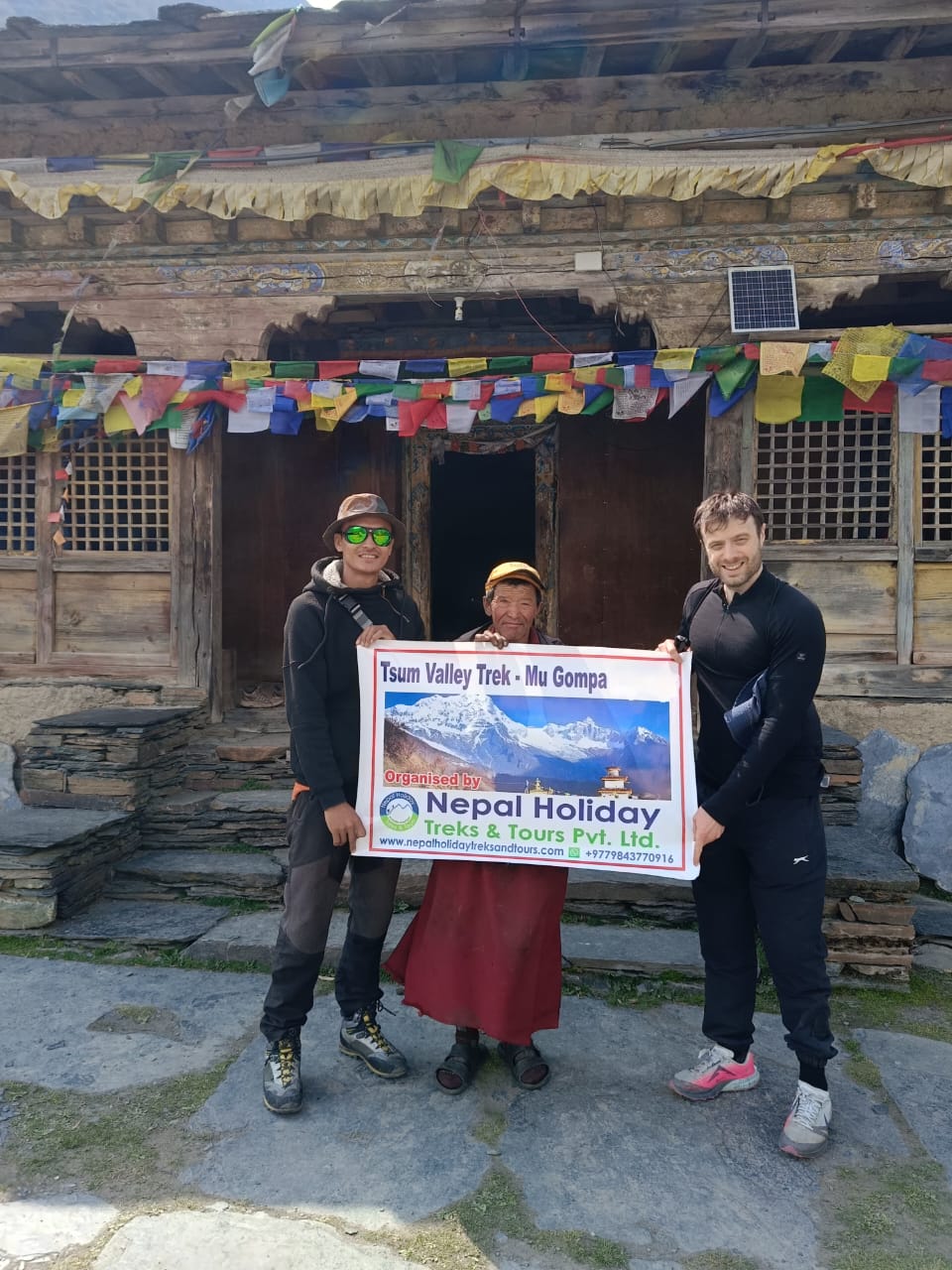
Mu Gompa
Mu Gompa, also known as Dechen Lhundrup, is an important Buddhist monastery in the Upper Tsum Valley of northern Gorkha, Nepal. Located along the remote Tsum Valley Trek, it is one of the region’s main spiritual and cultural landmarks. The monastery sits at approximately 3,700 m (12,139 ft) above sea level within the Manaslu Conservation […]
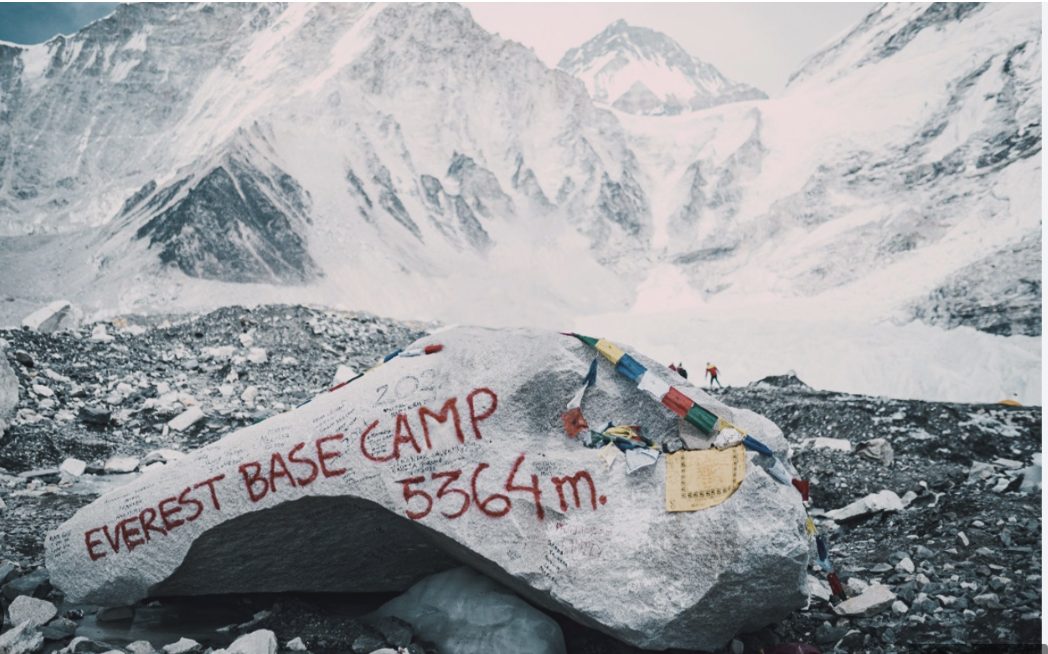
Everest Base Camp Trek FAQs
Introduction Planning the Everest Base Camp Trek often comes with questions about the route, duration, altitude, permits, weather, accommodation, fitness, and overall trekking conditions. These frequently asked questions provide clear and practical information to help you understand what to expect before starting the trek to Everest Base Camp. Frequently Asked Questions General Everest Base Camp […]
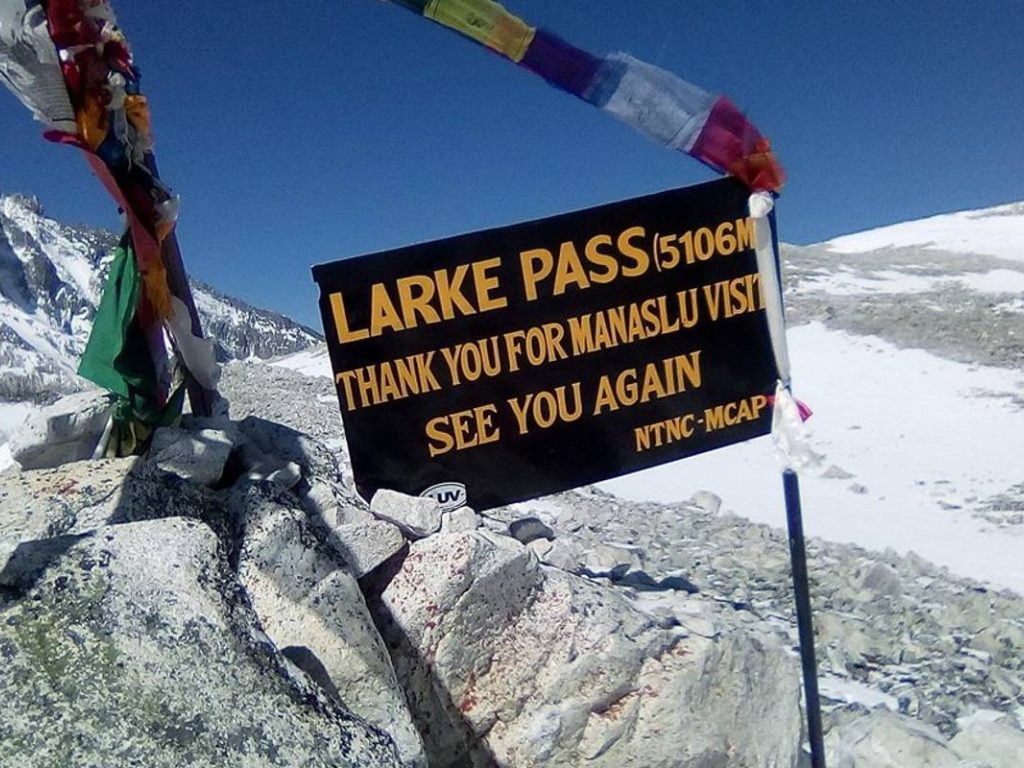
Manaslu Trek via Larke Pass Trek FAQs
Introduction The Manaslu Trek via Larke Pass is a remote Himalayan adventure around Mount Manaslu, the world’s eighth-highest mountain. The route passes through traditional villages, Buddhist monasteries, dramatic valleys, and high mountain landscapes before crossing the challenging Larke Pass. These FAQs cover the route, permits, difficulty, altitude, best time, accommodation, cost, preparation, and other practical […]