Pisang Peak Climbing – 22 Days – 22 Days
- Max Elevation: 6091 m
- Meals: Breakfast, Lunch, and Dinner with a cup of tea / coffee
- Transportation Airport pickup and Drop both way by Sharing Transportation. Domestic flight both way. Kathmandu to Besishar by Transportation.
- Group Size: 2 Min Pax
- Starts at: Kathmandu
- Ends at: Kathmandu
- Trip Route:
Annapurna Region
- Best Season: Spring (March to May) and Autumn (September to November)
Trip Highlights
- Stand on the summit of Pisang Peak at a breathtaking 6,091 meters
- Trek through the iconic and legendary Annapurna Circuit
- Cross Thorong La Pass (5,416m) – the world’s highest mountain pass
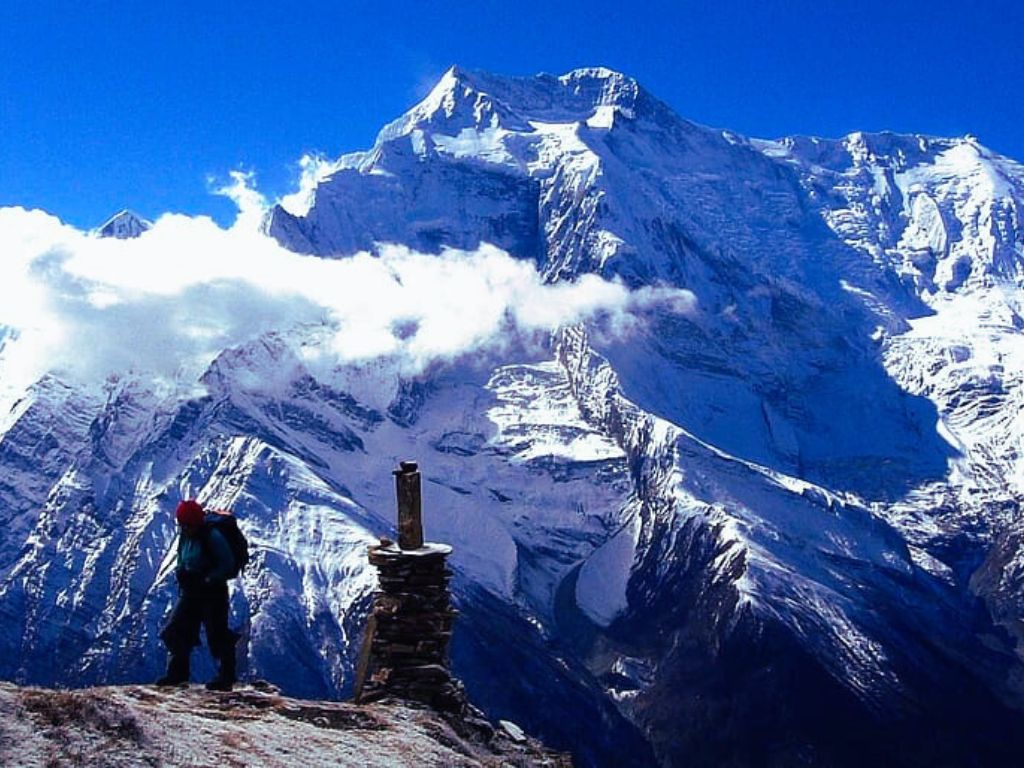
- Marvel at panoramic views of Annapurna II, IV, Tilicho Peak, Gangapurna & Glacier Dome
- Explore the mystical and culturally rich Manang Valley
- Visit Muktinath – one of the most sacred pilgrimage sites in the Himalayas
- Experience the perfect blend of trekking and real high-altitude climbing
- Discover ancient villages and authentic Himalayan culture along the way
- Ideal first 6,000m peak for aspiring mountaineers
- A summit victory that stays with you for a lifetime
Trip Information
Overview
Detailed Itinerary
Day 1: Arrivel in Kathmandu and Transfer to Hotel
Upon your arrival in Kathmandu, you will be transferred to your hotel for a rest to get rid of jet lag. This can be an important moment for recovery, meeting the guide, and finalizing trek preparations. You will also go on a city exploration to get familiar with its local surroundings, services, and necessary permits. Kathmandu is a focal point for trekkers to shop for gear, book items at the last minute, and confirm your trekking itinerary. The best time for trekking in Nepal is spring-from March to May-and autumn-from September to November-when the weather is clear and the skies are blue, thus making the conditions perfect for an enjoyable and safe adventure.
Day 2: Full day sightseeing in Kathmandu and parparing for trek.
You will go sightseeing in Kathmandu today, visiting the main landmarks such as Swayambhunath Stupa, Pashupatinath Temple, Boudhanath Stupa, and Durbar Square to behold the rich cultural and spiritual heritage of Kathmandu. These sites give insight into Nepal’s history and traditions. Later in the afternoon, you’ll get ready for the trek by meeting your guide, confirming permits, and ensuring you have all the necessary gear. The day helps you acclimatize to the city while being completely prepared for the adventure in the Himalayas.
Day 3: Drive to Beshisahar from kathmandu( 850m.)
Drive from Kathmandu to Beshisahar, situated at an elevation of 850m, which is the gateway to many of Nepal’s most famous treks and thus provides an ideal start for the Annapurna Circuit. The drive takes approximately 6-7 hours of driving through beautiful landscapes, quaint villages, and green hills. Along the route, there’s a glimpse into rural life in Nepal and the beautiful river views as it makes a gradual ascent to Beshisahar. Later, you rest and prepare for the next day’s trek. This journey marks the beginning of your adventure into the mountains.
Day 4: Trek to Bahundanda (1,310m. /5-6 hrs )
You will begin with a very fine village called Bahundanda on the hill in Beshishahar itself, lying 1,310 meters above. It involves all-day trekking through forests and terraces up to small, rural villages-takes approximately about 5 to 6 hours. Go up uphill to feel the eye-stealing scenery views of surrounding areas, such as the Annapurna, Lamjung Himal Range among others. Some uphill climb- moderate in gradation with more peacefulness at its core. Upon reaching Bahundanda, you’ll have time to relax and enjoy the tranquil environment before continuing your journey the next day.
Day 5: Trek to Chyamje (1410 meters/7 hrs trek)
you’ll trek from Bahundanda to Chyamje (1,410m), which takes about 7 hours. The trail continues through picturesque landscapes, passing through dense forests, rice terraces, and small villages. You’ll cross suspension bridges over rivers and gradually ascend towards Chyamje. The route offers beautiful views of the surrounding hills and mountains, including glimpses of the Annapurna range. Today is a moderate trek with steep parts, and you will reach Chyamje in the evening, where you rest and prepare for the next day.
Day 6: Trek to Dharapani ( 1, 950 m) / ( 5-6 hours)
You will trek from Chyamje to Dharapani, which is at an altitude of 1,950m, in about 5-6 hours. The trail goes uphill through the lush forests and terraces, gaining gradual height through small villages. You cross the rivers on suspension bridges, and the topography starts changing as you approach the high altitudes. It is a beautiful trek with views of surrounding hills and glimpses of the Annapurna and Lamjung Himal ranges. You need to get to Dharapani, a small village, where you could rest and be ready for the next stage of your journey.
Day 7: Trek to Chame (2,630m. /5-6 hours)
Trek from Dharapani to Chame at an altitude of 2,630 meters, about 5 to 6 hours. The route follows a windy path through a pine forest with several rivers and bridges and gives glimpses of snow-capped peaks. As you ascend higher, the route becomes rugged with an alpine landscape, and the mountain vistas are spectacular to see. You will also be passing by some small villages, and the natives are very friendly. Once you reach Chame, which is the headquarter of the Manang district, you can have all day free to relax and enjoy the natural beauty surrounding this place.
Day 8: Trek to Upper Pisang (3,700m./5-6 hours).
Your trek for today will be from Chame to Upper Pisang (3,700m) within 5-6 hours. The trail rises upwards through a mixture of forests and alpine terrain in increasingly spectacular views of the Annapurna range, including Annapurna II and Pisang Peak. The landscapes get more dramatic as one approaches Upper Pisang, with the village offering breathtaking panoramas of snow-capped peaks. The trek now is moderately hard, and from Upper Pisang onwards, one gets well prepared for the altitudes that await in the following days.
Day 9: Acclimatization Day in Upper Pisang
You will have an acclimatization day in Upper Pisang to help your body get used to the increased altitude. This rest day is necessary to minimize the risk of altitude sickness. You can spend the day exploring the area, visiting local monasteries, or hiking to higher viewpoints for stunning views of the Annapurna range and surrounding peaks. Light activities on this day help acclimatize you while resting and getting ready for the further stages of your trek. You also get time to relish the serenity in the mountainside atmosphere
Day 10: Trek to Pisang Peak Base Camp (4,380 m. /3-4 hours)
The next morning, you begin your trek from Upper Pisang to Pisang Peak Base Camp at an altitude of 4,380m, which will take around 3-4 hours. The trail goes through alpine meadows and rugged terrain, gaining altitude gradually toward the base camp. The path offers incredible views of the surrounding peaks, including Pisang Peak, and the Annapurna range. The trek is moderate, with some steep sections, but the stunning mountain scenery makes it a rewarding experience. Once at the base camp, you’ll rest and prepare for the challenging climb ahead.
Day 11: Pisang Peak Base Camp to High Camp (5,400m) / (3-4 hours)
You’ll trek from Pisang Peak Base Camp to High Camp (5,400m) in 3-4 hours. The trail now goes up steeper and gets more challenging with its rocky terrain and snow, depending on the season of the year. You will see magnificent views of the surrounding peaks, including the Annapurna range. The altitude will be higher, and thus the air will be thinner, making the trek upwards more demanding. Once you reach High Camp, you‘ll rest and acclimatize in preparation for the summit attempt the following day.
Day 12: Summit Pisang Peak and trek back to lower Pisang (6,091 m) / ( 9-12 hrs)
You’ll start early to summit Pisang Peak (6,091m), a challenging and exhilarating climb that takes around 9-12 hours. The ascent involves technical sections, including ice and snow, requiring proper gear and technique. Once at the summit, you’ll be rewarded with stunning panoramic views of the Annapurna range, including Annapurna II, III, and IV, as well as surrounding peaks. After taking in the views, you’ll descend back to Lower Pisang. The descent is more prolonged, which is less aggressive, providing every opportunity for respite to dwell on this victory further by continuing your trek.
Day 13: Trek to Manag Valley ( 3 ,450 m. / ( 5-6 hours)
You will be trekking to Manang Valley from Lower Pisang in 5-6 hours at an altitude of 3,450m. The trail goes up in gradual slopes through villages that offer magnificent views of the peaks around. Further down the valley, the topography becomes alpine, with wide meadows and limited vegetation. You pass through traditional villages to experience the culture and lifestyle of the locals. Upon reaching Manang, a larger settlement, you’ll have a chance to rest and acclimatize, preparing for the higher altitudes ahead.
Day 14: Rest Day in Manang
You will be taken to Manang for rest to get yourself acclimatized to the higher altitude and prepare for the next phase of your trek. This is an important day for your body to get tuned with the thin air, hence minimizing the probability of altitude sickness. You can either explore the local village, visit the Himalayan Rescue Association for health talks, or take a short hike to nearby viewpoints for stunning views of Annapurna II, III, IV, and Gangapurna. This rest day will help your body recover, so you’ll be prepared for more challenging days.
Day 15: Trek to Yak Kharka (4,110 m) / (3-4 hours)
you will trek from Manang to Yak Kharka (4,110m). The trail goes up gradually through a thin line of vegetation and alpine terrain, and from here you will get a beautiful view of peaks around you. You pass small settlements and see yaks and livestock grazing in the high-altitude meadows. This trek is pretty short, hence giving some time to get acclimatized with the higher altitude. Arriving at Yak Kharka, you will be given time to rest and get ready for the more challenging parts of the trek in the days to come. You will trek from Yak Kharka to Throng Pedi (4,400m) in 3-4 hours.
Day 16: Trek to Throng Pedi (4,400m. / 3-4 hours)
The trail goes up gradually through rocky and barren landscapes with increasingly amazing views of the peaks around. Approaching Throng Pedi, you pass through high-altitude meadows and small streams. Moderate, the trek provides an opportunity for acclimatization to the altitude change, prior to challenging crossing over of Throng La Pass within a few days in the itinerary. From Throng Pedi or Throng high camp/ Phedi you head up for an ascent via crossing over Throng La pass lying at an elevation of 5,416 meters to reach to Muktinath.
Day 17: Trek to Muktinath via Throng-la pass (5,416 m) From Throng High Camp/ phedi 9 hrs.
Day 18: Trek to Kagbeni (3550 m. /3½ hours)
You trek from Muktinath to Kagbeni (3,550m) in about 3½ hours. The trek from Muktinath goes downhill via the rugged landscape of the Mustang region, overlooking the surrounding dry hills and the Kali Gandaki River. The trail is quite easy, as it is a gradual downhill trek, passing by small villages and picturesque valleys. Kagbeni village is one of the oldest villages, famous for its ancient monasteries and peculiar Tibetan-influenced architecture. You can then explore the village and relax upon arrival, enjoying the serene beauty of this area.
Day 19: Trek to Jomsom (2,800m. / ( 3-4 hrs)
You will trek from Kagbeni to Jomsom (2,800m) in 3-4 hours. It follows the Kali Gandaki River, going down very smoothly through arid and wind-blowing landscapes with views of the peaks afar. The trail is easy with some parts of the path taking you through some villages and apple orchards. While you reach Jomsom, which is the district headquarters of the Mustang region, you‘ll see more development regarding services and amenities, offering an opportunity for rest and preparation for the next leg of the journey.
Day 20: Fly to Pokhara (820m. / 25 minutes)
A 25-minute flight from Jomsom to Pokhara (820m) will offer you spectacular views of the Himalayas: Annapurna and Dhaulagiri ranges, along with the surrounding valleys. Flying over rugged terrain, you will see from the air the beautiful landscapes you have trekked through. Later, ample time will be provided for you to relax and explore this lakeside city, serene in its beauty, as you prepare for your return.
Day 21: Drive back to Kathmandu (1,334m. / 6 hours)
You drive from Pokhara to Kathmandu (1,334m) for about 6 hours. On this scenic drive, you will pass through lush hills and valleys of Nepal, small villages, terraced fields, and rivers. As you drive closer to Kathmandu, the scenery starts to become more populated and urban. The drive is an opportunity to relax, reflect on your trek, and see rural Nepalese life. Once in Kathmandu, enjoy the vivacious city atmosphere, preparing yourself for your departure the next day.
Day 22: Departure from Kathmandu
It’s time for your departure from Kathmandu. You will be transferred to Tribhuvan International Airport, according to your flight schedule, for your flight home. This marks the end of your fantastic trekking adventure in the Himalayas. You can reflect on the unforgettable experiences and beautiful landscapes that you have come across during your journey. Although the trip may be over, the memories and the sense of achievement will live long after one leaves Nepal.
Price Includes
- Airport transfers by Private vehicle, both ways for arrival and departure
- Three meals a day- breakfast, Lunch, Dinner and 3 cups of tea/Coffee a day during the trek.
- 2 nights’ accommodation in Kathmandu B/B Plan (3-star category hotel) 1 night before the trek and 1 night after trek.
- Have a daytime tea break with cookies every day.
- Fresh fruits after dinner every night as dessert during the trek.
- Accommodation in Kathmandu at a hotel 3 nights on a twin-sharing basis. 1 night in Pokhara in a hotel.
- All meals (breakfast, lunch, and dinner) along with tea or coffee during the trek and climb.
- Nepal Holiday Treks and Tours, (-20 degree sleeping bag) and a duffel bag for the trekking, but you need to refund to the office after the trip.
- Pisang Peak climbing permit fees.
- Climbing Gear: Crampons, Ice axe, Helmet, harness, Climbing boot, and Carabineers are included.
- Lodge-to-lodge and tent accommodations during the trek and climb.
- An experienced, helpful, knowledgeable, friendly, English speaking well trained, government license holder special Climbing Guide with all his salary, food, Drinks, accommodation, equipment, transport, and insurance.
- Essential climbing equipment like ropes, ice screws, and snow bars.
- Jomsom-Pokhara flight, including departure tax.
- Surface transfers to/from Kathmandu by Sharing Transportation.
- Nepal Holiday Treks and Tours trip completion certificate from the company side.
- Annapurna Conservation Area Permit.
- Normal First aids kit box.
- TIMS card (TREKKERS’ INFORMATION MANAGEMENT SYSTEM)
- Government taxes and office service charges.
Price Does not Include
- Lunch and dinner in Kathmandu.
- Your travel insurance which should include the emergency rescue.
- International airfare and airport departure taxes.
- Nepal entry visa (available upon arrival at Tribhuvan International Airport in Kathmandu). A 30-day tourist visa costs US$ 40, and a 90-day visa costs US$ 100. Please bring 2 passport-sized photos for the visa application.
- Personal items like alcoholic beverages, cold drinks, laundry, etc.
- Personal trekking and climbing gear.
- A strong, helpful, porters with proper safety equipment and walking equipment his salary, food, drinks, accommodation, insurance, (one porter for two people he will carry bag pack max. 20-25 kg).
- Tips for your guide and porters which is compulsory.
- Any additional expenses not listed under the “Included” section.
- Tips for trekking staff and drivers (appreciated but not mandatory).