Larke Peak Climbing – 16 Days – 16 Days
- Meals: Breakfast, Lunch & Dinner
- Group Size: 2-15 max
- Starts at: Kathmandu
- Ends at: Kathmandu
- Trip Route:
Manaslu
Trip Highlights
Trip Information
Overview
Detailed Itinerary
Day 01: Arrival in Kathmandu and transfer to hotel
Welcome to Nepal, the home of the Himalayas. Your Larke Peak climbing adventure starts as soon as you touchdown at Tribhuwan International Airport in Kathmandu. Our team will be waiting you at the arrivals hall to give you a warm welcome along with a flower garland. We will pick you up and take you to your hotel, where you can get cleaned up and rest up for your trip. In afternoon your trek leader will call and give you a full trip briefing, including itinerary, safety guidelines, gear checklist and special permits for the Manaslu restricted Area. In the rest of the day you can walk through the bustling streets of Thamel, have a taste of real Nepali food or just take rest for the exciting trip ahead.
Day 02: Drive from Kathmandu to Soti Khola
Wake up early for beautiful overland drive that marks the true beginning your Larke Peak trek. Leaving Kathmandu behind, you head northwest along the lush Trishuli River through the bustling Arughat Bazaar and the rainforest foothills on to Soti Khola.
The road winds through terraced rice paddies, traditional Gurung and Brahmin villages, high forests and precipitating river gorges. Even on the worst parts of the road, every bend hurls you into a vista you want to capture from a window seat.
Day 03: Trek from Soti Khola to Machha Khola
Your first day on foot is a scenic light trek on the banks of the Budhi Gandaki River. The trail passes through humid subtropical forests, small farm villages and along narrow river banks that are naturally hewn into the mountainside.
You will cross a lots of suspension bridges as you bounce over turquoise waters, through the village of Riden, over the village of Almara and at the end of the day,you will reach Machha Khola. The name means “fish river” and local still catch fish in these waters, which are crystal clear just as they have for generations.
This is a superb introduction to the multi-ethnic culture of the region where the Hindu farming communities of the lower hills begin to mingle with the Buddist influences that you will encounter further up the valley.
Day 04: Trek from Machhakhola to Jagat
Today the path leads you even further down into the sheer Budhi Gandaki valley, crisscrossing the river on a series of suspension bridges. Along the route you cross Khorlabesi and Doban before reaching the natural hot springs at Tatopani – a great place to relax your legs and take in the view.
As you get closer to Jagat the scenery becomes even more stunning with sheer cliff walls and thunderous waterfalls surrounding the path on all sides. Jagat is the main entry point for the Manaslu Conservation Area, where your permits will be checked thoroughly.
Day 05: Trek from Jagat to Deng
From Jagat, the trail ascends gradually through thick bamboo forests and terraced village on hillsides. You walk through Sirdibas and cross another suspension bridge before the path leads you into a very narrow gorge – the Gandaki, it is one of the most visually spectacular portions of the entire trek.
At altitude increases, you get your first look of Sringi Himal (7,187m) towering majestically in the north- a spectacular foretaste of the high Himalayan scenery still to come. The trail also traverses isolated landslide sites, a sobering testament to the potent, raw energies of nature in this corner of the world.
Deng is a small Tibetan village with warm teahouse accommodation. Buddhist monasteries, prayer wheels turning and brightly colored prayer flags are now the cultural nerve center of the Manaslu region.
Day 06: Trek from Deng to Namrung
Today is probably the toughest day on the lower trail as you gain elevation steadily through ancient pines and rhododendron. The trail skirts Rana, Bihi Phedi and Ghap – each a quiet gem of Tibetan-Buddhist heritage, with elaborately carved mani stones that border every street.
You cross the Budhi Gandaki River one last time before making your way up to Namrung, an old customs stop that regulated the salt trade between Nepal and Tibet. The village has spectacular views of Ganesh Himal to the south and even the first teasing sight of the ridge of Manaslu to the north.
Day 07: Trek from Namrung to Shya
This is a shorter and very scenic day with your body being given the chance to slowly adapt to the increasing altitudes, as you ascend gradually and comfortably. The trail meanders through alpine meadows and yak pastures, revealing breathtaking mountain panoramas around every bend.
You cross the village of Lho, which is located right under the massive south face of Mount Manaslu (8,163m). This is without doubt one of the most photographed places on the entire Manaslu Circuit – a real Himalayan postcard moment. Relax, take your time and here and breathe it in all.
Shya is a quiet, perfectly peaceful village where time seems to stand still. In the evening, sit back, enjoy the silence of the mountains and let the altitude work its magic.
Day 08: Trek from Shya to Samagaon via Pungyen Monastery
It is one of those days where you feel paid for all the walking and pain. The main path to Samagaon is actually not very long, so you have plenty of time for an unforgettable detour to Pungyen Monastery – a two-hour round trip that is worth every step.
Pungyen Gompa sits perched high above the valley with a breathtaking Manaslu massif, the Manaslu Glacier and dramatic icefall pouring from summit right behind is truly stunning. One of the greatest views in the entire Himalayas.
Day 09: Acclimatization and Exploration day at Samagaon (3,530m)
This day of rest is not merely a luxury, it is a crucial investment in your safety and success on the summit. With a good acclimatization in Samagaon, the risk of altitude sickness gets minimalized going into the challenging high-altitude segments that still lie ahead.
We strongly recommend you to make the hike up to Manaslu Base Camp (4,900m) today, a 4 to 5 hour round trip that provides your body with the critical climb high, sleep low’ acclimatization it requires. The base camp views of Manaslu massive south face are stunning and are nothing like you will see from the trail.
Or visit Ribung Gompa, the spectacular monastery situated above the village, stroll through Samagaon’s cobbled streets or just relax in the sun and absorb the vibes of one of the most isolated and stunning locations in Nepal.
Day 10: Trek from Samagaon to Samdo
A short but meaningful day as you make your way deeper into the upper Manaslu valley. The trail meanders along the north bank of the Budhi Gandaki River through yak pastures and glacial moraine lands and mountain views on each step rolling 360 degrees.
Samdo lies in the last substantial village before the high camps and is only a few km away from the Tibetan border. It is a tiny village but a very interesting one with strong Tibetan cultural influences, if the weather is good you will see traders crossing the border from Tibet.
Spend the afternoon wandering the village or making a short acclimatization hike towards Samdo Ri for panoramic views of surrounding mountains. Sleep well tonight and tomorrow the high altitude climbing section starts.
Day 11: Trek from Samdo to Dharamasala
Today you ascend above 4,000m for the first time in true high altitude terrain. The path gradually climbs above the glacial lakes and boulder strewn meadows, crosses the Salka Khola stream and then ascends to Dharmasala, which is also known as Larke Phedi.
This will be your final teahouse stop prior to the peak. Dharmasala lies in a dramatic, fully exposed position at 4,460m directly above the Larke Glacier with the high ridgeline you will cross on your summit push right there in front of you.
Come early, dine heartily and get all your climbing gear ready tonight. Drink enough water, sleep too much as if you could and check the head torch batteries. Tomorrow night, you are going for the top.
Day 12: Trek from Dharmasala to Larke High Camp
Today, you step into the climbing zone. From Dharmasala, the path steeply ascends straight into glacial environment on your way to Larke High Camp at 5,650m. Your climbing guide will rope the team together for glacier travel – crampons and ice axes will be in active use throughout the climb.
The view from High Camp is just extraordinary, a panoramic 360 degree window into all of Himalaya including Manaslu (8,163m), it also includes Cheo Himal, Himlung Himal, Kang Guru and Annapurna II spanning the entire sky line.
At High Camp, the team pitches tents, cooks a hot meal and conducts a detailed briefing on the summit push. Sleep as much as possible – even a little light rest at this altitude has a big impact. The alarm is set for midnight.
Day 13: Summit Day of Larke Peak
Training: 1-1.5 hours / Summit Push: nearly 12:00 AM / Summit: 6:00–7:00 AM (can be early or late as per your pace)
This is the day you train for, the day you dream of and trekked for. Summit day on Larke Peak is a experience you will never forget.
Pre-Summit Training (1 to 1.5 hours)
Before you head into the dark, your lead climbing guide will conduct a brief 1 to 1.5 hour training and gear check at High Camp. This includes crampon use on ice, ice axe self-arrest, rope management and a complete walk through of the summit route conditions. This is not a formality, this briefing is a crucial safety precaution and all climbers on team are bonded in this training session.
Summit Push: 12:00 AM to 1:00 AM
In the quiet silence of the Himalayan darkness, we start out on our summit push. The midnight start makes the most of the most stable snow and ice conditions of the top portion of the mountain – crucial for safe and efficient climbing. Your guide takes the lead as the rope team all the way to the summit, moving at a consistent, moderate pace across the glacier, up fixed rope sections and along the final ridge to the summit.
Reaching the Summit: 6:00 AM – 7:00 AM (based on your pace)
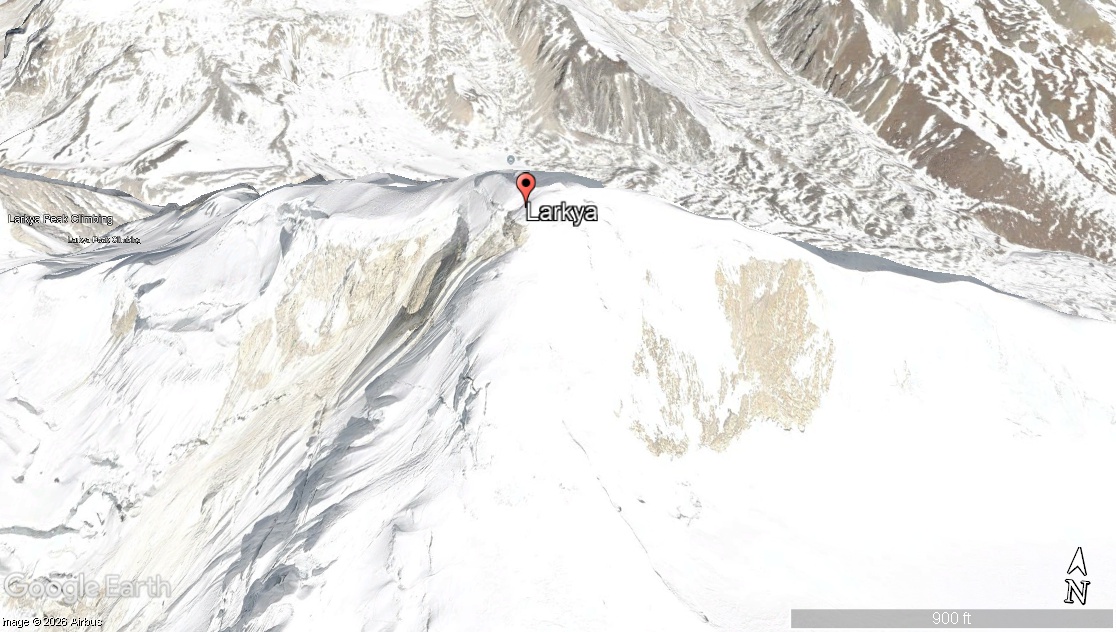
With a bright golden sunlight cascading over all of the Himalayas, you make your way to the top of Larke Peak at 6,249m together with the first rays of dawn. The feeling is so good that you cannot describe it. Before you lies one of the most stunning landscapes in all of Nepal, the imposing Manaslu summit, an unbroken string of Himalayan peaks that fades into the horizon and verdant valleys thousands of meters beneath your soles.
Take in the roof of your world. Snap a few pics. Breathe it in. Let the achievement soak in. You earned this.
Descent: After enjoying every moment at the top, we begin our slow retreat through High Camp and then press down to Bhimthang (3,800 m) for relaxation and restoration. The downhill is around 2,400 m in altitude – pace yourself and rely on your trekking poles and listen to your guide.
Day 14: Rest and Recovery at Bhimthang
After the extraordinary summit achieved yesterday, today is completely yours – rest, reflection and celebration. Bhimthang is a wonderful high altitude grassland village surrounded by snow-capped mountains, tranquility and clean air makes it one of the best places to rest on the entire trek.
Sleep in. Have a hearty breakfast. Let the reality of what you just did really wash over you. Many climbers describe the day after a Himalayan summit are some of the most deeply rewarding and tranquil days of their lives.
Take a leisurely walk in the afternoon through the beautiful meadows and get excellent views of Manaslu and Himlung Himal from a different angle. You stood on a 6,249m summit. Tonight, that deserves a real celebration.
Day 15: Trek from Bhimthang to Tilche
The trail descending from Bhimthang is long but it is one of the most satisfying walks through beautiful upper valley scenery on the whole trip. The path falls precipitously through high alpine birch and rhododendron forest before emerging onto the broad, warm valley floor of the Marsyangdi River.
You pass through Thonje and cross a suspension bridge over the Marsyangdi River to reach Tilche – a large, friendly Gurung village with beautifully paved “flagstone” streets (locally known as gaun tok) and stone traditional architecture.
As you descend as the air thickens and warmth returns to your bones. Just 48 hours ago you were standing on a 6,249m summit. Now, as you stroll down a village lane lined with flowers, children waving hello and the smell of dal bhat seeping out of rustic kitchen doors, you know exactly where you are: in the heartland of Nepali life. Cherish the contrast.
Day 16: Drive from Tilche to Kathmandu
The final chapter of your Larke Peak climbing experience. A long but nostalgic drives takes you back to Kathmandu along the Marsyangdi and Trishuli River valleys, with recollections of every mountain, every village and every step of this unbelievable trek going through your mind. The road leads you to the Dharapani, Besisahar and Dumre before meeting the main Prithvi Highway heading back to the Kathmandu. Stop for a roadside lunch on the side of the road and steal one more look at the Annapurna and Manaslu ranges as they recede in the distance behind you.
You will arrive Kathmandu in the early evening. Check into your hotel, take a shower and we will treat you with a celebratory dinner in Thamel. Your Larke Peak climbing expedition is complete and the summit of 6,249m is now part of your story forever.
Price Includes
- Pick up and drop from Kathmandu international airport by private vehicle to your hotel
- Three wholesome meals a day – Breakfast, Lunch and Dinner, including 3 cups of tea or coffee daily throughout the trek.
- Comfortable teahouse accommodation during the entire trek
- Seasonal fresh fruits as a dessert is served after the meal every night on the trek.
- Included Climbing Gear: Crampons, Ice Axe, Helmet, Harness, Climbing Boots, and Carabiners
- One night tent camping at Larke High Camp
- Bed and Breakfast in 3 star category hotel in Katmandu for 1 nights (arrival day)
- Private transport from Kathmandu to the beginning of the trek (Soti Khola) and from Tilche back to Kathmandu.
- Service for pick up and drop from your hotel to the departure point and vice versa.
- All necessary trekking permits – including the Manaslu Conservation Area Permit (MCAP), Annapurna Conservation Area Permit (ACAP), Restricted Area Permit for the Manaslu region, and TIMS Card.
- Special Larke Peak Climbing Permit (SP) from the Nepal Mountaineering Association (NMA).
- Nepal Holiday Treks and Tours – 20°C sleeping bag, along with a duffel bag for the duration of the trek (should handed back to the office after completing the trip).
- An experienced, government licensed, English speaking trekking and climbing guide – plus all his salary, meals, drinks, accommodation, equipment, transport and insurance for the entire expedition.
- A strong and dependable porter with all the necessary safety and walking equipments, including his wage, meals, drinks, accommodation, and insurance (1 porter for 2 guests only, max weight 20-25 kg).
- Twice a day monitoring of pulse oximetry throughout the trek for checking your oxygen saturation and heart rate – a critical early warning system for Altitude Mountain Sickness (AMS) that help you keep trekking safe.
- Provision of emergency helicopter evacuation service, if necessary (to be paid by your personal travel insurance).
- Standard first aid kit is taken along the expedition
- A complementary lunch or dinner in Kathmandu on your final day as a celebration by us for free.
- The official Nepal Holiday Treks and Tours completion trek certificate will be awarded to you at the end of your journey.
- Government taxes and company service charges where applicable.
Price Does not Include
- Personal travel insurance with emergency evacuation is mandatory and must be obtained before trekking.
- Lunch and dinner in Kathmandu during your stay
- Additional nights in Kathmandu or in the trek due to weather delays, cancelled flights, strikes or any personal health issue.
- Personal expenses (including drinks, bottled water, hot showers, laundry, extra snacks, WiFi, phone charging, or any services not specifically included)
- The costs of optional extensions at any of the stops along the route.
- Tips for your guides and porters – It is very much appreciated and culturally expected in Nepal.